


Energy woes: Over 40pc of textile industry has shifted to BD?

 ABDUL RASHEED AZAD
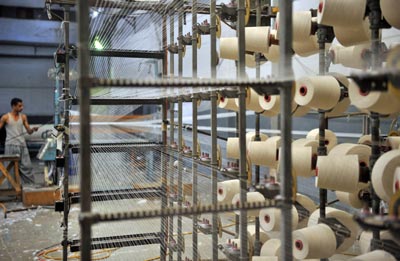
ISLAMABAD: More than 40 percent of the Pakistani textile industry and around 0.2 million power looms have shifted to Bangladesh in the last five years due to energy crisis in Pakistan and better incentives in Bangladesh, which has created serious employment related problems in the country.
Discussion with the industry stakeholders, farmers’ representatives and officials of Textile Ministry revealed that only in Punjab over 200,000 families are directly or indirectly negatively affected.
Mohsin Aziz Khan, Chairman All Pakistan Textile Mills Association (APTMA) said that about 15 million people are directly or indirectly associated with textile industry and around 3 to 4 million people have been negatively affected, adding that the sector is facing six hours power outages daily, besides two-day gas loadshedding.
He said at present all the textile units are working in two shifts instead of three shifts, which has deprived numerous people of their jobs.
According to an official of Textile Ministry, Bangladesh as a least developed country, has tax-free access to 37 countries including the European Union, Canada and Australia, which is one of the key reason why a large number of Pakistani textile units have relocated there in recent times.
The official said that the reason behind the shifting of textile industry to Bangladesh is not only related to energy crisis in the country but preferential trade treatment extended to Bangladesh by the European Union and the United States. He admitted that energy crisis has played a role in shifting of these units to Bangladesh and added that the government is now taking a number of steps to facilitate the industrial sector like reducing Gas Infrastructure Development Cess (GIDC) by Rs. 50 per MMBTU for the industry on their request.
The official said, “Bangladesh is a privileged country as it has been counted among least developed nations by the EU and US. It has been given facilities and its textile sector has been sponsored and supported financially by the big economic powers”.
Ibrahim Mughal, Chairman Agri Forum Pakistan accused the incumbent government of being more concerned with its legal battles then in the grievances of the masses and the ailing textile sector.




















Comments
Comments are closed for this article.