


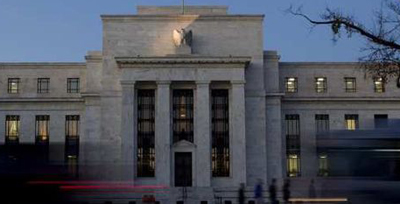
 TOKYO: Japan's central bank Thursday said the world's third-largest economy would grow slightly less than expected amid turmoil overseas, but held off making major policy moves as it pointed to a recovery.
The decision surprised some analysts after a flurry of interest rate cuts by central banks in Europe, Asia and South America aimed at propping up a global economy that is showing signs of slowing.
The Bank of Japan said it would keep rates at zero to 0.1 percent while it fine-tuned a 70 trillion yen ($880 billion) asset-purchase programme but kept the size of its main policy tool steady following a two-day policy meeting.
The bank said it expected Japan's economy to expand by 2.2 percent in the fiscal year through March 2013, slightly lower than its April outlook of 2.3-percent growth but still above a January forecast of 2.0 percent.
It kept a 1.7 percent growth forecast for the next fiscal year unchanged.
Japan's economy was hammered last year by the quake-tsunami disaster which wreaked havoc on industrial production, while flooding in Thailand and the yen's surge to record highs against the dollar later in the year also hurt growth.
"Japan's economic activity has started picking up moderately as domestic demand remains firm mainly supported by reconstruction-related demand" following last year's natural disasters, the bank said in a statement Thursday.
"(But) there remains a high degree of uncertainty about the global economy, including the prospects for the European debt problem.(and) the momentum toward a recovery for the US economy".
The US Federal Reserve has held off fresh stimulus, while the European Central Bank and China's central bank ushered in rate cuts last week, with Brazil on Wednesday cutting its rate to a record low.
South Korean policymakers on Thursday unexpectedly cut the key interest rate for the first time in more than three years.
Expectations for a rate cut from the Japanese central bank had been waning in recent weeks.
"(But) after rate cuts by Korea and Brazil, it's just odd that the BoJ is not playing ball like everyone else," said Hideyuki Ishiguro, strategist at Okasan Securities in Tokyo.
The bank said it would tweak policy by reducing the amount of fixed-rate loans it offers by five trillion yen while it increased the purchase of treasury discount bills by the same amount.
The shuffle was "somewhere between unchanged and an easing", said Tsunemasa Tsukada, chief manager of forex and financial products trading at Mitsubishi UFJ Trust and Banking.
"Still, the size of the asset purchase programme hasn't increased in net terms. So the effects of easing should be limited," he said.
The state of Japan's economy was not bad enough to stoke a major move by the central bank, Capital Economics said in a note.
"Recent economic data from Japan have mostly been weak but there have been just enough positives to justify a delay," it said.
The BoJ also lowered its inflation forecast in the current fiscal year to 0.2 percent from an earlier estimate of 0.3 percent, and kept unchanged its view of a 0.7 percent inflation rate for the following year.
Japan has been stuck in a deflationary spiral for years with efforts to battle a general trend of falling prices having little impact.
Europe, a key market for Japanese products, remains at the top of policymakers' concerns, with officials repeatedly saying the eurozone crisis is the biggest threat to Japan's economic recovery.
But on Thursday, the BoJ said production was picking up with the economy "expected to return to a moderate recovery path as domestic demand remains firm and overseas economies emerge from the deceleration phase".



















Comments
Comments are closed for this article.