


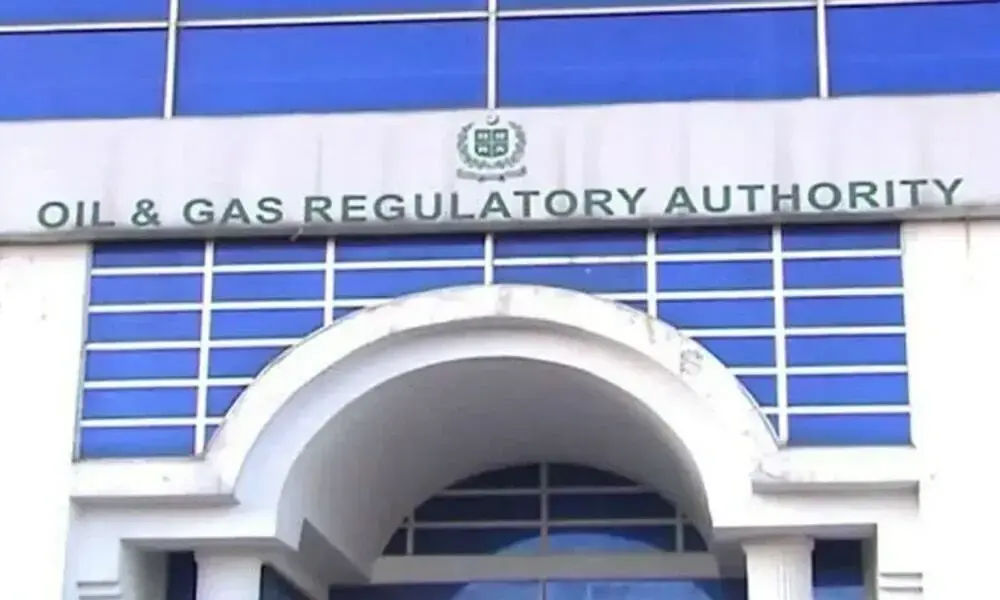
ISLAMABAD: Cnergyico PK Limited (CPL) has urged the Oil and Gas Regulatory Authority (OGRA) to reassess its refinery production performance against actual market demand and operational constraints, arguing that unrealistic production targets and an adverse motor spirit (MS) pricing mechanism are undermining refinery economics and domestic fuel security.
In a letter to Executive Director (OSC) OGRA, Iftikhar Mehmood, the refinery maintained that its production performance should not be evaluated against targets in isolation, particularly when crude availability, operational limitations and market demand determine actual throughput andOF output.
The company referred to OGRA’s letter of No November 11, 2026, and provided details of its October production and supplies, alongside objections to the November high-speed diesel (HSD) production target.
READ ALSO: Cnergyico Pakistan Limited
According to CPL, it entered October 2026 with approximately 58,000 metric tons of HSD inventory due to limited upliftment by oil marketing companies (OMCs) during preceding months. Its crude imports, the company said, were aligned with the production plan communicated to the regulator.
With an increase in OMC demand, CPL enhanced its throughput and HSD production during October. The refinery produced approximately 87,500 metric tons of HSD and supplied around 134,000 metric tons, including volumes drawn from opening inventory, recording its highest-ever monthly HSD sales.
The company said it also accommodated additional requirements of OMCs wherever operationally feasible, arguing that the substantial difference between production and supplies reflected inventory drawdown rather than a production deficiency.
CPL contended that refinery performance should therefore be assessed in the context of actual market demand, inventory movements and supplies, instead of relying exclusively on predetermined production targets.
The refinery has also challenged the HSD production target fixed for November 2026, stating that the target disregarded its communicated production plan and operational limitations.
At the November Product Review Meeting (PRM), CPL said it had conveyed an achievable HSD production plan of 130,000 metric tons based on scheduled crude arrivals and operational availability.
However, the target was subsequently fixed at 160,000 metric tons, significantly above the company’s communicated production plan.
CPL argued that production targets determined without taking into account crude availability and operational realities could not reasonably form the basis for attributing production shortfalls to the refinery.
The company maintained that refinery production obligations must remain linked to actual crude procurement schedules, plant availability and commercially sustainable operations.
Separately, CPL has raised serious concerns over the revised motor spirit pricing mechanism effective October 31, 2026, arguing that the arrangement imposes substantial financial losses on refineries while exposing them to prevailing international crude procurement costs.
Referring to its joint representation dated November 2, 2026, the refinery stated that the revised mechanism requires refineries to surrender Rs49.02 per litre, while crude procurement, freight, insurance, financing and other operating expenses remain subject to market conditions.
According to CPL, motor spirit is currently being sold at approximately $32 per barrel below the delivered crude price, creating a commercially unsustainable situation for refinery operations.
The company argued that it could not reasonably be expected to maximise production while absorbing substantial unrecoverable costs arising from regulatory pricing decisions.
It maintained that refineries are commercial enterprises and cannot be treated as instruments for subsidising consumer prices without considering the financial implications for their operations.
CPL further highlighted that crude oil cargoes are booked approximately two months in advance, making sudden changes in pricing arrangements particularly disruptive to refinery planning and procurement.
The company contended that changes in the pricing formula without prior notice or consultation adversely affect crude procurement decisions, operational planning and financial viability.
It warned that frequent revisions in pricing mechanisms, coupled with continued production at negative margins, could discourage refinery operations and lead to reduced capacity utilisation across the sector.
According to the refinery, regulatory interventions that undermine refinery economics cannot be separated from their implications for domestic production and national fuel security.
CPL has also questioned the compatibility of the revised MS pricing mechanism with fiscal protections assured under the Brownfield Refining Policy and its executed Upgrade Agreement.
The company stated that the changes raise serious concerns regarding the protections and assurances extended to refinery investment under the policy framework.
It referred to the preamble of the OGRA Ordinance, 2002, which envisages promoting competition, encouraging private investment and protecting the public interest while respecting individual rights.
CPL argued that these objectives should be interpreted consistently with constitutional protections under Articles 4, 18 and 25, relating to lawful treatment, freedom of business and equality before the law.
The refinery maintained that regulatory decisions must balance consumer interests with the sustainability of domestic refining operations, particularly where substantial investment commitments have been made under government policies.
CPL has formally requested OGRA to reassess its production performance in light of actual supplies, inventory movements and operational constraints.
It has also sought alignment of the November HSD production target with its communicated achievable plan of 130,000 metric tons, instead of the 160,000 metric tons subsequently fixed.
The refinery urged the regulator to take into account the adverse consequences of the revised MS pricing mechanism while evaluating production shortfalls and determining refinery obligations.
Copyright Business Recorder, 2026






















Comments