


Islamabad business community seeks 1,000 acres for special economic zone
- A proposed Islamabad Model Special Economic Zone aims to revitalise the capital's outdated industrial sector, attracting keen investment from Chinese and Turkish companies
Islamabad's business community requests 800-1,000 acres for a Special Economic Zone to modernize industry and create jobs. They also advocate for a 10-year economic policy and regional trade integration.
- Establishment of the Islamabad Model Special Economic Zone.
- Call for a 10-year national economic policy framework.
- Efforts to resolve business community issues with local authorities.
- Pakistan's role in strengthening regional economic cooperation via ECO.
- Potential of the Uzbekistan-Afghanistan-Pakistan railway project.
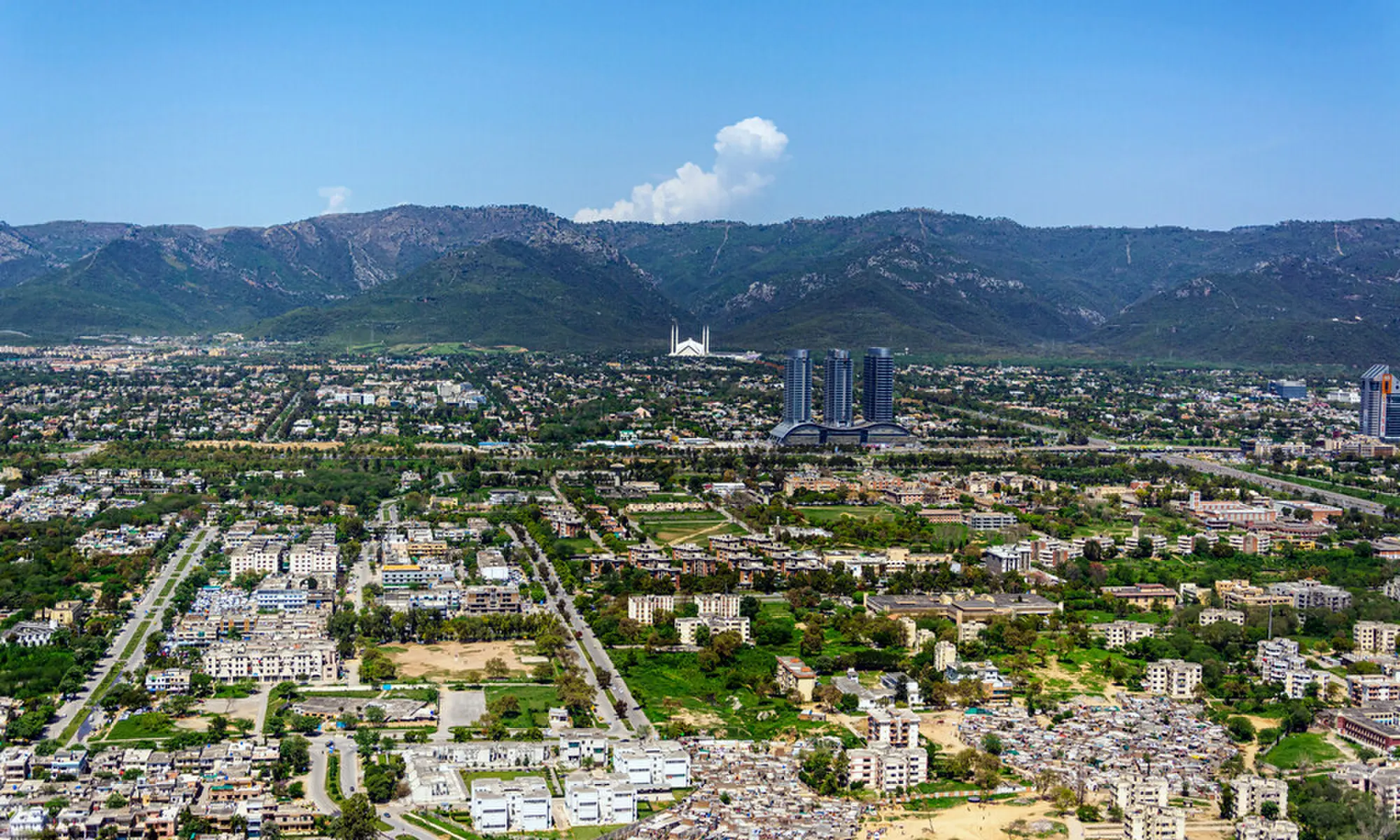
ISLAMABAD: The business community of Islamabad has approached the federal government and the Punjab government for the allocation of 800-1,000 acres land for the establishment of Islamabad Model Special Economic Zone (IMSEZ).
Talking to Business Recorder, President Islamabad Chamber of Commerce and Industry (ICCI), Muhammad Zikria Akbar Zia here on Sunday also called for a 10-year economic policy framework.
He said that establishment of Special Economic Zone was his top agenda as the project is aimed at replacing the outdated Islamabad’s industrial sector which was established some 50 years ago and now the federal capital’s population has increased manifold and at present there was no land in Islamabad to expand and establish new industries.
The business leader said that in this connection he along with senior members of the ICCI has approached the National Coordinator of Special Investment Facilitation Council (SIFC) Lt General Asad ur Rehman Afzal Cheema as well as Punjab’s Provincial Minister for Industries, Commerce, and Investment Chaudhry Shafay Hussain. The establishment of SEZ in Islamabad where people from across the country and reaching for better opportunities will bring multibillion investment, create thousands of jobs, play vital part in country’s economic growth and protect migration of local industry which over the period of time due to shortage of industrial plots have located to other areas.
He said that Chinese and Turkish companies are keen to invest in Pakistan especially in Islamabad which is the safest area in the country. The creation of SEZ in federal capital will help grow Small and Medium Enterprises (SMEs) which are more critical than of large industrial units and SMEs are the backbone of economy.
He said that at present Islamabad was facing serious water supply shortage related issues and the chamber along with local leadership is trying to resolve the core problem. He also said that recently Chamber in collaboration with local business leaders has brought initial relief for the traders in connection with polyethene bags.
He further said that the ICCI leadership was making all efforts to bring relief for the business community in connection with State Bank’s debt-recovery rules, port charges and administrative issues involving the Capital Development Authority (CDA) and the Federal Board of Revenue (FBR) and Islamabad Electric Supply Company (IESCO).
The ICCI president said that CDA must accommodate a non-voting member of the ICCI, so that business community has a direct say in the policy related matters, adding that the Islamabad region is deprived of local government since long and the government should hold local elections in the federal capital so that people of Islamabad can elect their own representatives.
Zia also welcomed Pakistan’s hosting of the 30th Meeting of the Economic Cooperation Organization (ECO) Council of Ministers, describing it as a landmark opportunity to strengthen regional economic integration, expand trade and attract investment. He said Pakistan’s assumption of the ECO Chair for 2026-27 should be utilised to translate regional commitments into tangible economic gains through enhanced private-sector engagement, stronger trade linkages and removal of barriers to cross-border commerce.
He said the expected adoption of the Islamabad Declaration and approval of ECO Vision 2035 could provide a strategic roadmap for regional connectivity, economic cooperation and sustainable development. He emphasized that meaningful progress on the ECO Trade Agreement (ECOTA) and Transit Transport Framework Agreement (TTFA) was essential to simplifying trade procedures, reducing transportation costs and facilitating the movement of goods across member countries.
Highlighting Pakistan’s strategic geographical position, the ICCI president said the proposed Uzbekistan-Afghanistan-Pakistan (UAP) railway project could be a game-changer for regional connectivity by linking Central Asian markets with Pakistani seaports. He observed that improved transport infrastructure and efficient transit arrangements would enhance Pakistan’s role as a regional trade and logistics hub while providing landlocked Central Asian economies with greater access to international markets.
Muhammad Zikria Akbar Zia noted that Pakistan’s growing economic engagement with Uzbekistan, Tajikistan, Kyrgyzstan, Azerbaijan and Kazakhstan had created promising opportunities for expanding exports, investment and industrial cooperation. He stressed that bilateral agreements and diplomatic engagements must translate into practical business partnerships, joint ventures and increased trade volumes. He proposed regular ECO business forums, trade exhibitions, B2B meetings and exchange of business delegations to connect entrepreneurs and promote commercial opportunities across the region.
The ICCI president emphasized that the private sector and chambers of commerce must be active partners in advancing ECO’s economic agenda, as sustainable regional integration was impossible without meaningful business-to-business collaboration. He expressed confidence that Pakistan’s ECO chairmanship would strengthen the country’s economic and diplomatic standing, adding that the real success of regional cooperation would be measured through increased intra-regional trade, investment flows, employment generation and shared prosperity.
Zia stressed that improved connectivity, infrastructure development and industrial collaboration were essential to unlocking the full potential of ECO’s economic relations. He highlighted the importance of rail link between all the member countries, saying that it could significantly facilitate regional and bilateral trade and provide businesses with an efficient corridor for onward transportation of goods to other regional and international markets.






















Comments