


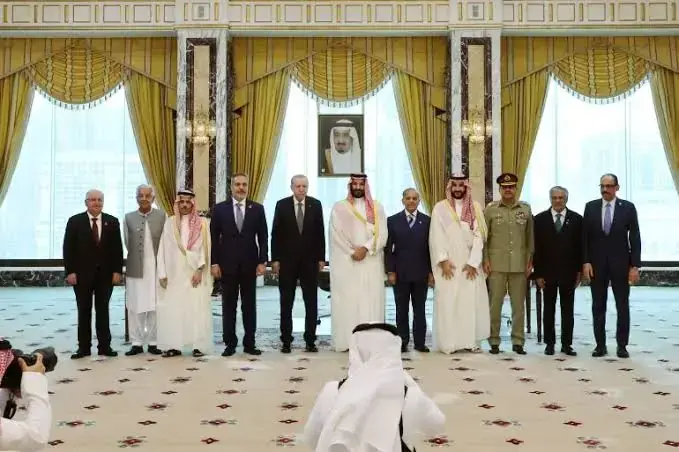
In a highly significant development in relation to the regional security situation, the Turkish parliament has approved a bill ratifying the Makkah Agreement on Joint Defence with Pakistan and Saudi Arabia. It is important to note that the Makkah Joint Defence Agreement, signed in August, commits the three countries—Pakistan, Saudi Arabia and Turkiye— to mutual assistance in the event of an armed attack, while allowing them to determine the nature and extent of their response. Its significance extends well beyond the immediate security concerns of its members.
The agreement reflects a changing strategic environment in which longstanding assumptions about American protection and regional stability are being subjected to increasingly uncomfortable scrutiny.
For decades, the United States has occupied a central position in the security calculations of the Middle East, providing military capabilities, political guarantees and strategic support to its partners.
Recent conflicts, shifting American priorities and the growing costs of regional confrontation have exposed the limitations of relying so heavily on an external guarantor.
Washington remains an enormously influential military power, but regional governments have compelling reasons to develop additional arrangements capable of protecting their interests when American commitments prove insufficient, conditional or subject to changing political calculations.
Qamar Abbas (Karachi)
Copyright Business Recorder, 2026



















Comments