


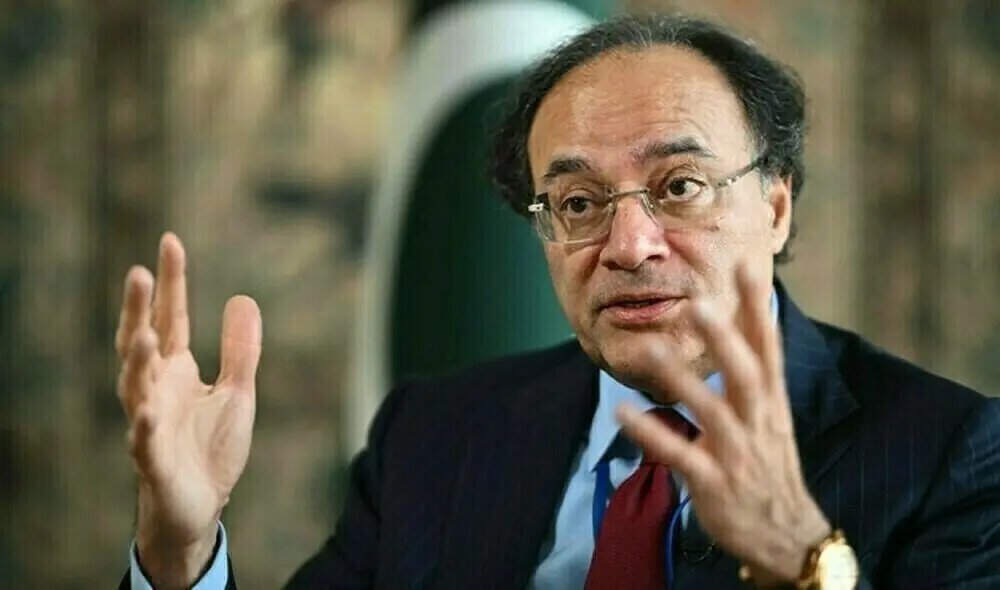
ISLAMABAD: Finance Minister Muhammad Aurangzeb said Wednesday that Pakistan had raised USD3 billion through the Eurobond issuance after accessing the international capital market, and now in a “comfortable position” regarding its external accounts.
He also confirmed that Islamabad had received a USD3 billion rollover from Saudi Arabia but did not disclose its exact duration.
He was responding to media queries regarding Washington DC’s refusal to entertain Pakistan’s request for USD10 billion in support, on the sidelines of a meeting of the Senate Standing Committee on Finance held at Parliament House on Wednesday.
READ ALSO: Improved external account shows economic resilience: SBP Governor
The Finance Minister expressed satisfaction, stating, “With or without USD10 billion from the USA, we are in a comfortable position regarding our external accounts.”
He clarified that the proposed support was neither a credit line nor guaranteed financing but a request for a Liquidity Support Programme. “If this support is provided, it will be fantastic, but if it does not come through, we can manage our external account in a comfortable manner,” he added.
He further clarified that Pakistan had raised USD3 billion after accessing the international capital market in the first week of September, while the government was planning further issuances of Eurobonds, Panda bonds and dollar-settled bonds.
To another question regarding the rollover of the USD3 billion facility granted by Saudi Arabia for a few months, the minister confirmed that the facility had been rolled over but declined to disclose its duration.
He said the repayment period of the Eurobond had intentionally been fixed at 5.5 years to ensure that the repayment obligation did not create difficulties for the upcoming administration.
Federal Secretary Finance Imdad Ullah Bosal briefed the Senate panel and stated that Pakistan’s gross external financing repayments stood at USD21.5 billion, including USD17 billion in principal and USD4 billion in interest payments.
He said USD7.3 billion was available in the shape of bilateral rollovers but did not share details. Sources said the amount included USD4 billion in SAFE deposits from China, USD3 billion from Saudi Arabia and the remaining USD300 million from Kuwait.
Saudi Arabia had provided deposits of USD8 billion, out of which USD5 billion had been rolled over for a medium-term period until 2028. On the remaining USD3 billion, Saudi Arabia had possibly granted a one-year rollover for FY27.
Imdad Ullah Bosal said that, excluding the USD7.3 billion rollover, the remaining external debt repayment stood at USD14 billion, out of which commercial refinancing amounted to USD3.2 billion. Pakistan might not opt for this commercial refinancing because of its cost.
The Finance Ministry stated that the government had repaid USD5 billion during the first five months, while only USD6 billion would be repaid during the remaining seven months of the current fiscal year.
The Secretary Finance also informed the committee that debt servicing costs had increased by 28 percent in FY23, mainly due to the depreciation of the rupee against the dollar.
The Minister for Finance and Revenue, Muhammad Aurangzeb, briefed the committee on the Annual Borrowing Plan, highlighting projected public debt of Rs86.7 trillion, additional borrowing of Rs6.86 trillion and gross financing requirements of Rs28.65 trillion.
The committee was informed that public debt had declined from 75.1 percent of GDP in FY23 to 68.6 percent in FY26.
The government also apprised the committee of its efforts to maintain macroeconomic stability, retire short-term debt, improve the debt profile and enhance Pakistan’s credit ratings to secure financing at lower costs. It was further informed that the country would comfortably meet approximately USD5 billion in debt-servicing obligations over the next six months while maintaining foreign exchange reserves of USD21.5 billion.
The Finance Minister explained that Pakistan had received considerable interest from international investors, adding that the country was clearly on the radar of institutional investors. He said that during his recent visit to Bangkok, he held meetings with 80 to 90 institutional investors, who were looking beyond Pakistan’s existing programme and assessing its future prospects.
He said the government was planning to issue Eurobonds in five-year and 10-year tranches, besides exploring further issuances of Panda bonds and dollar-settled bonds. The five-year tranche had been planned to avoid concentrating Eurobond repayment obligations at one time and to ensure that the repayment burden remained manageable.
The government’s effort was to avoid bunching of repayments in any particular year so that future administrations would not face difficulties in meeting external debt obligations.
Regarding external financing, he said Pakistan would continue to explore market-based financing opportunities. A liquidity support facility, if available, would be helpful; however, in its absence, the government would continue raising funds from international markets.
The Finance Minister said the short-term financial facility extended by Saudi Arabia had been rolled over for a reasonable period. He confirmed that the USD3 billion loan from Saudi Arabia had been rolled over.
He also referred to his recent meeting with the Saudi Finance Minister, describing it as very positive.
He said Pakistan did not need to be concerned about the Saudi financing arrangement, given the nature of bilateral relations between the two countries. At present, Pakistan did not require any additional financial support from Saudi Arabia, he added.
Aurangzeb said the country’s foreign exchange reserves currently provided around three months of import cover, while the government was making efforts to increase this to four months by the end of the current fiscal year.
Regarding the International Monetary Fund (IMF) programme, the Finance Minister added that the IMF Executive Board meeting was expected in December, although its date had not yet been finalised.
Copyright Business Recorder, 2026



















Comments