


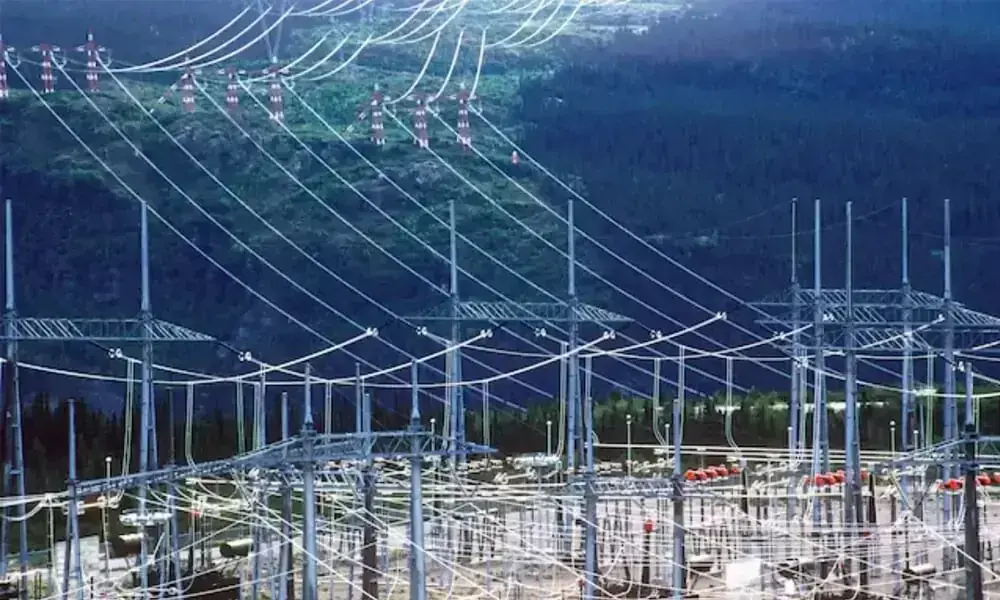
EDITORIAL: Finally, the government has planned to end the slab-based electricity subsidy in the power sector. This space has argued for years that these distortions in the power sector need to be removed. Now, the government is finally moving in that direction, perhaps under IMF pressure. The decision is right, but it has come a little too late.
Historically, over the past few decades, power sector subsidies have been grossly abused. The cross-subsidy mechanism places the burden on consumers in higher slabs, including domestic consumers, the commercial segment, and the industrial sector.
The burden was not as significant for those subsidizing others when the government was not fully passing on costs to consumers (prior to 2018). Instead, these costs accumulated as circular debt. Eventually, the axe fell on power consumers in the form of interest payments or on taxpayers at large, as the fiscal side had to cover the shortfall.
Thereafter, slowly but surely, due to IMF conditions, the government started passing on costs to consumers. This resulted in exorbitantly high electricity costs for industrial players and others bearing the cross-subsidy burden. These higher costs are partly due to lopsided IPP (Independent Power Producers) contracts, which, across successive power policies, have largely favoured generators. Moreover, the inefficiencies of transmission and distribution companies, including theft and losses, are eventually loaded onto consumer tariffs.
Already, power generation and supply costs are much higher in Pakistan compared to other countries in the region. On top of that, paying consumers are cross subsidizing a large pool of customers consuming less than 200 units per month. As mentioned above, relatively affluent households have also exploited this policy by installing multiple meters in their homes.
Higher electricity prices have pushed consumers away from the grid, wherever possible, through rooftop solar installations. Similarly, industrial players with available space have started installing solar panels to reduce their daytime dependence on the grid. In parts of Sindh, wind power generation is also becoming increasingly common. Meanwhile, farmers have almost completely shifted to tubewells to solar energy from diesel-powered generation. And, among all these developments, net-metered consumption accounts for only a small fraction.
This has reduced dependence on the grid and resulted in higher costs for those who still rely on it. The entire system is becoming unsustainable and needs a reset. That is why the Power Minister has informed the upper house of plans to replace the existing electricity tariff system.
It is the right move, but it should have been made much earlier. Nevertheless, the government now plans to channel subsidies for marginalized households through BISP (Benazir Income Support Programme). This may help ensure that only deserving consumers receive subsidies, while those misusing the system are excluded. However, many deserving consumers are not part of BISP, particularly when almost half of the country’s population lives below the poverty threshold of USD 4 per person per day.
These consumers may end up bearing the brunt of the change. The government must also reduce the cost of power, as limited fiscal space means it will have to rely on a full-cost recovery model. The privatization of distribution companies should be expedited, contracts for newer IPP projects should be revisited where feasible, and efforts should be made to extend debt maturities to ease the financial burden.
The core objective should be to provide affordable energy for everyone without indirectly shifting the burden onto taxpayers.
Copyright Business Recorder, 2026






















Comments