


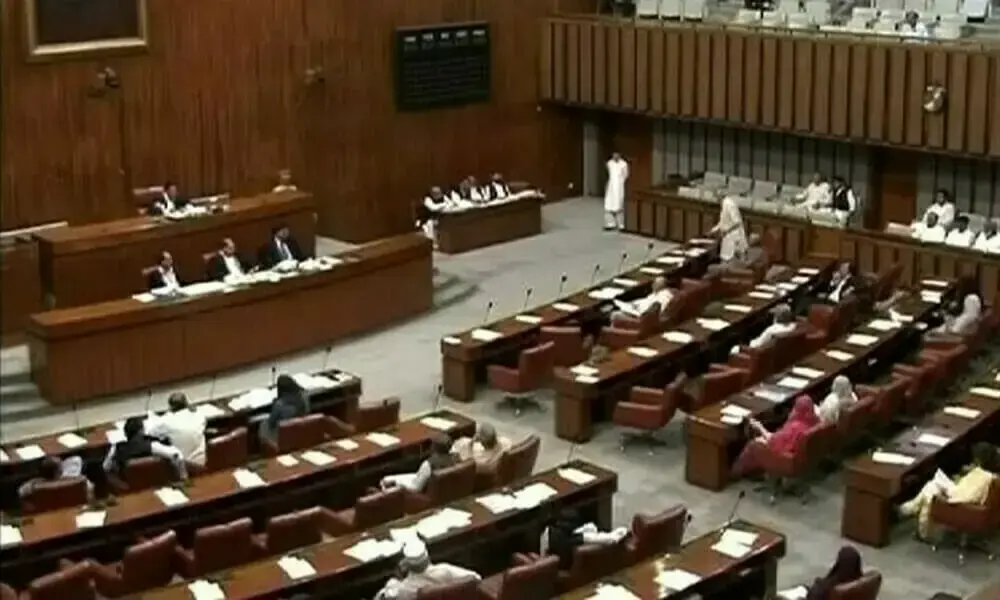
ISLAMABAD: The Special Investment Facilitation Council (SIFC) on Thursday informed the Senate’s Cabinet Secretariat Committee that around 38 projects had been finalised in sectors including mining, industry, railways, roads, maritime affairs, power, information technology, pharmaceuticals, health, tourism and food security, which are expected to attract around USD 40 billion in investment.
The Senate Standing Committee on Cabinet Secretariat met here on Thursday under the chairmanship of Senator Rana Mehmoodul Hassan.
The Senate body was informed that the Brownfield Refinery Policy had been approved, with five refineries signing implementation agreements involving proposed investments of approximately USD 6 billion.
The SIFC officials also highlighted engagements with Chinese companies and investors from Qatar and Kuwait, alongside efforts to facilitate foreign investment through streamlined regulatory procedures, improved visa facilitation and single-window operations.
READ ALSO: SIFC informs NA: FY26 foreign profit repatriation 41pc higher than FDI
The Chairman observed that obtaining No Objection Certificates (NOCs) had previously been a major obstacle for investors, but that improvements had been witnessed following SIFC’s intervention. He stressed the need to further simplify procedures and reduce the regulatory burden on investors.
Senator Saadia Abbasi emphasised that the responsibility for bureaucratic inefficiency ultimately rested with the leadership and sought details of concrete incentives being offered to attract foreign investment.
Senator Abdul Qadir highlighted the high cost of doing business in Pakistan compared with regional economies, particularly in terms of energy and financing costs. He also raised concerns regarding multiple regulatory requirements, tax notices, profit repatriation and competition from smuggled goods.
He stressed the need for a coordinated and structured relief mechanism, jointly developed by the Government and the State Bank of Pakistan, to improve investor confidence and protect existing and prospective investments.
The Committee underscored the importance of continued efforts by SIFC to facilitate investors and improve Pakistan’s regional competitiveness.
The Committee was apprised of disruptions to trade and business due to the prevailing regional situation, including developments relating to the US–Iran conflict, made it difficult to provide reliable statistical projections and final investment figures at this stage.
Senior officials of the National Electric Power Regulatory Authority (NEPRA) briefed the Committee in the absence of the Chairman NEPRA, who could not attend due to illness. The briefing covered the operational performance of IPPs, capacity factors, tariff structures, capacity payments and the regulatory framework governing power generation tariffs.
The Committee was informed about power plants had operated below a 50 percent capacity factor, primarily in the context of variations in grid demand, while no plant had recorded zero electricity generation. NEPRA officials also briefed the Committee on the statutory framework under Section 31 of the NEPRA Act, including cost recovery, return on capital and quarterly tariff indexation for the National Power Parks Management Company (Balloki) project.
The Committee was further informed that third-party heat rate tests for residual fuel oil (RFO)-based power plants had been awarded to NESPAK through an international bidding process.
Members emphasised the importance of independent verification of the test results to ensure transparency and accuracy in assessing plant performance.
Copyright Business Recorder, 2026


















Comments