


Transforming food supply chains
Pakistan's food economy needs modernized supply chains to meet evolving demands and global standards. This requires coordinated efforts, private investment, and digital integration to enhance competitiveness and resilience.
- Coordinated and commercially integrated supply chains.
- Developing cold chain infrastructure and agribusiness.
- Access to finance and leveraging data for efficiency.
- Building reliable supply chains for export markets.
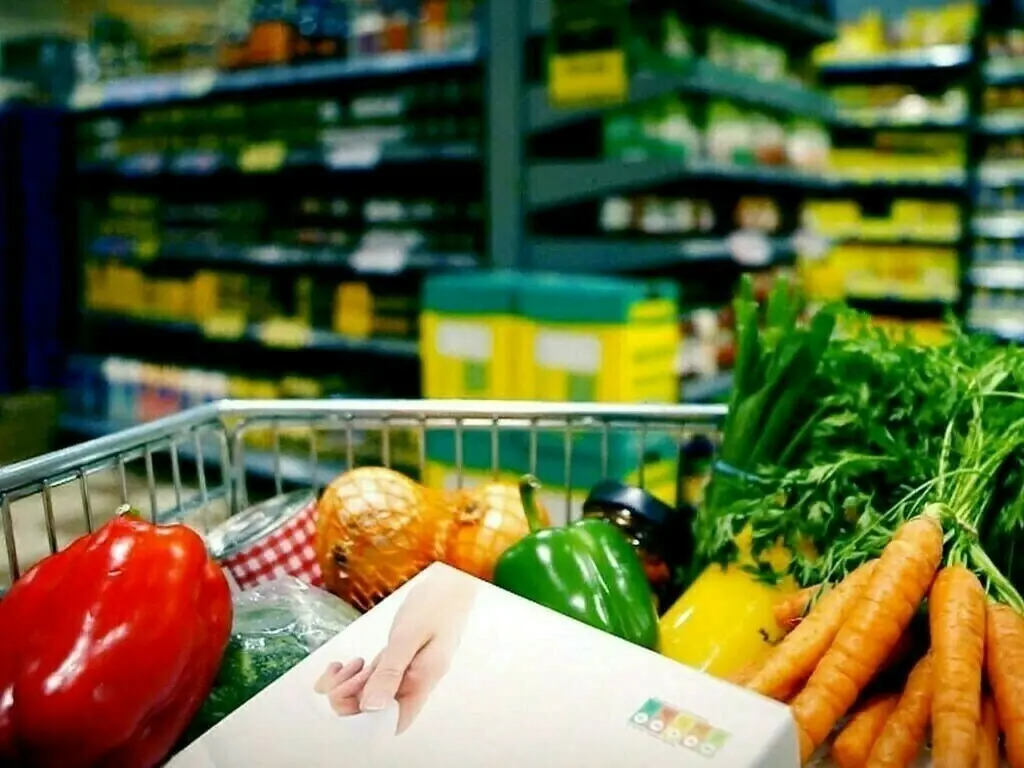

Pakistan’s food economy is changing, but its supply chains are struggling to keep pace. Consumers are demanding greater convenience, consistency, safety and quality. Food businesses are looking for reliable supplies and predictable prices. Export markets are imposing stricter standards. At the same time, producers are facing rising input costs, climate-related uncertainty and increasingly complex markets.
Against this backdrop, modernizing food supply chains is no longer simply a matter of improving logistics. It is becoming a question of business competitiveness.
A food supply chain connects far more than farms and consumers. It links input suppliers, producers, aggregators, transporters, warehouses, processors, distributors, retailers and financial institutions. When these actors operate independently, information gaps and transaction costs can accumulate at every stage.
The consequence is a market in which agricultural commodities may change hands several times before reaching their final destination, while information about quality, demand and prices moves much less efficiently.
This creates an important opportunity for reform.
The first priority should be to make supply chains more coordinated and commercially integrated. Farmers need clearer signals about what markets want, businesses need greater predictability in procurement, and consumers need consistent quality. Better coordination can reduce uncertainty for everyone involved.
Aggregation may play an important role.
Pakistan’s fragmented farm structure makes it difficult for individual producers to supply large buyers consistently. Producer groups, collection centers and professional aggregators can consolidate output, standardize quality and reduce the costs associated with dealing with thousands of small suppliers.
This is particularly important for supermarkets, processors and exporters that require regular volumes and uniform specifications.
The next opportunity lies in moving from commodity trading towards supply-chain-based agribusiness.
Instead of purchasing agricultural products only when they are available, businesses can develop structured procurement arrangements with producers. Such arrangements can include agreed quality specifications, production guidance, collection schedules and payment mechanisms.
This can create a more predictable relationship between production and demand.
For processors, such integration can improve capacity utilization and reduce procurement uncertainty. For farmers, it can provide clearer market opportunities. For retailers, it can improve consistency. The wider economy benefits when transactions become more organized and transparent.
Cold-chain development is another major commercial opportunity.
Perishable foods cannot be treated like durable commodities. Fruits, vegetables, dairy, meat and other temperature-sensitive products require specialized handling from the point of production to the point of sale.
Investment in pre-cooling, refrigerated transport, temperature-controlled warehouses and modern distribution centers can therefore become an important part of Pakistan’s food-business infrastructure.
But cold chains should not be viewed simply as storage facilities. They are part of a broader logistics ecosystem involving packaging, inventory management, transportation and market scheduling.
This is where private-sector investment becomes particularly important.
Public investment can provide basic infrastructure, standards and an enabling regulatory environment, but the scale of modernization required across Pakistan cannot be achieved through public spending alone. Banks, logistics companies, food processors, retailers, technology firms and investors all have a role to play.
The policy challenge is to make such investment commercially viable.
Access to finance will be central to this process. Modern warehouses, processing units, refrigerated vehicles, sorting facilities and digital systems require capital. Small and medium-sized enterprises (SMEs) often struggle to secure financing for these investments because conventional lending does not always recognize the dynamics of agricultural businesses.
Supply-chain finance may provide part of the answer.
Financing linked to purchase orders, warehouse inventories, confirmed buyers or established supply relationships can help businesses overcome working-capital constraints. Digital payment systems can further improve transaction speed and transparency.
Data will become equally important.
Modern food businesses cannot rely solely on historical market practices. Demand forecasting, inventory data, price information and consumer purchasing patterns can help businesses decide what to procure, where to store it and when to move it.
Digital traceability can also become commercially valuable, particularly for premium domestic markets and exports.
For exporters, this issue is becoming increasingly significant.
International buyers are not simply purchasing agricultural commodities; they are purchasing reliability. They want products that meet specified standards, arrive on time, can be traced and remain consistent from one shipment to another.
Pakistan’s export ambitions therefore depend partly on the ability to build supply chains that can deliver such reliability.
Value addition should be considered within the same framework.
Instead of moving agricultural commodities through markets in largely unchanged form, businesses can create additional value through processing, packaging, branding and product differentiation.
This can open new domestic and export markets while reducing dependence on the sale of raw commodities.
However, modernization should not mean replacing traditional market actors indiscriminately.
Traders, commission agents, transporters and other intermediaries perform important functions, particularly where formal infrastructure is limited. The objective should be to make these relationships more efficient, transparent and productive rather than simply eliminating them.
The future supply chain is therefore likely to be a combination of physical networks and digital coordination.
Technology can connect buyers and sellers, while logistics infrastructure moves products. Financial systems facilitate transactions, while standards provide confidence. Data can improve decisions, while contracts and stronger institutions can reduce uncertainty.
Climate risks add another dimension to this equation.
For businesses, climate change is increasingly a supply-chain risk. Floods can interrupt transportation, heat can affect storage and product quality, while water shortages can alter production patterns. Companies that diversify sourcing, invest in risk management and improve their logistics flexibility will be better positioned to manage such disruptions.
This makes resilience a business issue, not merely an environmental one.
Pakistan now needs a coordinated national approach to food supply-chain modernisation. Such an approach should encourage investment in logistics and storage, strengthen quality infrastructure, facilitate supply-chain finance, support digital adoption and improve coordination between producers and markets.
Regulation should also encourage competition and innovation rather than creating unnecessary transaction costs.
Most importantly, supply-chain reform should be measured by economic outcomes: lower losses, reduced transaction costs, improved quality, stronger market access, higher productivity and greater value creation.
Pakistan already possesses a substantial agricultural base. The next stage is to build the commercial infrastructure around it.
The opportunity is not simply to move food from farms to markets more quickly. It is to build supply chains that are smarter, more coordinated, investment-friendly and competitive. The future of Pakistan’s food economy will depend not only on what farmers produce, but on how effectively businesses and institutions organize everything that happens afterwards.
Copyright Business Recorder, 2026
The writer is affiliated with the School of Management, Jiangsu University, Zhenjiang, Jiangsu, P.R. China, and the Department of Agribusiness and Entrepreneurship Development, MNS-University of Agriculture, Multan, Pakistan
The writer is affiliated with the Department of Food Science and Technology, Bahauddin Zakariya University (BZU), Multan, Pakistan



















Comments