


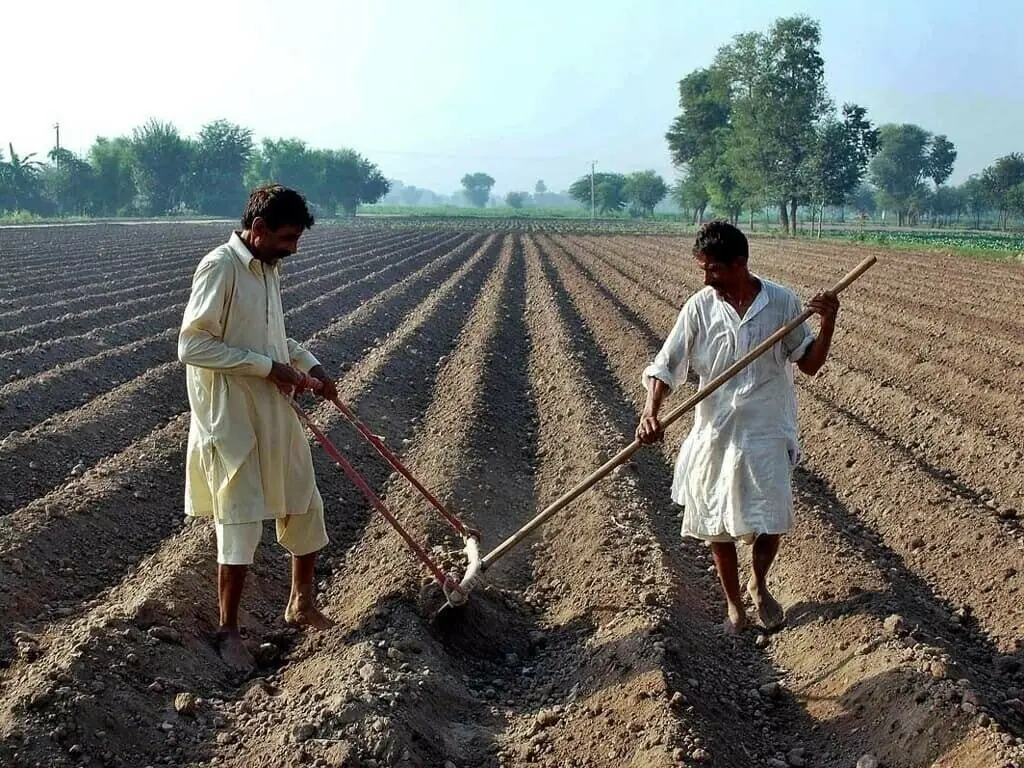
LAHORE: President Pakistan Kissan Ittehad Khalid Mahmood Khokhar has called for an immediate announcement of the government’s wheat policy and fixing the wheat support price at Rs5,000 per 40kg, warning that rising input costs, climate risks and weak agricultural policies are threatening Pakistan’s food security.
Addressing a press conference on the impact of international conflicts on farm production costs, sugar exports and weather-related risks to agriculture, Khokhar said food security was the foremost issue of national security and was currently exposed to serious risks.
He urged the government to announce the wheat policy without further delay, saying wheat cultivation in rain-fed areas would begin from October 15 and farmers needed clarity before making planting decisions.
He said the government had a responsibility to store wheat for food security, whereas it was wrong to expect farmers to hold stocks without ensuring them a reasonable return. Khokhar said he had repeatedly requested the government to announce a clear wheat policy, adding that farmers were facing uncertainty over prices, input costs and future market conditions.
Talking about cotton, he said he had a deep attachment to agriculture and described cotton as his favourite crop, noting that International Cotton Day would be observed the following day.
He said the cotton sector generated employment on a large scale and was closely linked with the textile industry. Pakistan’s cotton production, which had once reached around 11 million bales, had fallen sharply, while India had increased its production substantially, he claimed. According to Khokhar, Pakistan had now fallen to around six million bales because of flawed policies, warning that the country’s cotton crop was gradually disappearing.
He criticised the condition of the Central Cotton Research Institute in Multan, saying the facility had been neglected and was lying in a poor state despite the importance of cotton to the national economy.
He said climate change and rising temperatures would have a significant impact on agriculture and warned that Pakistan could not afford to ignore the increasing weather-related risks to crop production.
Khokhar said Pakistan was using only around 21 percent certified seed, which was insufficient to achieve higher agricultural productivity. He also pointed to the imbalanced use of fertilisers as another major constraint affecting crop yields. He said countries such as Brazil had made substantial progress by investing in agricultural research, whereas Pakistan had failed to provide agriculture with the level of policy attention and investment it required. Khokhar said the country’s dependence on foreign support was also linked to the failure to develop its agricultural sector on a sustainable basis.
He expressed concern that children of farming families were increasingly reluctant to enter agriculture, calling it a matter of serious concern for the future of the sector. He said the government needed to formulate policies that recognised the farmer as a key stakeholder in the economy and provided a viable return on agricultural production.
Khokhar also criticised the government’s approach towards farmers, saying policymakers often treated farmers as neither proper stakeholders nor equal citizens in economic policymaking.
He said Pakistan had fallen into a difficult situation and needed to come out of it through policies rooted in national interest and commitment to the country. He also called for measures to protect the textile and agriculture sectors, warning that continued pressure on productive sectors would further constrain the national economy.
Copyright Business Recorder, 2026





















Comments