


Auto manufacturers urge govt to suspend EDB’s used vehicle import 'relaxation'
PAMA urges Pakistan's government to suspend a revised framework for used vehicle imports, warning it disproportionately disadvantages domestic manufacturers and could lead to over Rs50 billion in losses.
- PAMA's concerns about the revised import framework.
- Specific changes in the EDB's new notification.
- Potential financial losses for the domestic auto industry.
- Rising commercial import volumes of used vehicles.
- Disadvantages faced by local manufacturers.
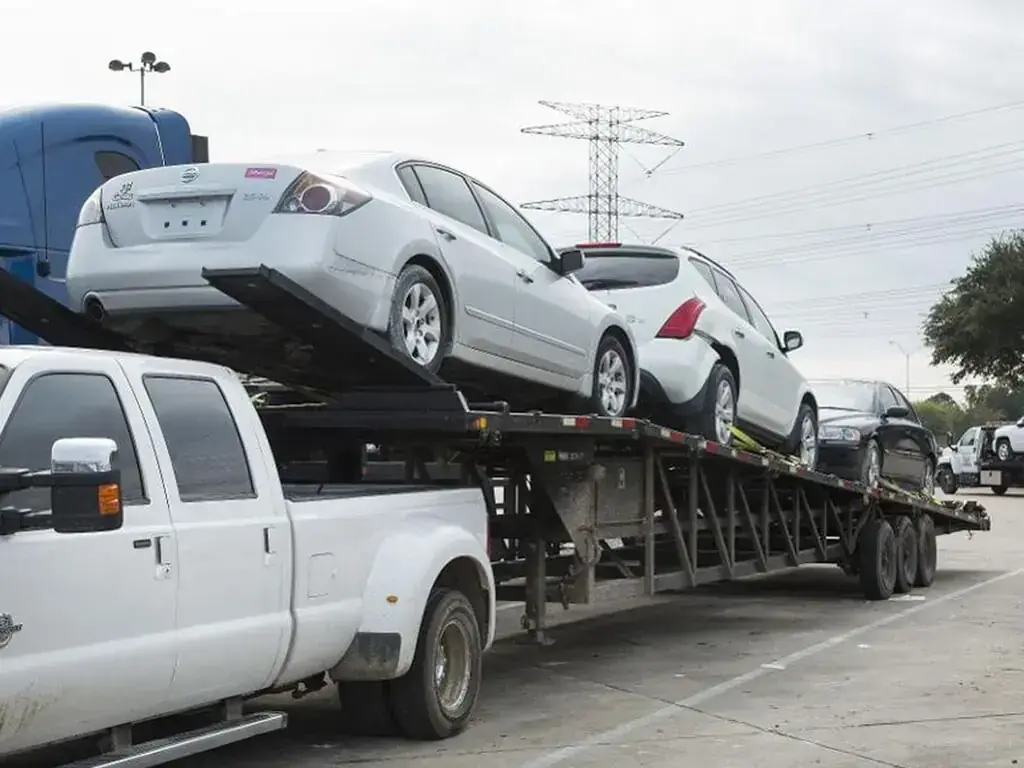

The Pakistan Automotive Manufacturers Association (PAMA) on Tuesday urged the government to suspend implementation of the Engineering Development Board’s (EDB) revised framework for commercial imports of used vehicles, warning it could put domestic manufacturers at a disproportionate disadvantage.
In a letter to Adviser to the Prime Minister for Industries and Production Haroon Akhtar Khan, PAMA Director General Razi ur Rahman called for a review of the September 30 notification and meaningful consultation with the automotive industry and other stakeholders.
He said the removal of key safeguards could accelerate used vehicle imports, potentially causing losses of more than Rs50 billion to the domestic auto industry and its vendor network.
Khan maintained that a balanced regulatory framework was essential—one that protects consumer interests and promotes competition, while ensuring that domestic manufacturers and their substantial investments were not placed at an unintended and disproportionate disadvantage.
“On behalf of the Pakistan Automotive Manufacturers Association, we wish to convey our serious concern regarding the EDB Notification dated 30 September 2026, which supersedes the Notification of 30 September 2025 and introduces significant relaxations in the regulatory framework governing the commercial import of used vehicles,” the letter read.
As per the letter, the revised framework represented a dilution of the safeguards introduced under the earlier notification. In particular, it:
1-Restricts the scope of regulation to used vehicles, whereas the 2025 notification covered both new and used CBUs (Completely Built Up);
2-Removes the minimum capital requirement for importing companies and the requirement for adequate after-sales service, without establishing an effective product recall mechanism;
3-Transfers pre- and post-shipment inspection responsibilities from EDB to the Pakistan Standards and Quality Control Authority (PSQCA); and
4-Further facilitates commercial imports under SRO 2443(I)/2025, allowing PSQCA-registered companies to undertake inspection of imported used vehicles.
These changes were already having a visible impact on import volumes, the PAMA said.
According to Ministry of Commerce data, commercial imports of used vehicles increased from 48 units in May 2026 to 843 in June, 1,938 in July, 1,445 in August, and 2,276 in September 2026.
The removal of key regulatory safeguards was likely to accelerate this trend further, Khan lamented.
The PAMA official was concerned that the liberalisation was taking place at a time when the domestic automotive industry was already operating in an environment of considerable uncertainty, including the forthcoming Auto Policy and National Tariff Policy (NTP) 2025–30 as well as proposals for significant tariff reductions intended to enhance competition and market efficiency.
“At the same time, commercially imported used vehicles continue to enjoy substantial built-in cost advantages, including depreciation benefits of up to 36%. This creates a serious asymmetry: local manufacturers are required to invest in plant, localisation, technology, employment, quality systems, taxation and regulatory compliance, while commercially imported used vehicles can enter the market without comparable obligations.
“This is not merely a matter of competitive pressure. If left unchecked, the resulting displacement of locally manufactured vehicles could have significant consequences for investment, localisation, employment, government revenues, and the sustainability of Pakistan’s automotive manufacturing and vendor base,” he said.
PAMA estimates that a return to FY2025–26 import volumes could result in losses exceeding Rs50 billion for the domestic automotive industry and its extensive vendor network.



















Comments