


PSO in FY26–held back by a weaker last quarter
Pakistan State Oil (PSO) reported a mixed FY26, with operational resilience overshadowed by a 28% profit decline due to lower fuel volumes, reduced LNG activity, and Q4 inventory losses.
- Declining fuel volumes and market share erosion.
- Significant fourth-quarter inventory losses and weak LNG activity.
- Outlook for FY27 and strategies for recovery.
Pakistan State Oil Company Limited’s (PSX: PSO) FY26 performance was mixed. The company remained operationally resilient through a volatile year, but weaker fuel volumes, lower LNG activity and heavy inventory losses in the final quarter pulled down earnings.
Net sales declined 3 percent to Rs3.05 trillion, reflecting lower MS and HSD volumes and reduced contribution from LNG. PSO’s MS and HSD volumes fell by around 5 percent and 6 percent, respectively, year-on-year, while its market share slipped to around 42-43 percent as smaller OMCs gained ground.
Despite lower sales, gross profit rose 3 percent, lifting gross margin to 3.28 percent in FY26 from 3.07 percent in FY25. However, the improvement did not carry through to the bottomline, with net margin narrowing to 0.49 percent from 0.66 percent as profit after tax fell 28 percent year-on-year. Finance costs also fell 24 percent, helped by lower interest rates and some improvement in liquidity. Trade receivables declined by the end of FY26, providing some relief to PSO’s long-standing working-capital pressures.
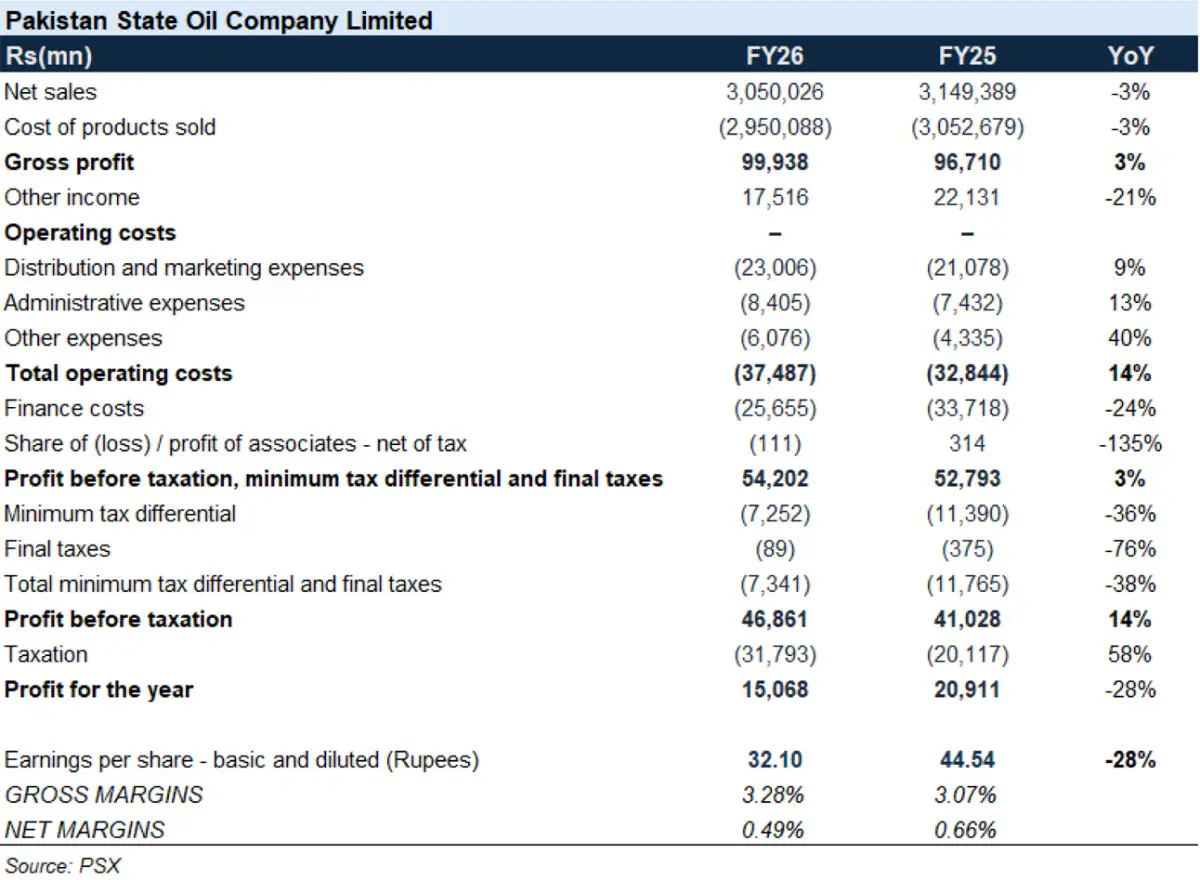
The major hit came in the fourth quarter. PSO booked a gross loss as falling fuel prices triggered sizeable inventory losses. The quarter ended with a net loss of around Rs23 billion, compared with a profit of Rs5.6 billion a year earlier. LNG activity also weakened sharply, with only six cargoes handled in 4QFY26 versus 28 in the same period last year.
As a result, full-year profit after tax fell 28 percent year-on-year. The fall in earnings looks sharper because pre-tax profit was actually slightly higher year-on-year; a heavier tax burden weighed on the bottomline, turning the modest earning growth into a decline for the year.
Operationally, PSO held up better. The companymaintained fuel supplies through a difficult geopolitical period and continued to expand its retail and non-fuel businesses. However, the bigger concern is the loss of market share in its core fuel business, as PSO’s volumes fell.
Overall, FY26 was a year of operational resilience for PSO. Lower finance costs and better receivables were positives, but softer volumes, market-share erosion, weaker LNG activity, and fourth-quarter inventory losses overshadowed those gains.
For PSO, FY27 should be better than FY26 if fuel volumes recover, inventory losses normalise and financing costs continue to ease. Lower interest rates and improving receivables could provide further relief to the bottomline, while any revision in OMC margins and progress on circular debt would strengthen cash flows. The biggest operational task would be regaining the market share.
For the OMC sector, the outlook is cautiously positive. Industry volumes were broadly flat in FY26, but a pickup in mobility, industrial activity and economic growth could support demand in FY27. Lower financing costs should remain supportive, while higher regulated margins would improve earnings quality.





















Comments