


A level playing field
The Lahore High Court's PIA privatization judgment establishes a clearer, more predictable legal framework for selling Pakistani state assets, reducing investor uncertainty and fostering better bids.
- Constitutional basis for state asset divestment.
- Court's upholding of commercial confidentiality.
- Higher bar for challenging privatization deals.

What the Lahore High Court’s judgment on the privatisation of PIA settled, and why it matters to anyone pricing a Pakistani state asset?
The privatization of Pakistan International Airlines reached financial close in June 2026. The commercial terms, purchase price, and deal terms will be debated for years. The more durable development is legal, and anyone contemplating a bid for a Pakistani state asset should understand it: the constitutional and statutory basis for such a transaction is now firmer and more predictable than it has been at any point in two decades.
What used to sit on the risk register?
Consider how legal counsel advising a foreign bidder would have written a legal due diligence note on a Pakistani privatization five years ago. The threshold question of whether the Federation may sell at all would have been answered confidently but with little to cite.
The next question—what a court would review and against what standard—would have produced a genuinely uncertain answer.
The third question, whether commercially sensitive material submitted during the process could be compelled into the public domain, would have been answered with a cautionary note on the Supreme Court of Pakistan’s suo motu powers under Article 184(3) of the Constitution as it then stood.
Finally, the fourth question, regarding what it takes for a stranger to the transaction to halt it, would have been answered: not much. A writ petition filed in the High Court by disgruntled employees looking to halt the change in ownership, combined with an interventionist and sympathetic court, could easily stall the process at a critical stage through an injunctive order. These constitute four uncertainties, each of which a bidder prices.
Together they are the difference between a serious international field and a thin domestic one. A thin field produces low bids, which are then produced in evidence as proof that the asset was given away at a throwaway price. The circularity has cost this country a great deal.
What the Rawalpindi Bench settled
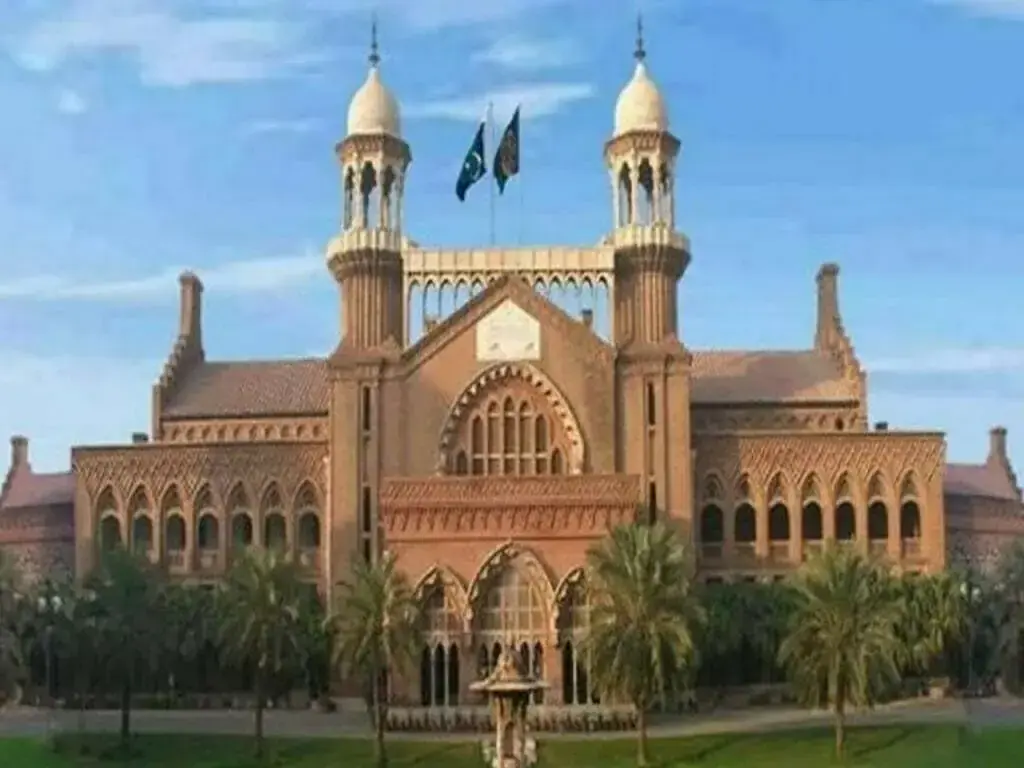
The judgment of the Lahore High Court, Rawalpindi Bench, of June 2025 (Sardar Amber Maqsood vs Federation of Pakistan & others reported as PLD 2025 Lahore 827) addresses all four, and it is worth setting out what it establishes rather than how it disposed of the petition before it.
On competence, the Court located the power to divest in Article 173 of the Constitution, which extends the executive authority of the Federation to the grant, sale or disposition of any property vested in it.
Following the conversion of PIA into a public limited company in 2016, with roughly ninety-six per cent of shares federally held, what is sold in such a transaction is property vested in the Federation.
The Privatisation Commission Ordinance is the channel through which that competence is exercised, not its source. For a bidder, this converts the threshold question from an arguable one into a settled one.
On process, the Court held that Sections 23 and 24 of the Ordinance impose real and mandatory obligations such as consultation, publication in national daily newspapers at prescribed intervals with international placement where foreign investment is anticipated, valuation in the prescribed manner, and then examined the record to see whether they had been met. That is the useful part.
The standard is compliance demonstrable on the file, not only judicial approval of the commercial bargain. A transaction that is properly documented is defensible; a bidder can assess that in advance.
On confidentiality, the Court declined to order production of valuation and asset records sought under the right to information, holding that the Confidentiality and Secrecy of Documents Regulations, 2003 classify such material as confidential and permit disclosure only through defined exceptions. This is the passage with the most immediate commercial significance.
Competitive bidding depends on the integrity of the data room. A rule that submitted material becomes public on the application of any citizen would not make privatisation more transparent; it would make it un-biddable.
And on standing, the Court held that public interest litigation, however liberally entertained, must rest on credible material and that bald assertion unsupported by documents cannot invoke the jurisdiction of Article 199. This does not narrow access to the courts. It means that the cost of stopping a transaction is no longer close to zero, which is a different proposition and a necessary one if a bidding timetable is to mean anything.
An unresolved question has now been answered
Article 173 has a longer history in this area than is usually noticed. When the Supreme Court considered the Pakistan Steel Mills transaction in 2006, counsel for the Federal Government argued that the Article directly confers authority on the Federation and the Provinces to dispose of their property, and the Attorney General suggested that its interpretation, alongside Articles 153 and 154, be left to a case in which the controversy was live.
The Court went on to deal at length with the role of the Council of Common Interests under Articles 153 and 154, but it did not reach Article 173. Although the contention was made, the case was decided on other grounds, leaving the provision unexamined.
It has remained so. Nineteen years later, the Rawalpindi Bench begins where that argument left off, treating Article 173 as the source of the competence to divest and the Ordinance as the machinery through which it is exercised. For a provision that underwrites an entire national programme, that is a long time to wait for a court to say so — and it is why this judgment is likely to be cited long after the PIA transaction has stopped being news.
Why predictability is the asset
Investment in state assets is not deterred by scrutiny. It is deterred by scrutiny whose scope and outcome cannot be forecast. Legal risk that can be quantified is priced into a bid; legal risk that cannot be quantified is either priced at a heavy discount or avoided, and the discount then becomes evidence, in the next round of argument, that the asset was undervalued.
Delay does most of the damage, and it does it without anyone having to decide anything. A petition, an interim order, an adjournment, and the bidders are gone. The petitioner bears none of that cost. The lenders bear it, the bidders bear it, and the exchequer bears it in the form of continuing losses at the enterprise being sold, which is a cost that never appears on a cause list because it has no claimant.
The Rawalpindi Bench addressed this with unusual candour for a judgment of first instance, observing that judicial intervention in commercial matters has contributed to regulatory unpredictability and to the difficulty of attracting foreign investment.
The Steel Mills experience is instructive here, though not for the reason usually given. That transaction was set aside in 2006 on grounds relating to the process by which it had been concluded, and the executive was left free to begin again. It never did.
The mega industrial unit was then a going concern operating near ninety per cent of capacity; production ceased in 2015 and has not resumed. Whatever view one takes of the litigation, the sequence shows how much can turn on a transaction that stops and is not restarted.
What this does not do
None of this insulates a transaction. The certainty the judgment offers runs exactly as far as the record supports it, which is why it is worth having. A single petitioner can still bring a process to a halt, and consistency across the high courts is not yet assured.
But the four questions a bidder actually asks now have answers, and they are answers that can be relied upon in a memorandum to an investment committee. That is what a level field looks like, and it is a considerable part of why the PIA transaction reached closing when so many before it did not.
Copyright Business Recorder, 2026
The writer is a barrister practicing constitutional, commercial and corporate law and appeared for the Privatisation Commission in the case discussed



















Comments