


Govt cuts HEV sales tax from 25% to 18%
- GST was used to be around 8-12% before budget, says Ali Khizar
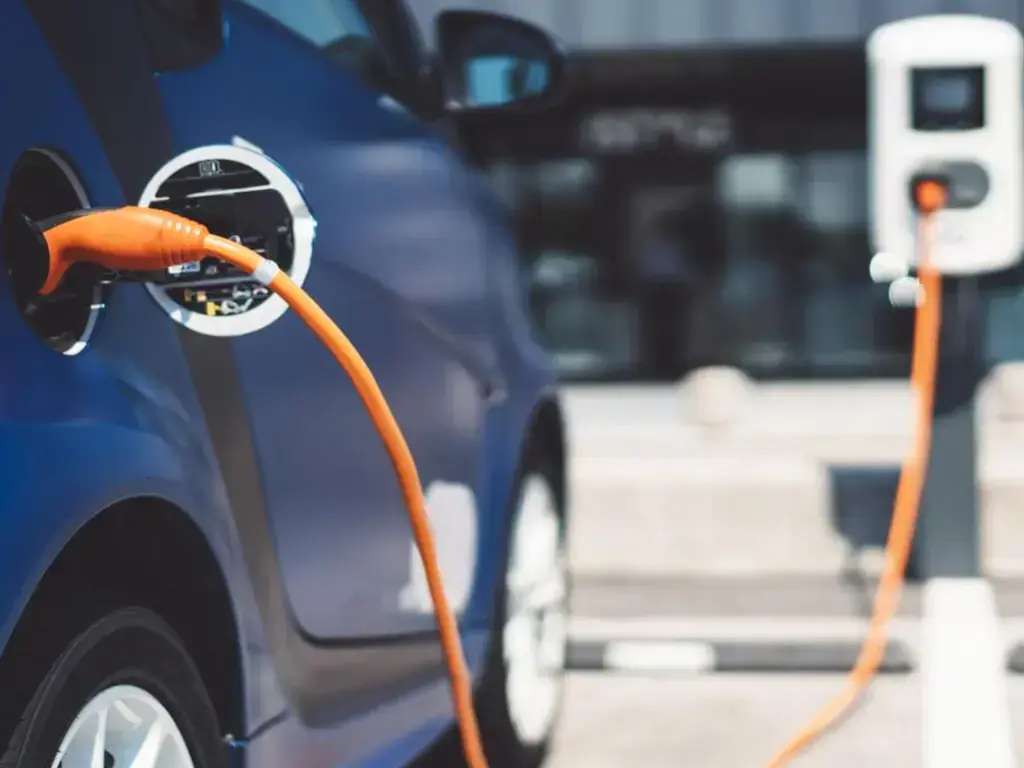
The government has lowered the sales tax on locally manufactured hybrid electric vehicles (HEVs) with engine capacity up to 2000cc from 25% to 18%.
The Finance Division has issued S.R.O. 1525(1)/2026 dated September 13, 2026, amending the sales-tax notification S.R.O. 297(1)/2023.
“In exercise of the powers conferred by clause (b) of sub-section (2) of section 3 of the Sales Tax Act, 1990, read with the first proviso to clause (a) of the said sub-section (2), the Federal Government is pleased to direct that the following amendments shall be made in its Notification No. S.R.O. 297(1)/2023, dated the 8th day of March, 2023, as amended vide Notification No. S.R.O. 370(1)/2024, dated 8th day of March, 2024, namely: -
“In the aforesaid notification, after Table-II, the following proviso shall be added, namely: -
“Provided that the provisions of Table-II shall not apply to locally manufactured hybrid electric vehicles with engine capacity upto 2000cc,” read the notification.
The notification came into force with immediate effect.

Ali Khizar, Director of Research at Business Recorder, confirmed the development in a post on social media platform. “It used to be 8-12% before the budget and later 25%. Now it settles at 18%,” Khizar wrote on X.
In Pakistan, the General Sales Tax (GST) rates for electric vehicles (EVs) and hybrid electric vehicles (HEVs) have seen several changes and proposals over time.
Initially, the approved EV policy set the GST on the sale of two- and three-wheeler electric vehicles at 1% for five years. Prior to June 13, 2025, HEVs benefited from a preferential GST rate of 8.5%, while fully electric vehicles (EVs) faced an 18% GST burden. Plug-in hybrid electric vehicles (PHEVs) also had a preferential GST regime ranging from 8.5% to 12.5%.
By September 11, 2024, an official from the Engineering Development Board (EDB) warned that raising GST on EVs from 1% to 18% could hinder promotion efforts, following a Federal Board of Revenue (FBR) notice to an electric scooter manufacturer that was paying 1% GST instead of the standard 18%.
In the period leading up to the Budget 2025-26, there were reports suggesting a potential increase in GST on HEVs from 8.5% to 18%. MG Motors Pakistan advocated for reducing EV GST to 8.5% to match HEV rates.
By June 10, 2026, it was reported that the government was considering imposing up to 25% sales tax on imported EVs in the upcoming budget. The 1% sales tax rate for locally manufactured/assembled 4-wheel EVs (small cars/SUVs with battery capacities up to 50 kWh, and light commercial vehicles with up to 150 kWh) was set to expire on June 30, 2026. Similarly, the lower sales tax rate of 8.5% to 12.75% for locally manufactured HEVs was also slated to expire on the same date.
However, by July 10, 2026, following the expiry of the previous auto policy, sales tax and duty concessions for EVs and Range Extended Electric Vehicles (REEVs) were extended for another year, making their default GST position 1%. Conversely, the lower GST policy for HEVs and PHEVs had ended, leading to their GST increasing to 25% in certain segments, aligning with comparable internal combustion engine (ICE) vehicles.
As of September 8, 2026, the government was noted to be providing exceptionally favourable tax and duty treatment to New Energy Vehicles (NEVs), including a flat 1% sales tax regime.
A proposed Automotive and Auto Parts Manufacturing Policy for 2026-31, put forth by an inter-ministerial committee on September 9, 2026, suggested equal treatment for Battery Electric Vehicles (BEVs), REEVs, and PHEVs under the New Energy Vehicles Policy, with a 1% sales tax on NEVs, parts, and raw materials. For hybrids (HEVs), the proposal was to treat them on par with conventional vehicles for sales tax purposes.
Finally, on September 12, 2026, the FBR formally extended the sales tax exemption on the import of CKD kits for specified electric vehicles and the 1% reduced sales tax regime for specified EVs until June 30, 2027.


















Comments