


GSP+ at risk
Pakistan's preferential EU trade access (GSP+) is at risk due to human rights concerns and implementation gaps. Continued status depends on measurable progress and meaningful reforms.
- EU warnings on Pakistan's GSP+ trade status.
- Economic impact of losing preferential EU access.
- Human rights concerns jeopardizing GSP+ continuation.
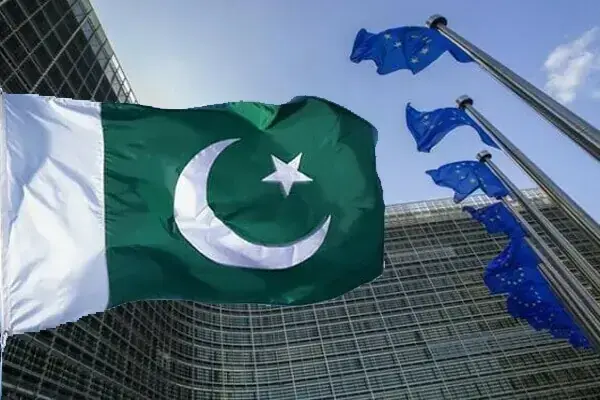
EDITORIAL: Pakistan’s trade relationship with the European Union is facing an important test, and the message from European officials could hardly be clearer: preferential access to the bloc’s market under the GSP+ scheme cannot be taken for granted.
EU’s Ambassador to Pakistan Raimundas Karoblis recently described the country as being at a “very critical” juncture, warning that continued GSP+ preference will depend on credible, measurable progress in meeting the scheme’s commitments.
Meanwhile, the Dutch ambassador has issued a similar warning, saying that continuation of Pakistan’s GSP+ status is “not necessarily a given”, stressing the need for concrete steps, particularly on human rights.
The warnings matter enormously for Pakistan’s export economy. The EU is the country’s largest export destination, accounting for 14.1 percent of its total trade. Bilateral goods trade reached €12.2 billion in 2025, while over 85 percent of Pakistan’s exports currently enter the EU duty- and quota-free under GSP+.
Furthermore, approximately 89 percent of Pakistani textile products that are imported by the EU benefit from preferential tariffs.
The potential cost of losing this access, then, cannot be overstated. As Ambassador Karoblis has warned, the country’s textile producers could face tariffs of roughly nine to 12 percent on products that currently enjoy zero-duty access. Such an increase would directly erode competitiveness in a sector already confronting intense pressure from rival suppliers.
This is precisely why Pakistan needs to take the European Commission’s latest assessment of its GSP+ commitments seriously, rather than remain preoccupied with contesting aspects of it.
The assessment acknowledges progress in some areas, but has also pointed to regression in others, including when it comes to enforced disappearances, minority rights, freedom of expression and media freedoms, and extrajudicial killings, while also raising concerns over judicial independence and accountability for human rights violations.
The key issue is the persistent gap between laws on paper and their effective implementation. This matters even more as the EU’s new GSP regulation, taking effect in January 2027, places greater emphasis on demonstrable implementation and measurable progress.
Moreover, under the new regulation, the EU will be assessing implementation of 32 international conventions, up from 27, with the framework adding areas like disability rights, children in armed conflict and labour inspection.
It is clear that concerns regarding human rights are likely to remain particularly consequential, and these should not be dismissed as Europe imposing alien standards on Pakistan. As Ambassador Karoblis has noted, the GSP+ requirements principally relate to international conventions that Pakistan itself has ratified. The issue, therefore, revolves around whether those commitments are being implemented in practice. There is some reason for cautious optimism.
The commerce ministry has begun mapping the EU’s recommendations and developing an institutional action plan covering the 32 conventions, with implementation and monitoring assigned across relevant ministries. That is the right approach. But an action plan will have little value unless it produces measurable outcomes and sustained institutional reform.
Pakistan must also recognise the shifting competitive landscape. With Bangladesh, Egypt and Tunisia competing for textile markets, and an EU-India trade agreement potentially strengthening India’s position, the country cannot afford to surrender an advantage while rivals gain ground.
The objective now should be to use the time available before the current GSP+ arrangement expires to address the concerns at the heart of the new framework.
Many of these are fundamental to improving governance, protecting rights and strengthening the institutions that serve Pakistan’s own citizens.
The country’s response to Europe’s warnings should therefore be meaningful reform, not resistance. For an economy so dependent on textile exports and external markets, protecting GSP+ is both an economic imperative, and in many respects could also be a means of improving the lives of ordinary citizens.
Copyright Business Recorder, 2026

















Comments