


The shock has stopped shocking
Brent crude surpassing $100 reflects a "new normal" where geopolitical instability, disrupted oil flows, and uncertainty are increasingly priced into energy markets, impacting global economies.
- Geopolitical premiums and the "new, new normal" for energy.
- Disrupted oil flows and uncertainty in the Strait of Hormuz.
- Tightening refined-product markets and rising diesel prices.
- Global economic growth amidst high energy and borrowing costs.

Perhaps the strangest thing about Brent crossing $100 again is how unsurprising it has begun to feel. Six months into the Iran war, traders are still trying to establish how much oil is actually moving through the Strait of Hormuz, tankers are disappearing from tracking systems, attacks are spreading towards alternative export routes, and a geopolitical premium appears increasingly embedded in energy prices. Yet the global economy continues expanding, investors remain remarkably willing to take risk and policymakers increasingly discuss disruption as though it were simply another variable to feed into their models.
Could this be what analysts are beginning to call the “new, new normal”?
There was a time when roughly 20 million barrels of oil passing through Hormuz every day was one of those facts markets barely needed to think about. That certainty has vanished. The US administration claimed more than 17 million barrels crossed under naval supervision on August 31. Kpler, an energy-data firm that tracks global oil flows using satellite imagery, vessel signals, port records, and shipping intelligence, put the figure at perhaps six million barrels. More recent industry data has put flows below two million barrels per day. Tankers increasingly travel “dark”, satellite visibility has been reduced, and competing American and Iranian restrictions have turned the world’s most important energy artery into something approaching a statistical guessing game.
How exactly does an oil market price supply when it cannot confidently measure it?
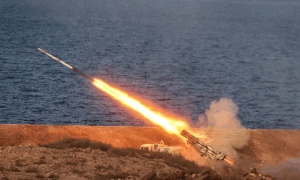
Apparently, by putting a price on uncertainty itself. Brent breached $100 on Wednesday for the first time since July, having risen roughly a quarter since early August as hopes for a durable settlement faded. Attacks by Iran-backed Houthis on Saudi energy facilities are now threatening the Red Sea route that helped compensate for severely curtailed Hormuz traffic. Banks have been lifting crude-price forecasts, while markets increasingly appear to be pricing a prolonged conflict rather than another temporary disruption.
And how much of this new normal owes to Donald Trump’s original blunder in allowing Benjamin Netanyahu’s Iran gamble to pull Washington into a war that was supposed to settle matters rather more cleanly? Six months later, the result is repeated military escalation, severely disrupted energy flows and a Strait of Hormuz whose normal functioning can no longer be taken for granted. Brent reached $126.41 at its April peak, fell back when hopes of settlement returned and has now climbed through $100 once more. Perhaps the more important development is no longer the occasional spike in crude, but the possibility that geopolitical insecurity is acquiring a semi-permanent price of its own.
That possibility becomes more troubling because crude is only part of the story. Refined-product markets are also tightening pretty sharply. Diesel supply has been squeezed by disruptions to Middle Eastern and Russian exports, while limited spare refining capacity makes replacement difficult. US diesel prices have reached record levels, gasoline is climbing, inventories are already depleted and refinery maintenance season is approaching. Hedge funds, which spent the early months of the war largely bearish, have swung aggressively bullish on gasoline and diesel even while remaining comparatively cautious on crude. So, could the next energy shock therefore arrive at the refinery rather than the wellhead?
The wider economic backdrop makes that question particularly awkward. Despite two wars, expensive energy and sharply higher borrowing costs, global growth is running surprisingly hot. JPMorgan’s global business surveys showed activity rising for a fifth consecutive month in August to its strongest level in more than two years, consistent with annualised global GDP growth of 3.1 percent against the bank’s estimate of 2.3 percent potential growth. AI investment, defence spending and corporate capital expenditure are keeping demand strong even as supply disruptions add inflationary pressure.
What happens when unusually strong demand collides with structurally more expensive energy? Central banks may be about to find out. Governments, already carrying historically heavy debt burdens, appear reluctant to restrain fiscal policy because many are relying on growth itself to stabilise debt ratios. That leaves monetary policy increasingly responsible for applying the brakes. Higher-for-longer interest rates then begin looking less like an unpleasant interlude and more like another feature of the emerging landscape.
For Pakistan, there is very little theoretical about any of this. Inflation is rising again after the relief of the earlier disinflation cycle, while economic growth has for years struggled to create enough space for a rapidly expanding population. Now oil is threatening another sustained climb precisely as daily fuel-price revisions transmit international movements much faster to consumers. The pain does not remain confined to the filling station. Diesel moves trucks, tractors and generators; higher transport costs work their way through vegetables, grain, manufactured goods and almost everything else that must travel from producer to consumer.
Then comes the external account. Pakistan imports much of its energy requirement, so a persistent geopolitical premium on crude feeds directly into the import bill, the currency equation and eventually inflation. At the same time, the same forces keeping energy expensive are helping keep global interest rates elevated. An economy can therefore find itself paying more for oil and more for capital at precisely the moment when domestic households and businesses are least equipped to absorb either.
So what exactly does “normalisation” mean for a country caught between dearer energy, dearer money and weak underlying growth?
Perhaps Brent slips back below $100. Perhaps Hormuz flows recover. Perhaps diplomacy eventually achieves what six months of warfare have failed to deliver. Markets have spent much of this conflict repeatedly betting on such outcomes. Yet the more uncomfortable question is whether the benchmark itself has changed.
If oil traders must routinely price invisible tankers, naval escorts, alternative shipping corridors, refinery shortages and the possibility of another missile strike; if central banks must price geopolitical inflation alongside unusually strong demand; and if downstream economies such as Pakistan must absorb those costs with ever shorter lags, what exactly are we expecting to return to?
Maybe “normal service” is the wrong thing to wait for.
Copyright Business Recorder, 2026
The writer can be reached at [email protected]

















Comments