


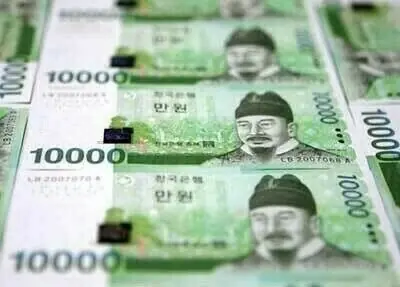

BENGALURU: Emerging Asian currencies strengthened on Thursday, with the South Korean won near a 14-month high, while Malaysia’s ringgit and stocks were steady after the central bank kept rates unchanged as expected.
The MSCI emerging market currency index rose 0.4 percent to a record high as the dollar weakened and US Treasury yields retreated from multi-year highs ahead of US jobs data.
Oil prices edged lower but remained high amid uncertainty over renewed US-Iran strikes.
In Malaysia, the ringgit and stocks were largely unchanged after Bank Negara Malaysia (BNM) kept its overnight policy rate steady at 2.75 percent for a seventh straight meeting, as widely expected. The ringgit was up 0.1 percent, while stocks edged 0.2 percent higher.
The ringgit has risen 0.4 percent this year, supported by Malaysia’s relatively strong economy, fuel subsidies and resilient technology exports despite heightened geopolitical uncertainty.
Elsewhere, the South Korean won rose 0.2 percent near a 14-month peak, while Thailand’s baht gained 0.6 percent, on track to snap an eight-session losing streak. Indonesia’s rupiah advanced 0.5 percent.
In Japan, the yen extended gains on Thursday after a sharp jump in the previous session, with traders pointing to rising bets on Bank of Japan rate hikes rather than intervention by Japanese authorities. The currency gained 1.3 percent.
Among regional equities, stocks in Jakarta were up 0.9 percent to their highest level since mid-May, supported by blue-chip banks.
Singapore shares were little changed, up 0.1 percent after erasing earlier gains that took the benchmark to a record high. South Korean stocks rose 0.3 percent. The broader MSCI Emerging Asia index inched 0.1 percent higher.




















Comments