


ECC directs TCP to ensure domestic sugar availability, price stability
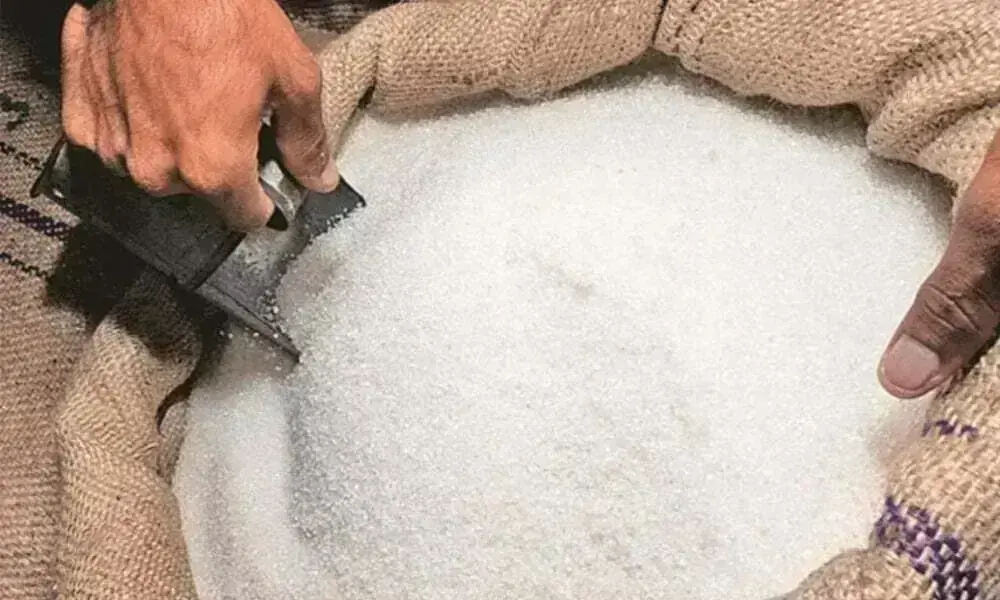
ISLAMABAD: The Economic Coordination Committee (ECC) of the Cabinet has directed Trading Corporation of Pakistan (TCP) to ensure that the disposal / export of sugar does not adversely affect domestic sugar availability and prices.
These instructions were issued while according approval to invite international bids for export of 108,000 metric tonnes of imported sugar lying in its stocks, amid concerns over its shelf life and mounting storage costs.
According to sources, the government had allowed export of around 0.790 million metric tonnes of sugar during 2024-25 after the sugar industry reported a surplus, while maintaining a buffer stock of around 0.504 million tonnes.
READ MORE: ECC approves international tenders to export surplus sugar
However, heatwaves, crop diseases, competition from other crops and lower sugarcane production subsequently reduced sugar output by around 15 percent. Supply constraints and market distortions pushed retail sugar prices to around Rs220 per kg in some markets, with concerns that prices could cross Rs250 per kg.
To address the shortage, the ECC in June 2025 approved the import of up to 500,000 tonnes of white crystalline sugar, which was subsequently ratified by the Federal Cabinet. Although 500,000 tonnes was authorised, TCP ultimately imported 300,000 tonnes during September-November 2025.
Of the imported quantity, 192,000 tonnes was sold in the domestic market, while approximately 108,000 tonnes remained with TCP.
The corporation had earlier attempted to dispose of the remaining sugar in the local market through tenders held on November 17 and 25, 2025. However, the bids were substantially below the landed cost and were rejected.
The ECC was informed that prevailing local ex-mill sugar prices were around Rs132-140 per kg, meaning disposal of the imported sugar in the domestic market would involve a cost differential of approximately Rs50-55 per kg. In addition, TCP was incurring markup of around Rs2 per kg on the stored sugar, resulting in a monthly financial burden of more than Rs200 million.
The imported sugar has a shelf life of two years from its date of manufacture and therefore needs to be disposed of before expiry. A private company from Uzbekistan had expressed interest in purchasing the sugar.
However, the Steering Committee on Sugar, in its meeting on August 12, 2026, concluded that under PPRA rules the sugar could not be sold directly to a single private-sector company. It consequently directed the Ministry of National Food Security and Research to seek ECC approval for export of the 108,000 tonnes through an international bidding process.
During deliberations, the ECC observed that the case did not qualify as an unsolicited bid under PPRA Rules, 2004. It was also informed that efforts to sell the remaining sugar locally had failed because domestic buyers offered prices substantially below the landed cost and demand for the available variety was limited.
The ECC expressed concern that government projections of sugar and other food commodities had repeatedly proved inaccurate, resulting in a recurring cycle of imports followed by exports and imposing considerable economic costs on the country.
It directed the Ministry of National Food Security and Research to base future projections on robust empirical data, sound demand and supply assessments and realistic market trends.
The Commerce Division proposed that the terms and conditions of the international tender should clearly specify whether border routes would be included for export. It also proposed that the bidding process be televised live to ensure transparency.
Commerce Division further maintained that TCP could not be held responsible for ensuring that the export would not adversely affect domestic sugar availability and prices, arguing that this responsibility falls within the mandate of the Ministry of National Food Security and Research.
The ECC also expressed grave concern over outstanding payments relating to the 192,000 tonnes of imported sugar already sold in the domestic market.
The meeting was informed that around Rs15 billion remained receivable from the provincial governments of Punjab and Balochistan, as well as corporate-sector entities and sugar dealers in Karachi. The ECC directed TCP to submit a complete bifurcation and ageing schedule of the outstanding Rs15 billion at its next meeting.
The ECC approved the proposal to invite international bids for export of the 108,000 tonnes of sugar, but deleted the condition requiring TCP to ensure that the disposal/export would not adversely affect domestic sugar availability and prices.
It further decided that all modalities for implementation of the approved proposal would be determined by the Steering Committee constituted by the ECC in June 2025.
Copyright Business Recorder, 2026




















Comments