


China flexes its auto-safety chops with huge recall of Tesla, other cars
- The ban on such minimalist designs, which were popularised by Tesla and imitated by Chinese EV makers, will apply to new models from next year
China is spearheading new auto safety standards with a massive EV recall and regulations for door mechanisms, addressing fears of occupants being trapped and asserting regulatory leadership in advanced vehicle technology.
- China's new assertive EV safety regulations.
- Largest vehicle recall in China's history.
- Global concerns over EV door release mechanisms.
- Impact of Chinese rules on global car designs.
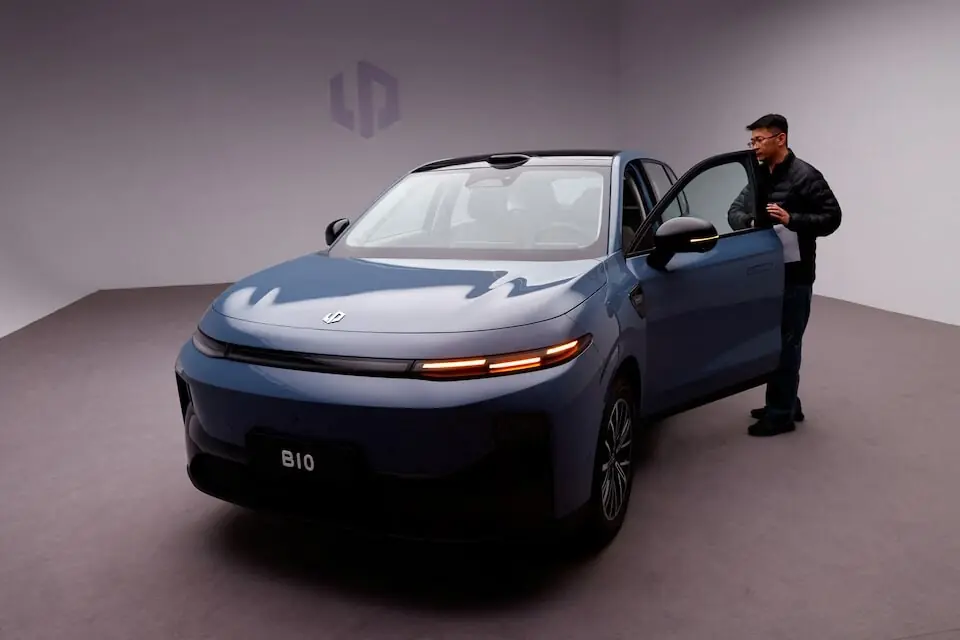
SHANGHAI/BEIJING: A huge recall in China last week aims to address a long-standing fear of EV owners: potentially being trapped in their cars when the power fails. It also highlights how Beijing is now spearheading new auto safety standards for some of the world’s most advanced cars.
Marking the largest recall to date in the world’s biggest car market, nine automakers including Tesla, Xiaomi and Leapmotor said they would fix a combined 4.3 million vehicles due to concerns that emergency buttons or levers inside cars that allow occupants to manually open a door can be hard to find.
The move follows China’s announcement in February of a ban on exterior electronic handles without a traditional manual mechanism that opens the door.
The ban on such minimalist designs, which were popularised by Tesla and imitated by Chinese EV makers, will apply to new models from next year.
Whereas US and European regulators have historically taken the lead in global auto safety, China — now the world’s biggest EV market by far with electric vehicles accounting for almost 55% of new cars sold — could soon be setting the tone.
“The trend is clear: China is, bit by bit, approaching regulatory leadership for advanced vehicle tech,” said Pedro Pacheco, a vice president of research at consultancy firm Gartner.
‘Assertive safety-regulation phase’
While Chinese automakers have rolled out features like fast-charging batteries and advanced self-driving software with breathtaking speed, they have often prioritised user experience and aesthetics over other considerations, analysts said.
Now Chinese regulators appear to be moving the industry in a new direction, increasing oversight and introducing rules requiring automakers to track the condition and repair history of all EVs sold.
It’s a shift “from rapid EV innovation and feature proliferation toward a much more assertive safety-regulation phase,” said Bill Russo, CEO of the Shanghai-based advisory firm Automobility.
Door-release and door handle issues have also been a concern in the United States and Europe, although authorities have yet to take action.
In July, the US National Highway Traffic Safety Administration, responding to a petition seeking a defect investigation into the emergency mechanical door release on about 180,000 Tesla Model 3 vehicles, said the issue would be more appropriately addressed through an ongoing rule-making process.
The NHTSA declined to comment for this article. European regulators, which last year flagged potential risks involving door-handle designs as a key priority, did not respond to Reuters queries. China’s State Administration for Market Regulation also did not respond to a request for comment.
Michael Brooks, executive director of the Center for Auto Safety, a Washington, D.C.-based advocacy group, said the NHTSA has struggled on fast-moving trends in vehicle technology, like self-driving cars and touchscreen controls, while regulators in China have implemented rules faster.
Some safety requirements in the US, like rear seat-belt warnings, have taken more than a decade amid bureaucratic delays and industry pushback.
“There are so many ways for a regulation to get thwarted, changed, withdrawn by an incoming administration,” he said. “These are the kind of delays you would never see in China.”
Other notable examples of China breaking new ground in auto safety regulation include last year’s ban of terms such as “smart driving” and “autonomous driving” in advertising driver assistance systems.
That’s gone further than most Western markets, although California last year found Tesla violated state law with its use of the phrase “autopilot” in its marketing.
Trapped inside
For this latest recall in China, automakers will fix the issue by attaching clearer labels to the door-release mechanisms and deploying over-the-air software updates that will lower windows in an emergency.
Door-release and door handle issues have drawn scrutiny globally after cases emerged of people becoming trapped inside burning vehicles.
Chinese state media reported in October that the driver of a Xiaomi SU7 sedan died after a crash and fire, and that passersby were not able to open the doors to pull him out.
In the US, several lawsuits have alleged that Tesla’s door-handle designs led to injuries or deaths after drivers or passengers were trapped in a vehicle while it was on fire. Some drivers have complained to the NHTSA about being unable to get their child out of a vehicle after exiting.
For Tesla, the Chinese regulatory action could force it to rethink its minimalist door handle design globally, Russo said.
“Because China is such an important sales and production market for Tesla, I would expect Tesla to design toward the Chinese requirement rather than maintain a completely separate solution just for China,” he said.
Tesla did not respond to a request for comment.
















Comments