


Pakistan’s import challenge lies in growing and unchecked dependence
Pakistan faces a growing textile trade deficit and supply-chain risks due to increasing reliance on Chinese imports, conflicting with US forced labor regulations and leading to tariffs.
- Pakistan's widening textile trade deficit.
- US forced labor regulations and supply-chain risks.
- Tariffs imposed on Pakistan after Section 301 investigation.
- Circumvention of US forced-labor import prohibitions.
- Aligning Pakistan's import policy with export interests.
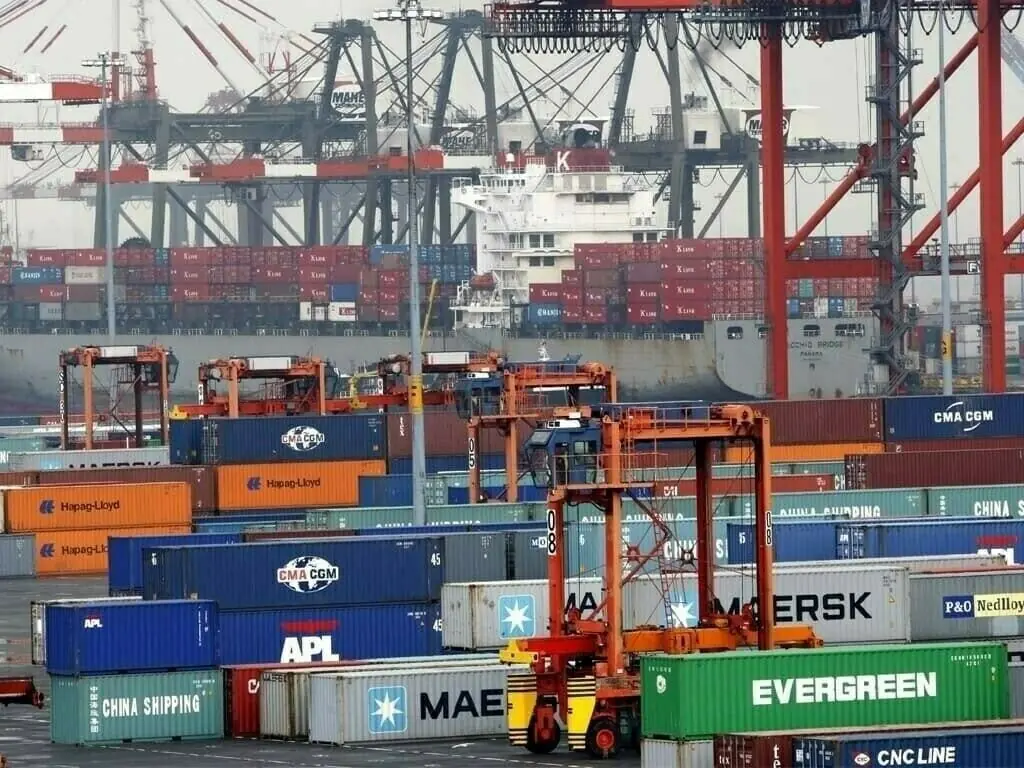

Fiscal Year 2026 closed with a trade deficit of USD 39.6 billion, up 22 percent from the previous year. Textile imports alone reached USD 6.46 billion, comprising cotton, cotton yarn, various fabrics, and other textile materials.
While Pakistan’s widening trade deficit is a serious concern, an even more troubling trend is emerging within the textile sector. Between FY2024 and FY2026, textile exports grew by only 7.7 percent, while textile imports surged by 138 percent, thereby worsening the textile trade balance by 17.7 percent over the same period.
A decade ago, Pakistan’s textile exporters were largely self-sufficient in raw materials. However, the continued decline in domestic cotton production has forced the industry to rely increasingly on imports to meet its requirements.
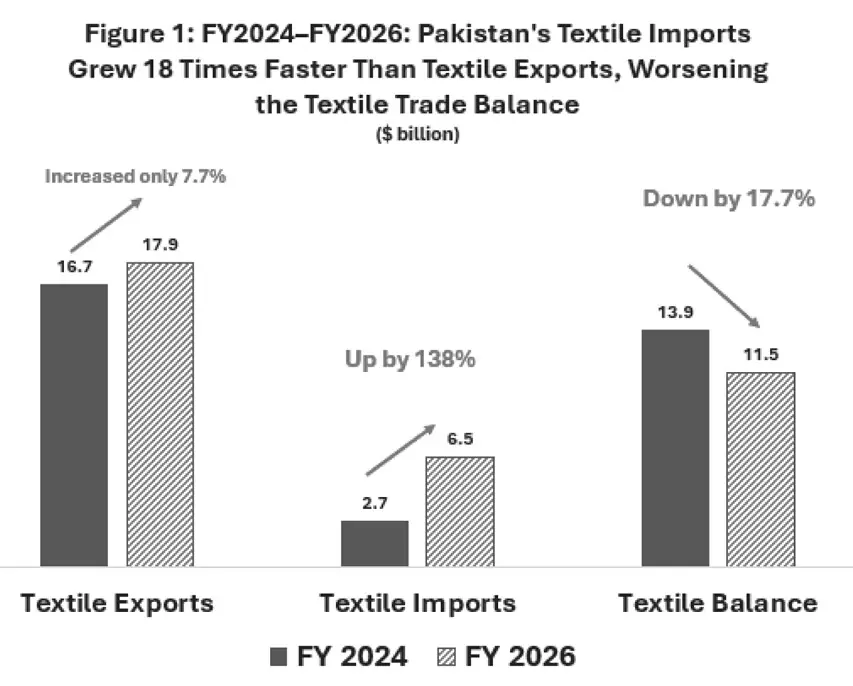
As a result, cotton imports reached USD 1.6 billion in FY2026 (PRAL). More concerningly, this dependence is no longer limited to cotton, as Pakistan is now increasingly reliant on imported textile intermediates as well.
For a dollar-constrained economy that already struggles to maintain external balance, this rapid growth in imports presents a serious challenge. The fact that a significant share of these imports originates from China adds another layer of supply-chain risk.
But why does the origin of these imports matter?
In 2022, the United States began enforcing the Uyghur Forced Labour Prevention Act (UFLPA), which prohibits the importation of goods produced wholly or in part through forced labour in China, particularly in the Xinjiang Uyghur Autonomous Region. More recently, the United States expanded enforcement under the UFLPA by adding another 43 Chinese entities to the UFLPA Entity List, bringing the total to 187. The list covers several high-priority enforcement sectors, including apparel, cotton, and cotton products.
Since the UFLPA came into effect, US Customs and Border Protection has reviewed more than 16,700 shipments valued at nearly USD 3.7 billion. These shipments covered products ranging from apparel and automotive parts to chemicals, electronics, flooring, and solar panels, all reviewed over concerns related to forced labour.
Until recently, many believed that these measures would remain confined to China. That assumption is no longer valid.
Most recently, the United States concluded its Section 301 investigation into forced labour practices across 60 economies. Following the investigation, tariffs were imposed on all the economies examined, including a 10 percent tariff on Pakistan, citing the absence of a comprehensive framework prohibiting imports produced through forced labour.
While tariffs are concerning the issue goes far beyond them. The Section 301 investigation makes it clear that economies exporting textile and apparel products to the United States may increasingly be required to demonstrate that their products contain no inputs from entities included on the UFLPA Entity List. They may also be required to verify the origin of inputs imported from China.
More importantly, the investigation concludes that there is a significant risk that cotton subject to the UFLPA is circumventing the US forced-labour import prohibition through intermediary manufacturers in third countries, including India, Indonesia, Mexico, Sri Lanka, Vietnam, Ethiopia, Kenya, and Pakistan.
This is arguably the most consequential statement in the entire investigation, yet it has received remarkably little attention in Pakistan.
Approximately 30 percent of Pakistan’s imports originate from China, while around 22 percent of its exports are destined for the United States. Pakistan’s growing dependence on Chinese intermediate inputs, combined with its reliance on the US market for textile exports, has therefore created an increasingly complex supply-chain challenge.
The concentration of imports is even more striking. According to PRAL data, 94 percent of Pakistan’s cotton yarn imports originated from China in FY2024, declining only marginally to 86 percent in FY2025. During the same period, Pakistan exported approximately 27 percent of its textile and apparel products to the United States.
This trajectory should concern policymakers and exporters alike.
Pakistan is currently pursuing two objectives that are becoming increasingly difficult to reconcile: seeking deeper trade integration with the United States while simultaneously increasing its dependence on Chinese intermediate inputs in sectors now subject to enhanced US enforcement.
For stakeholders who may not fully recognise the severity of the situation, allegations of forced labour are among the most serious and damaging claims that can arise in international trade.
Historically, Pakistan’s textile exports have not been subject to US supply-chain restrictions, and no Pakistani textile producer has been placed under a US Customs and Border Protection Withhold Release Order (WRO). This reflects Pakistan’s standing as a relatively compliant and credible sourcing destination. However, the UFLPA, the 2026 Section 301 investigation, Pakistan’s explicit mention in that investigation, and the resulting tariff represent significant developments that must be taken seriously.
Pakistan’s response cannot be limited to amending the Import Policy Order alone. The government must also scrutinise the goods entering the country through robust traceability mechanisms. A comprehensive forced-labour import prohibition framework should be established without delay. Most importantly, customs authorities should introduce a mechanism for verifying the provenance of textile inputs, including yarn and fabric, used in Pakistani exports destined for global markets, particularly the United States.
Pakistan has yet to strategically align its import policy with its export interests.
However, if adopted, these measures would not only help ensure compliance with forced-labour requirements but also enable the government to address import under-invoicing and misdeclaration, two long-standing problems that remain unresolved.
Copyright Business Recorder, 2026
The writer is Chairman APTMA— North Zone. The views expressed in this article are not necessarily those of the newspaper











Comments