


SBP designates D-SIBs for 2026
The State Bank of Pakistan designated UBL, HBL, and NBP as Domestic Systemically Important Banks (D-SIBs) for 2026, requiring them to maintain additional capital to strengthen financial stability.
- SBP's framework for identifying Domestic Systemically Important Banks.
- Annual assessment process and criteria for D-SIB designation.
- Specific additional capital requirements for designated banks.
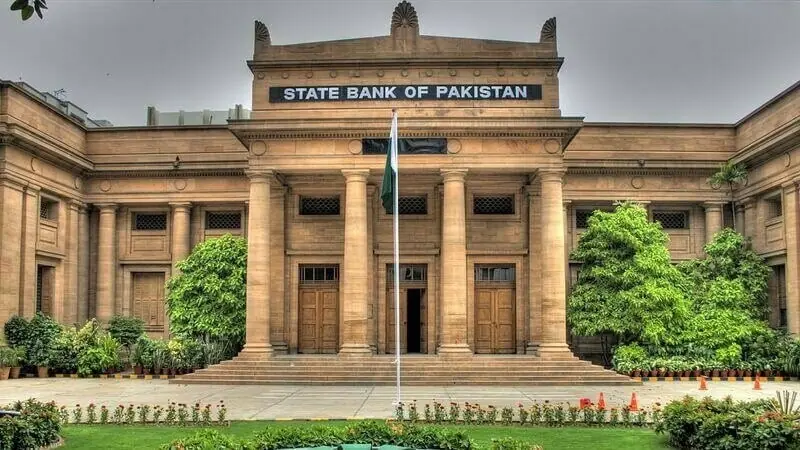

KARACHI: The State Bank of Pakistan (SBP) has announced the designation of D-SIBs for the year 2026 in accordance with Framework for ‘Domestic Systemically Important Banks (D-SIBs)’ published in April 2018 and amended in December 2022.
The framework introduced by SBP is consistent with international standards and duly takes into account the local circumstances of the financial industry and economy.
It specifies the methodology for the identification of D-SIBs, enhanced regulatory and supervisory requirements and implementation guidelines for D-SIBs.
The enhanced requirements aim to further strengthen the resilience of systemically important banks against shocks and augment their risk management capacities.
READ MORE: SBP names NBP, UBL, HBL as D-SIBS for 2025
Under the framework, the identification of D-SIBs is carried out on an annual basis via two-step process. In the first step, Sample D-SIBs are identified according to prescribed quantitative and qualitative criteria. In the second step, D-SIBs are designated from amongst the sample D-SIBs based on institutions’ composite systemic scores in terms of their size, interconnectedness, substitutability and complexity.
SBP has carried out annual assessment of banks based on their financial statements as of December 31, 2025. As per the assessment, three banks; i.e., United Bank Limited, Habib Bank Limited, and National Bank of Pakistan have been designated as D-SIBs for the year 2026. These designated banks need to comply with the additional Common Equity Tier-1 (CET-1) capital requirements with effect from March 31, 2027, in addition to enhanced supervisory requirements set forth in the D-SIBs framework. UBL, placed in Bucket D, will be required to maintain an additional CET-1 buffer of 2.5 percent, while HBL in Bucket C will maintain 1.5 percent and NBP in Bucket B will maintain 1.0 percent.
Moreover, bank branches of Global-Systemically Important Banks (G-SIBs) operating in Pakistan will be required to maintain additional CET-1 capital against their risk-weighted assets in Pakistan at the rate prescribed by the Financial Stability Board for their respective principal G-SIB.
The SBP remains committed to ensure financial stability and support sustainable growth in the economy. The designation of D-SIBs is one of the key elements of supervisory framework and reflects SBP’s proactive approach to identification and mitigation of systemic risks.
Copyright Business Recorder, 2026
















Comments