


Indian steel mills face margin squeeze as global coking coal prices rise
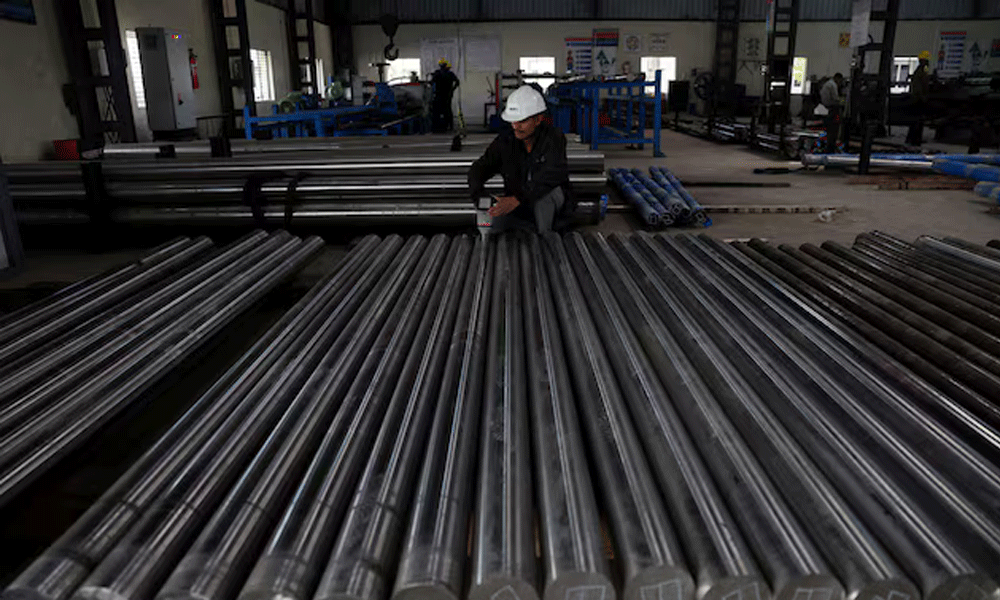

NEW DELHI: Indian steel mills are facing mounting pressure on margins as higher coking coal prices, driven by supply disruptions in Australia and China and the Iran war, raise steelmaking costs, executives and analysts said.
India, the world’s biggest crude steel producer after China, meets 95 percent of its coking coal needs through imports, with at least half shipped from Australia. Coking coal accounts for nearly 40 percent of steel production costs.
Squeezed margins could impede investment and delay capacity expansion as Indian steelmakers step up spending to meet buoyant domestic demand driven by infrastructure and strong economic growth.
Premium hard coking coal prices jumped 25 percent from last year to average USD236 per metric ton freight on board (FOB) Australia in the first seven months of 2026, said Banmeet Khurmi, lead, metallurgical coal and coke market service, at consultancy CRU in Sydney.
“Prices have been higher this year due to supply disruptions in Australia, slower-than-expected ramp-up at new mines, price support from the conflict in the Middle East and, more recently, a large accident in Shanxi, China,” Khurmi said.
Costs are likely to remain high in the second half of the year, partly due to the loss of supply following the Shanxi coal mine disaster, said Freddie Brooks, commodities analyst at BMI, a unit of Fitch Solutions.
For blast furnace-based steelmakers, every USD10 a ton increase in coking coal prices adds approximately USD7 to USD9 per metric ton to steelmaking costs, said an executive at a large steel mill, who was not authorised to speak to the media.
Higher coking coal prices have squeezed margins, three other executives at leading steelmakers said, with little headroom to raise steel prices, given competition from cheap Chinese steel.
Shipments from China have increased despite import tariffs on some grades.
Coking coal imports are expected to rise by between 2 million and 3 million tons in 2026-27 from 64 million tons a year earlier, commodities consultancy BigMint said.




















Comments