


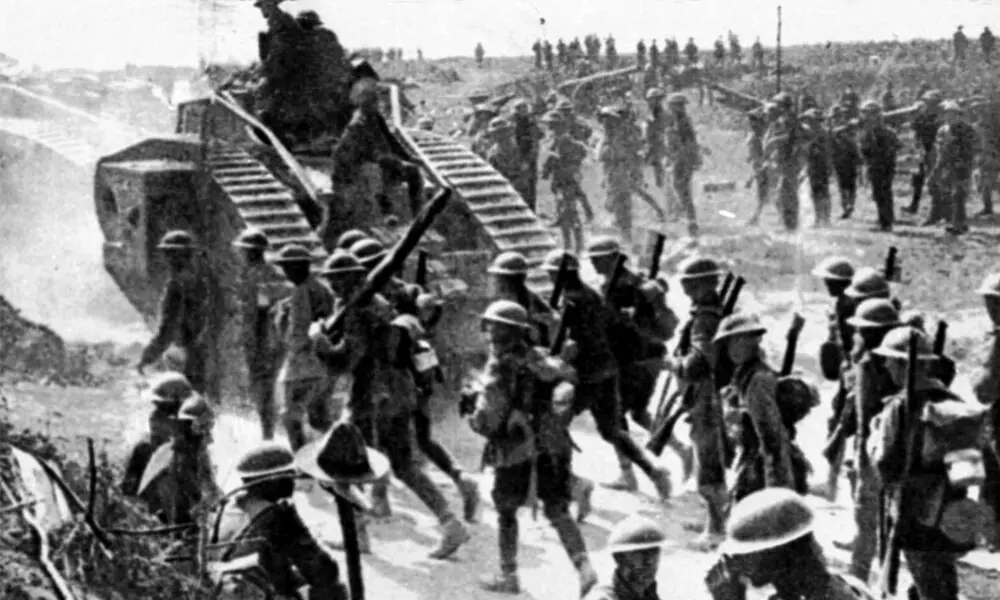

In the years after the First World War, France resolved never to be caught unprepared again. It poured a decade of treasure into the most sophisticated fortification ever built: the Maginot Line. Hundreds of kilometers of interconnected bunkers, retractable gun turrets and underground railways.
It was an engineering marvel, meticulously planned, magnificently executed, and utterly beside the point.
In May 1940, the Germans did not attack the Line. They drove around it, through the Ardennes forest that French planners had declared impassable and were in Paris within six weeks. The Line’s guns, many fixed facing east, never fired. France had built a perfect defence but for the previous war.
Pakistan’s power sector should find the story uncomfortably familiar, though our version comes with a twist the French were spared: we spent our first seventy years fighting the demon of power planning with no fortifications at all. There was no integrated plan. Not an outdated one, not a flawed one; none.
Capacity was raised by episodic proclamations. The 1994 Power Policy guaranteed investors returns in US dollars, so every time the rupee fell, what we owed in rupees automatically rose. The 2002 policy repeated the exercise, and the 2015 CPEC wave perfected it.
Megawatts were procured first; questions about demand were deferred indefinitely.
The cost of that inadequate planning is still being paid, with interest. Capacity payments, an amount paid to power plants for merely existing, now exceed Rs2 trillion a year. The circular debt swelled until last year’s Rs1.2 trillion restructuring provided some temporary relief.
And to finance this arithmetic, tariffs rose 155 percent in three years, weighing heavily on consumers.
It was not until 2021, twenty-seven years after we began signing take-or-pay contracts, that the country produced its first-generation blueprint, our very own Maginot line, the Integrated Generation Capacity Expansion Plan.
The latest available iteration of the IGCEP (2025-2035) is genuinely impressive — hourly modelling, least-cost optimization, scenarios and sensitivities, engineering that would have made the French General Staff weep with recognition.
Some 63,000MW by 2035, roughly $50 billion in investment, transmission corridors drawn with a draughtsman’s care. And like the original, it is built to repel precisely one enemy: a demand forecast derived from the top down.
GDP growth here, population there, therefore consumption, marching frontally at a pace of 4.4 percent arriving punctually at the summer peak every year like an army that has kindly shared its invasion schedule.
The entire fortification faces east, towards a centralised future in which power flows one way, from big plants to obedient consumers who, meanwhile, have found the Ardennes.
Driven by the high tariffs and armed with Chinese solar panels, households and factories have simply gone around the grid. According to a study by Renewables first, approximately 38 GW of solar power has been installed in Pakistan.
A quarter of Pakistani households now generate their own daylight. Net-metered capacity has crossed seven gigawatts and that is only the visible fraction.
A panel behind a household meter is invisible; the grid merely notices a customer who has stopped buying at noon. Meanwhile, our planners are fortified against an enemy they cannot see.
What they can see is the shape of the damage. Solar floods the system at midday, so grid demand sags into a deep belly. At sunset, millions of solar homes return to the grid at once, and demand rears up violently.
Engineers call this the ‘duck curve’, and its danger lies in the ramp: the grid must go from near-idle to full tilt within two or three hours every evening. A system that cannot climb that slope ends in load-shedding not because the country lacks megawatts, but because it lacks megawatts that can move rapidly.
And how have the planners responded? In the finest tradition of the French: Declare the forest impassable.
The demand decline is temporary. It is the economy, not the rooftops. Then the guns swivelled towards our own population: solar buyback rates slashed by two-thirds, prosumer rules redrafted to make grid connection as pleasant as a border crossing. This prompted even the regulator to ask who will pay for new capacity when grid demand is falling and taxpayers are defecting — and received silence.
To our misery, solar isn’t the only outflanking column our planners ignore.
The state wants a third of new vehicle sales electric by 2030. A commercial car charger can draw as much power as several small houses and EVs charge when their owners come home, which is precisely when the duck’s neck is rearing.
A million EVs plugged in at dusk is a second army arriving at the weakest point of the Line, making the evening ramp steeper and the midday belly, by contrast, even deeper.
Electrification of daily life will change the dynamics further still. As gas grows scarce and is costly, the demand for electric stoves and electric geysers will rise. Cooking load spikes at dawn and dinner; heating load arrives in winter mornings, none of it coincides politely with the summer afternoon peak our planners fortify against. Each of these loads will redraw the shape, the season and the hour of demand.
The perils are not hypothetical. Build $50bn of fortifications for an assault that never comes, and we re-enact the capacity payment catastrophe on a grander scale.
Fewer grid customers shouldering fixed costs means higher tariffs, which drives more defection, which raises tariffs again. This is a death spiral whose last captives are the lifeline consumers, who cannot afford to buy their way around the Line.
Moreover, harassing prosumers speeds the route as batteries are cheaper every year. A household pushed hard enough will not surrender to the grid; it will desert it altogether.
What the grid needs now is not reinforcement but reorientation: turning the guns to face the war underway. Plan for all 8,760 hours of the year; not one peak afternoon as a grid prepared only for its tallest hour is blindsided by its strangest ones.
The duck curve demands sprinters, batteries and flexible plants that start in minutes, not the marathon runners we keep requisitioning: big hydro and coal built to lumber all day at a steady pace adding to the operational costs.
Count the invisible army: forecast rooftop solar, batteries, EVs and electrified cooking and heating explicitly, area by area, because adoption clusters locally and can overwhelm a neighbourhood transformer long before it registers nationally. Turn the new loads from threat into reinforcement: price electricity according to time of use so that the EV charges and the washing machines run at noon, in the belly of the duck, soaking up surplus solar instead of piling onto the evening ramp.
Test the plan against several futures, not one. And reconcile the national forecast with what distribution companies see on their wires, instead of dismissing reports from the front as bad morale.
The French did not lose in 1940 for lack of resources or intelligence, but because their plan was a monument to the last war, defended by an institution long after the terrain had refuted it. The Maginot Line still stands today.
Tourists visit it. That is one possible future for our grid: superbly engineered, fabulously expensive, and remembered chiefly as a museum of how thoroughly one can prepare for the wrong thing.
Copyright Business Recorder, 2026
The writer works as an Analyst at a think and do tank dedicated to driving a fair and inclusive energy transition




















Comments