


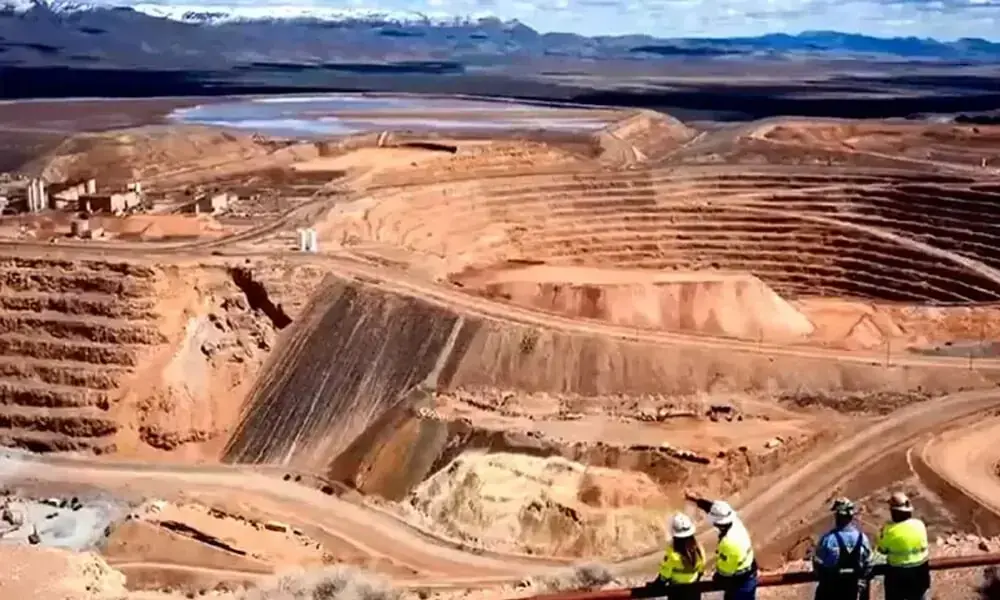

This is Part I of a multi-part “The Mineral Corridor” series, examines Pakistan’s mineral opportunity and the transition from resource extraction to value-added industrial development.
Pakistan stands at a critical moment in its economic transformation. While the global economy enters a new era of critical mineral demand, the country has an opportunity to convert its geological resources into industrial capability. The real question is not whether Pakistan possesses mineral wealth, but whether it can transform those resources into value-added industries, exports and long-term economic growth.
The global mineral landscape is changing rapidly. Critical minerals such as copper, lithium, nickel and rare earth elements are becoming essential inputs for renewable energy systems, electrification, advanced manufacturing and emerging technologies. As demand for these resources grows, countries with mineral reserves are seeking ways to capture greater economic value beyond extraction.
For Pakistan, this shift coincides with the evolving priorities of the Belt and Road Initiative (BRI). China’s overseas engagement is increasingly moving beyond traditional infrastructure towards mineral processing, advanced manufacturing and industrial supply chains. During the first half of 2026, Chinese BRI investment and construction engagement reached $126.4 billion. Metals and mining attracted $21.8 billion, accounting for 17.2 percent of total engagement, and becoming the second-largest sector after energy. Around 80.6 percent of metals and mining engagement was linked to processing activities rather than extraction, while nearly 85 percent of investment—around $13 billion—went into processing-related projects. China is increasingly investing in smelters, steel plants, aluminium facilities and mineral-based manufacturing, highlighting the growing importance of value addition.
This transformation offers an important lesson for Pakistan. The future of mineral development will not be determined only by the ability to extract resources, but by the capacity to process, manufacture and integrate them into industrial value chains.
Pakistan enters this transition with significant geological potential but limited economic returns. The country has around 92 known minerals, of which 52 are commercially extracted. Nearly 5,000 operational mines produce approximately 68.5 million metric tonnes annually. Yet, the mineral sector contributes only around 2–3 percent to GDP, and exports remain largely concentrated in raw or semi-processed products.
Pakistan already participates in international mineral markets. Copper concentrate remains the country’s leading mineral export, generating around $842 million in 2024. Salt, stone, plaster, lime and cement-related products contributed more than $500 million. The country also exports chromite, lead-zinc concentrates, marble, gypsum and gemstones. However, much of this trade captures limited domestic value because processing and downstream industries remain underdeveloped.
The challenge, therefore, is not simply to expand mining activity. It is to develop the capabilities required to convert mineral resources into higher-value products. Copper concentrate should eventually support refining and electrical industries. Marble should move beyond block exports towards finished stone products. Industrial minerals such as limestone, gypsum and silica should support construction materials, ceramics and manufacturing industries.
Pakistan’s strongest immediate opportunity lies in copper and gold. Reko Diq represents one of the country’s most significant mineral assets, estimated to contain about 13.1 million tonnes of copper and 17.9 million ounces of gold over a projected 37-year mine life. Pakistan also possesses copper resources at Saindak, lead and zinc at Duddar, chromite deposits in Balochistan and Khyber Pakhtunkhwa, and prospects for lithium, nickel, cobalt and rare-earth minerals.
However, mineral wealth alone does not guarantee economic transformation. The experience of resource-rich countries shows that sustainable benefits emerge when mining is connected with local industries, technical expertise and downstream activities. The significance of projects such as Reko Diq should therefore extend beyond mineral extraction. Their success should also be measured by the development of engineering services, skilled workforce, supplier networks and supporting industries.
This is where the concept of a ‘Mineral Corridor’ becomes important. A mineral corridor should not be viewed merely as a route for transporting minerals from mines to ports. It should represent an integrated industrial ecosystem connecting resource regions with processing facilities, manufacturing clusters, logistics networks and markets.
CPEC provides a foundation for this transition. The first phase created important connectivity and infrastructure assets, including 8,904 MW of power generation capacity, around 1,000 km of transport network, and Gwadar’s development. The next phase provides an opportunity to link these assets with productive industries. A ‘Mineral Corridor’ under CPEC 2.0 could connect resource-rich areas with processing zones, industrial clusters and export-oriented manufacturing.
China’s experience in Pakistan’s mineral sector provides an existing foundation for cooperation. Chinese companies have participated in the Saindak copper-gold project and the Duddar lead-zinc mine, while CPEC facilitated Chinese involvement in Thar coal mining and mine-mouth power generation. Future cooperation should focus not only extraction but also mineral processing, technical services, equipment manufacturing and industrial linkages.
The H1 2026 BRI report recorded no new qualifying Chinese investment announcement in Pakistan, even as metals and mining engagement expanded globally. This should not be viewed as disengagement, but as a signal for Pakistan to develop bankable projects aligned with the new BRI priorities. With Chinese private firms driving a growing share of overseas investment, Pakistan must engage beyond G2G channels and attract mining, processing and manufacturing companies.
The development of Pakistan’s mineral sector must also create opportunities beyond large mining projects. Local enterprise development, supplier networks, technical training and community participation will be essential to ensure that mineral activities generate broader economic benefits. Resource-rich regions should become centres of economic activity rather than only locations of extraction.
Pakistan’s mineral opportunity is therefore not defined only by what lies beneath the ground. The real opportunity lies in building the industries, skills and capabilities required to transform resources into economic value.
CPEC’s first phase helped address infrastructure and energy constraints. The next phase should focus on industrial transformation. Moving from mines to manufacturing can allow Pakistan to capture a greater share of value from its mineral resources and establish a stronger foundation for future economic growth.
Pakistan’s mineral opportunity is underground. Its economic value, however, will depend on what the country builds above it.
Copyright Business Recorder, 2026
The writer specializes in Energy Policy and Management and talks about energy and climate-related issues. He works at CPEC Center of Excellence, PIDE and can be reached at [email protected].




















Comments