


Why trust will determine the success of Pakistan's HPV vaccination campaign
Pakistan has introduced the HPV vaccine to prevent cervical cancer, but successful implementation hinges on building community trust, clear communication, and engagement beyond scientific evidence.
- Pakistan's introduction of the HPV vaccine.
- Building community trust and confidence for vaccine acceptance.
- Addressing limited awareness of cervical cancer and HPV.
- The role of religious scholars and community leaders.
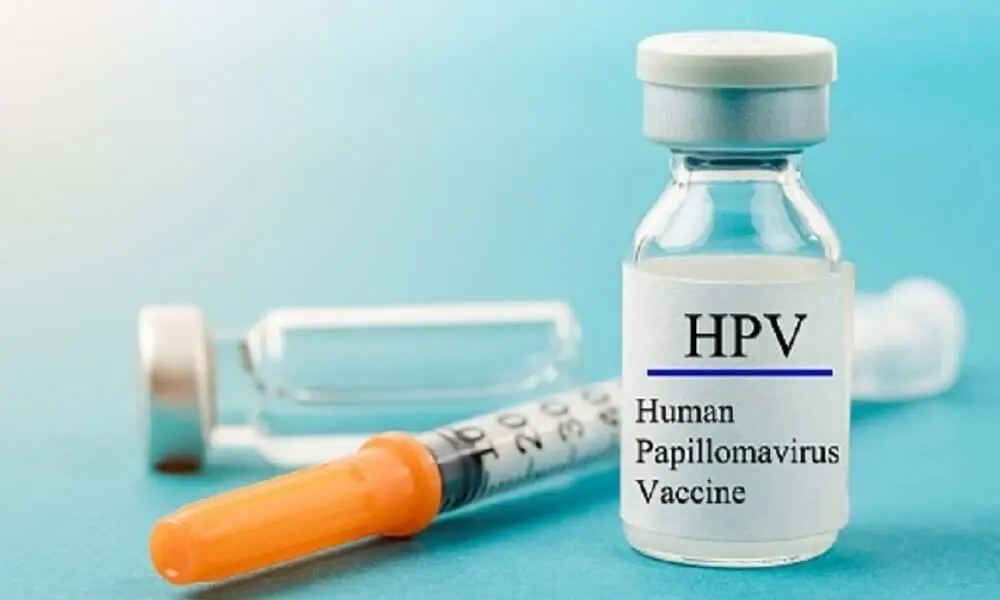

Every few years, a country reaches an important milestone in public health. A new vaccine is introduced, a disease moves closer to elimination, or a generation of children gains protection from illnesses that once claimed countless lives. Pakistan’s recent introduction of the Human Papillomavirus (HPV) vaccine is one such milestone.
For the first time, the country has the opportunity to prevent thousands of future cases of cervical cancer; a disease that remains one of the leading causes of cancer-related deaths among women worldwide.
Yet history teaches us that introducing a vaccine is only the beginning.
The true measure of success is not the number of vaccine doses procured or distributed. It is whether parents choose to accept them for their daughters. That decision is shaped not only by scientific evidence but also by confidence, communication and trust.
This is perhaps the most important lesson Pakistan must embrace as it enters a new era of cervical cancer prevention. Cervical cancer is unique because it is one of the few cancers that can largely be prevented. Persistent infection with certain high-risk types of Human Papillomavirus is responsible for almost all cervical cancers. Over the past two decades, overwhelming scientific evidence has demonstrated that HPV vaccination substantially reduces HPV infections, precancerous cervical lesions and, increasingly, cervical cancer itself.
Many countries have already begun witnessing these benefits. Pakistan now joins this global effort with an opportunity to alter the future health of an entire generation of girls. However, introducing a vaccine into a national immunisation programme is fundamentally different from introducing it into a scientific journal. Scientific evidence answers the question of whether a vaccine works.
Communities ask a different question:
Can we trust it?
Our own research offers an important perspective on this challenge.
As part of the Global Burden of HPV (GLOBE-HPV) study, we recently conducted one of Pakistan’s largest population-based studies of HPV infection among women living in both urban informal settlements and rural communities. The study generated contemporary baseline data on HPV prevalence and genotype distribution before nationwide HPV vaccine implementation.
While the epidemiological findings are scientifically important, another observation deserves equal attention.
Across both urban and rural settings, awareness of cervical cancer and HPV was remarkably limited. For many women, cervical cancer was unfamiliar, HPV had never been heard of, and screening was virtually nonexistent. Yet despite this limited awareness, many women expressed a willingness to engage in preventive services once these were explained clearly and respectfully. This finding should encourage us.
Communities are not rejecting science. They are asking for understandable, trustworthy information before making decisions. Too often, public health assumes that providing scientific facts alone is sufficient to change behaviour. Decades of implementation research suggest otherwise.
People make health decisions through relationships of trust. Parents seek reassurance from physicians, nurses, teachers, family members, neighbours and, for many Pakistani families, respected religious scholars.
Recognising this reality does not weaken science. It strengthens public health. Successful immunisation programmes understand that trust is built through dialogue rather than instruction. Communities are far more likely to accept health interventions when information comes from voices they already know and trust.
This is why community engagement should be viewed not as an optional communication activity but as a core component of HPV vaccine implementation. Healthcare workers must be equipped to answer questions about vaccine safety, effectiveness and fertility with confidence and empathy. Teachers and school administrators should receive appropriate information because they often become the first point of contact for parents.
Community organisations can help ensure that accurate information reaches families before misinformation does. Equally important is the role of religious engagement. For many Pakistani families, faith and healthcare are not competing influences but complementary sources of guidance. Islam places great emphasis on the preservation of life (Hifz al-Nafs), disease prevention and seeking beneficial treatment. These principles have long supported preventive healthcare.
Several Muslim-majority countries; including Saudi Arabia, Indonesia, Malaysia, Bangladesh, Qatar and the United Arab Emirates; have successfully incorporated HPV vaccination into their national immunisation programmes. Pakistan’s own health authorities have also affirmed that leading Islamic scholars support HPV vaccination and consider it consistent with Islamic values.
This should not be viewed as religion validating science. Rather, it is an example of science and faith working together in pursuit of a common objective: protecting the health and lives of future generations. There is another lesson emerging from implementation science.
Countries that achieve sustained success with vaccination programmes rarely rely on a single strategy. They combine scientific evidence with transparent communication, political commitment, strong primary healthcare systems, community partnerships and public trust.
Trust is not built during a crisis. It is cultivated long before misinformation has an opportunity to spread. That means engaging communities early, listening respectfully to concerns, answering difficult questions honestly and ensuring that every family feels their voice matters.
Pakistan has already taken a historic first step by introducing the HPV vaccine. The next challenge is ensuring that this programme becomes a lasting public health success rather than simply another campaign. This requires moving beyond vaccine delivery towards building vaccine confidence.
Confidence grows when evidence is communicated clearly and when healthcare workers are supported. Confidence grows when schools, communities and religious leaders become partners rather than spectators. Most importantly, confidence grows when people feel respected rather than persuaded. One day, the true impact of Pakistan’s HPV vaccination programme will not be measured only by the number of girls vaccinated.
It will be reflected in something far more meaningful. The mothers who never develop cervical cancer. The daughters who grow up protected from a preventable disease. The families spared the grief of losing a woman whose life could have been saved. Vaccines prevent cervical cancer. Trust ensures that vaccines fulfil that promise.



















Comments