


Businessmen urged to explore investment opportunities in Libya
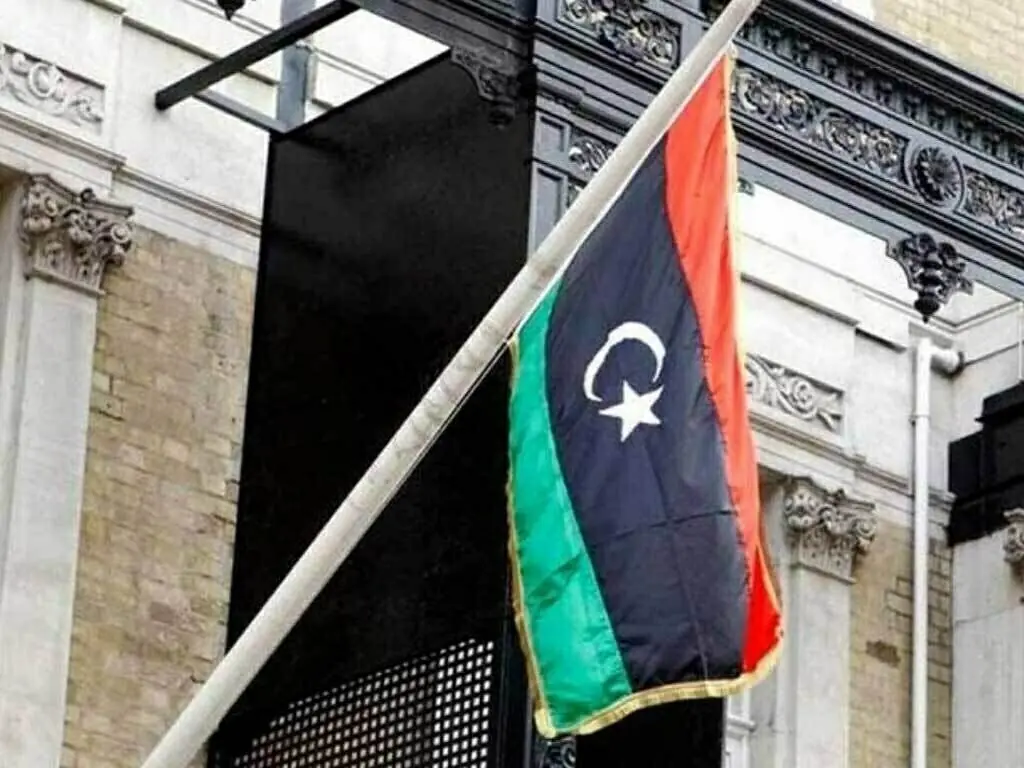

KARACHI: Pakistan’s Ambassador-designate to Libya, Major General (Retd) Mumtaz Hussain has urged the Pakistani business community to aggressively explore the vast trade, investment and employment opportunities emerging in Libya, stating that the North African country is entering a major reconstruction phase with substantial demand for imported goods, skilled manpower and business partnerships.
He expressed confidence that Pakistan’s exports to Libya could increase manifold, with bilateral trade having the potential to reach USD500 million, provided the private sector actively engages through institutional collaboration and business-to-business linkages.
Speaking at a meeting of Karachi Chamber of Commerce and Industry (KCCI) on Wednesday, Ambassador-designate Maj. Gen. (Retd.) Mumtaz Hussain said that Libya presents enormous untapped opportunities for Pakistani exporters despite the perception of instability.
He noted that the country has a GDP of approximately USD46-47 billion, a relatively high per capita income and substantial financial resources, making it an attractive destination for trade and investment.
Dispelling misconceptions about the security situation, he said Libya is currently witnessing a “no peace, no war” environment and the prevailing situation is far more stable than commonly perceived.
He pointed out that reconstruction activities are underway across the country, creating significant demand for imported products and services.
He observed that countries such as China have consistently invested in regions facing challenges and have successfully converted those challenges into economic opportunities.
Stressing that Pakistani businesses should not allow these opportunities to pass by, he remarked that once complete stability returns, European companies would rapidly dominate the market, leaving limited space for late entrants.
The Ambassador-designate informed participants that Libyan authorities currently require approximately 50,000 skilled workers, while Pakistan has already received an official demand for thousands of workers.
He expressed concern that despite widespread unemployment in Pakistan, the response from skilled professionals has remained disappointingly low due to misconceptions regarding Libya’s security situation.
He assured the business community that the Government of Pakistan is proceeding cautiously to ensure the safety and welfare of overseas Pakistani workers, while simultaneously facilitating legal employment opportunities in Libya.
Highlighting Pakistan’s diplomatic engagement, he informed the participants that Pakistan has recently strengthened its diplomatic presence in Libya, with a Counsellor now stationed in Benghazi in addition to Pakistan’s diplomatic mission in Tripoli.
This arrangement, he said, would enable closer coordination with both major administrations in Libya and facilitate commercial activities.
Referring to reconstruction efforts underway in Libya, he said the country is importing virtually everything required for rebuilding infrastructure, housing and public facilities but most of imports were from Egypt and Turkey.
Responding to concerns raised by the business community regarding banking channels and payment mechanisms, the Ambassador-designate revealed that he had already discussed these issues with the State Bank of Pakistan.
He said the central bank had assured full cooperation in identifying practical banking arrangements and alternative mechanisms to facilitate legitimate trade transactions with Libya.
He said Pakistan’s exports have declined from around USD32 billion to approximately USD30 billion, making it imperative for the country to identify and penetrate new markets. “Where there are challenges, there are also opportunities,” he remarked, adding that increasing exports should remain Pakistan’s foremost national economic priority.
Expressing his commitment to strengthening bilateral economic relations, Ambassador Mumtaz Hussain said his foremost objective would be to at least double Pakistan-Libya trade during his tenure.
He assured KCCI members that he would remain directly accessible to the business community and personally facilitate trade-related matters with Libyan authorities.
He emphasized that business-to-business (B2B) and chamber-to-chamber engagement would produce quicker and more tangible results than relying solely on prolonged government-to-government processes.
He urged KCCI to establish direct institutional contacts with Libyan chambers of commerce to unlock the market’s full potential.
Speaking on the occasion, President KCCI Rehan Hanif, while describing Libya as a brotherly Islamic country with immense economic potential, regretted that bilateral trade remains disproportionately low and does not reflect the excellent relations enjoyed by the two nations.
He emphasized that expanding exports to Libya should be a national priority, particularly at a time when Pakistan is striving to improve its external sector and strengthen foreign exchange earnings.
Presenting a detailed overview of bilateral trade, he pointed out that Libya imports goods worth approximately USD31 billion annually, whereas Pakistan’s exports account for only USD15-16 million, representing a negligible 0.04 percent share of Libya’s total imports.
He observed that this insignificant market share presents tremendous opportunities for Pakistani exporters, particularly as Libya continues its reconstruction and infrastructure development initiatives.
Rehan Hanif informed the Ambassador-designate that Pakistan’s exports to Libya are currently dominated by textiles, with limited quantities of chemicals, agricultural products and pharmaceuticals, while imports from Libya mainly consist of iron and steel. He stressed that the existing trade basket remains extremely narrow and requires substantial diversification.
Highlighting sectors with significant export potential, he stated that Pakistan can successfully compete in furniture, textiles, garments, knitwear, rice, pharmaceuticals, ceramics, sanitary ware, tiles, faucets and sports goods, many of which are presently being supplied to Libya by competing countries.
President KCCI urged Pakistan’s diplomatic mission in Libya to facilitate stronger institutional linkages between KCCI and Libyan chambers of commerce, organize business networking opportunities and help Pakistani exporters identify reliable importers, distributors and commercial partners in Libya.
Rehan Hanif assured the Ambassador-designate of KCCI’s full cooperation in promoting bilateral trade and investment and expressed optimism that, through coordinated efforts between the diplomatic mission and the private sector, Pakistan would be able to secure a significantly larger share of Libya’s import market and transform the existing trade relationship into a vibrant economic partnership.
Copyright Business Recorder, 2026






















Comments