


Time-based power tariff: IMF not allowing Pakistan to offer cheap electricity: Leghari
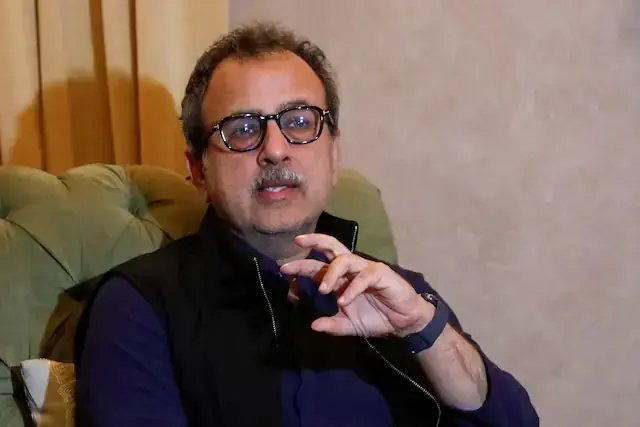

ISLAMABAD: Federal Minister for Power Sardar Awais Ahmad Khan Leghari has said that the International Monetary Fund (IMF) is currently not allowing Pakistan to offer cheaper electricity during specific hours, although negotiations on the proposal have been ongoing for the last several months.
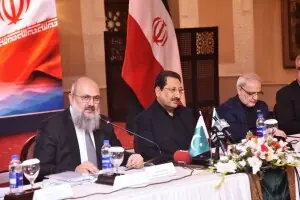
Speaking at a conference titled “Solar. Storage. Flexibility 2026” organised by Renewables First, Pakistan Solar Association and Global Solar Council here on Tuesday, the minister said the government is actively engaging with the IMF to secure approval for time-based electricity pricing, which could help increase power consumption and improve system efficiency.
“We approached the IMF three to four months ago to introduce a form of time-based tariff,” Leghari said, adding that such mechanisms are successfully implemented in countries like Australia, where utility companies can adjust pricing to boost demand during different hours of the day.
READ MORE: Solar reshapes power demand patterns: Leghari
He maintained that offering lower tariffs during off-peak hours has no fiscal impact and is not linked to IMF programme conditions. However, he noted that Pakistan still faces constraints in implementing such policies.
“The Time-of-Use marginal tariff of around Rs6 per kWh during daytime is not being allowed. These are challenges that countries like Australia do not face,” he added.
According to the minister, enabling cheaper daytime electricity could also support energy storage solutions, allowing consumers to store power and use it during expensive peak hours, thereby helping flatten the “duck curve”.
Leghari expressed optimism that Pakistan would eventually convince the IMF, stating that all necessary justifications and data would be presented to secure approval.
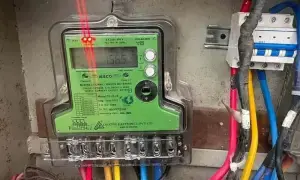
He also highlighted the need for significant investment in the digitalisation of the power grid, noting that many single-phase meters are not yet digital and lack reverse flow capability required for distributed generation.
The minister said Pakistan is undergoing a major transformation in its energy sector, shifting focus from power generation to efficient utilisation and storage.
He noted that the country’s solar power capacity has surged to nearly 38,000MW, fundamentally altering the energy landscape.
“Pakistan no longer faces a challenge of electricity generation alone, but rather efficient use and storage of power,” he said, pointing out that surplus generation during the day and higher demands in the evening have created a new imbalance.
Leghari stressed that Battery Energy Storage Systems (BESS) are now essential for grid stability and efficient power management.
“Without battery storage, achieving the target of 90 percent clean energy by 2035 will not be possible,” he said.
He added that clean energy currently accounts for about 55 percent of the country’s electricity generation mix, with a target to raise this share to 90 percent over the next decade.
The minister warned that reliance on imported fuels poses serious risks to energy security, citing recent RLNG supply disruptions from Qatar that led to nighttime load shedding.
“Solar generation helped stabilise supply during the day, but the absence of storage solutions exposed vulnerabilities at night,” he remarked.
Leghari said the government is prioritising the development of a domestic battery energy storage industry to reduce reliance on imports.
“We will promote local manufacturing of batteries along with engineering, system integration and battery management software,” he said.
He revealed that the Ministry of Industries is finalising a comprehensive battery manufacturing policy, while a National Steering Committee on BESS has already been established, supported by technical and regulatory working groups.
Pilot BESS projects in distribution companies (Discos) have also been approved, and data from these projects will help shape future regulatory frameworks.
The government is additionally working on a national BESS framework, which will outline safety standards, grid connectivity protocols and investment mechanisms.
Leghari said Pakistan has emerged as one of the fastest-growing distributed energy markets globally and assured investors of a transparent and stable policy environment.
Inviting international investors and technology firms, he said recommendations from the conference would be incorporated into policymaking.
“We are not interested in ornamental reports, but in practical and implementable solutions,” he said, adding that Pakistan’s energy future depends on “local sun, local engineers and local battery storage.”
He reiterated that the country’s first comprehensive energy plan will be unveiled by April next year, outlining a long-term roadmap for sustainable energy development.
Copyright Business Recorder, 2026













Comments