


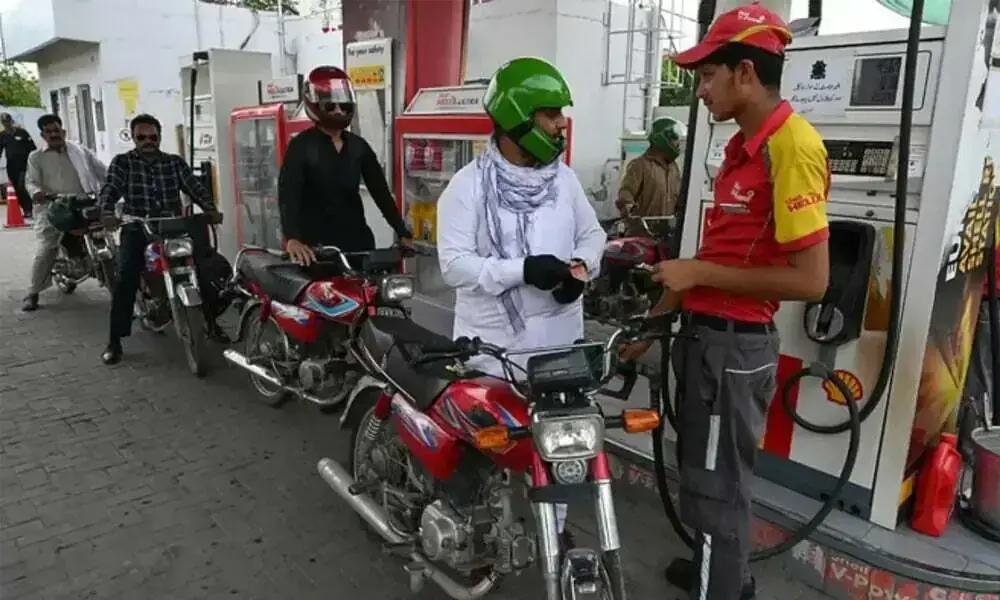

Pakistan’s petroleum pricing system has many visible burdens: petroleum levy, margins, freight, exchange-rate pass-through and government adjustments. But one of the most revealing is the least understood: deemed duty. It is a charge that consumers pay without seeing it, a subsidy that government does not budget transparently, and a protection that refineries have treated for too long as an entitlement.
Deemed duty is not an ordinary customs duty. It is not paid at the border. It is built into the ex-refinery price of locally refined fuel as if the product had been imported and customs duty had been paid. In practical terms, Pakistani consumers pay domestic refineries an import duty on an import that never happened. That is not sound taxation. It is policy laundering.
The original case was not absurd. Pakistan needed local refining capacity. Refineries were old, margins were uncertain, and dependence on imported finished petroleum products created real supply risks. When the government moved away from guaranteed-return refinery pricing in 2002, deemed duty was presented as a transition mechanism: consumers would pay more today so the country could have upgraded, cleaner and more competitive refineries tomorrow.
Two decades later, the question is simple: where is that tomorrow?
The public record is damning. Estimates of deemed-duty collections have varied widely, with public reporting citing figures from above Rs200 billion to as high as Rs500 billion depending on period and method. The precise number matters, but the larger scandal is that such a large consumer-funded transfer could run for years without a clean, refinery-wise public ledger showing how much was collected, where it was placed, what was invested, and what was delivered? If the country cannot clearly trace the money, the policy has already failed the governance test.
This was known long ago. The Planning Commission’s Annual Plan 2011-12 stated plainly that subsidies paid to oil refineries in the form of deemed duty should be removed and that ex-refinery pricing should be improved as the oil industry moved gradually towards deregulated pricing. The same plan went further: refinery support was to be discontinued after three years to encourage refineries to upgrade configuration and improve efficiency. That was not a technical footnote. It was an institutional attempt to stop a temporary support from becoming permanent protection. It was ignored.
That ignored warning explains the failure. Deemed duty functioned like a tax but escaped the discipline of a tax. A tax is debated, budgeted, collected and appropriated. Deemed duty hides inside the fuel price. The citizen pays it without seeing it. The refinery receives it without the same level of public accountability. The state defends it without treating it as expenditure. Everyone gets cover except the consumer.
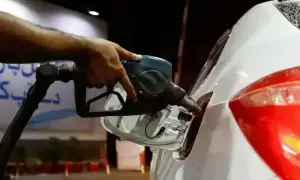
And the consumer is not an abstraction. Diesel moves food, fertiliser, buses, machinery, cement, crops, exports and labour. A hidden charge on diesel does not remain at the pump. It travels through freight, agriculture, construction, public transport and inflation. The poor may never hear the words “deemed duty”, but they pay it in flour, vegetables and fares. That is why this is not merely a refinery issue. It is a cost-of-living issue.
The industry’s defence is familiar: refineries invested. Some did. Product quality improved in places; units were added; some modernisation occurred. Pakistan should not shut refineries overnight, nor should it become casually dependent on imported finished fuels. Local refining, storage and supply security matter. But that is not the test. The test is whether consumers received value for the protection they were forced to finance. On that test, the record is weak.
A serious refinery policy should have delivered deeper conversion, lower furnace-oil output, cleaner fuels, better petrol and diesel yields, stronger storage and internationally competitive operations. Instead, Pakistan kept extending protection, renegotiating timelines and accepting partial progress as success. In normal industrial policy, incentives buy performance. In Pakistan, too often, they buy extensions.
The worst feature of deemed duty is the moral hazard it creates. If refineries lose money, protection is justified as survival support. If they make money, protection is justified as upgrade funding. If upgrades are delayed, the answer is more time. If the consumer suffers, the explanation is national interest. This is a one-way ratchet: gains are private, risks are socialised, and accountability is postponed.
The new brownfield refinery policy tries to impose more structure through upgrade agreements and escrow arrangements. That is better than the old loose regime. But the danger remains. Another long protection period, without hard milestones and automatic clawback, will simply repeat the old mistake with better stationery. Escrow accounts mean little unless independently audited. Upgrade agreements mean little unless failure has consequences. If a refinery misses financial close, delays commissioning, reduces scope or fails quality and conversion targets, the benefit must be withdrawn and recovered.
Pakistan must also stop confusing refinery support with energy security. Strategic petroleum reserves, bonded storage, open-access terminals and minimum inventory obligations are legitimate national requirements. They should be funded transparently and governed separately. Energy security cannot mean making consumers finance inefficient assets indefinitely. That is not resilience. It is ransom economics.
The deeper issue is that Pakistan still lacks a real downstream petroleum market. Prices remain administered. Freight equalisation hides location-specific costs. Import decisions, refinery upliftment, storage constraints and government interventions blur the price signal. The result is a half-market: liberal enough for private gain controlled enough to socialise losses.
In a functioning market, refineries would compete with imports, importers with refiners, and storage operators with each other. Prices would reveal logistics costs. Inefficient refineries would upgrade, merge, convert or exit. Consumers would see the true cost of policy choices. Pakistan has instead built a system where every inefficiency is renamed as protection and every protection is billed to the public.
The reform agenda is clear. First, publish a full forensic audit of deemed duty from 2002 onwards: refinery-wise collections, product-wise basis, utilisation, investment, project status, related-party payments, and verified upgrades. No more fog. Put the ledger on the table.
Second, any future deemed duty or tariff protection must be declining, time-bound and capped. Third, all proceeds must be ring-fenced through independently monitored escrow accounts. Fourth, clawback must be automatic. Fifth, incentives must reward outcomes, not survival: lower furnace-oil yield, cleaner fuels, higher conversion, storage obligations and measurable import substitution. Finally, Pakistan must move towards a real downstream market with phased price deregulation, open access to storage and logistics, transparent freight pricing, competitive imports, strong fuel-quality enforcement and a regulator that protects competition rather than managing favours.
The argument is not against refineries. The argument is against bad policy. Pakistan needs modern refineries, not protected museums. It needs energy security, not hidden subsidies. It needs markets, not administrative bargains stitched together in Islamabad and paid for by citizens at the pump.
Deemed duty may have begun as a transition mechanism. It became a long-running hidden tax with weak accountability and poor delivery. The consumer has paid enough. Now refineries must deliver - or the protection must end.
Planning Commission of Pakistan, Annual Plan 2011-12, Chapter 10: Energy, pp. 96 and 105. The plan states that subsidies paid to oil refineries in the form of deemed duty should be removed, and that refinery support would be discontinued after three years to encourage configuration upgrades and efficiency improvements.
Business Recorder, “Expansion of oil refineries: Planning Commission seeks end to deemed duty,” 2011. The report cites the same Planning Commission position on removing deemed-duty subsidies and improving ex-refinery pricing.
Auditor General of Pakistan, Audit Report on the Accounts of Petroleum Division and OGRA, 2019-20, para 2.1.7.4, on irregular retention of deemed duty by Byco.
PIDE Reform Agenda for Accelerated and Sustained Growth, recommendation to eliminate the 7.5 percent deemed duty on diesel collected by refineries since 2002 because upgrades were not being delivered sufficiently.
Copyright Business Recorder, 2026

PUBLIC SECTOR EXPERIENCE: He has served as Member Energy of the Planning Commission of Pakistan & has also been an advisor at: Ministry of Finance Ministry of Petroleum Ministry of Water & Power
PRIVATE SECTOR EXPERIENCE: He has held senior management positions with various energy sector entities and has worked with the World Bank, USAID and DFID since 1988. Mr. Shahid Sattar joined All Pakistan Textile Mills Association in 2017 and holds the office of Executive Director and Secretary General of APTMA.
He has many international publications and has been regularly writing articles in Pakistani newspapers on the industry and economic issues which can be viewed in Articles & Blogs Section of this website.











Comments