


Chairman FBR briefs Senate body: Rs1.9trn collected thru power bills in 4 fiscal years


ISLAMABAD: The Federal Board of Revenue (FBR) collected a cumulative Rs1.866 trillion in sales tax and income tax through electricity bills during the last four fiscal years, including Rs476.1 billion in fiscal year 2025-26, according to an official briefing presented before the Senate Standing Committee on Finance and Revenue.
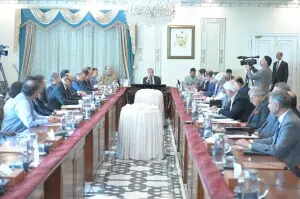
Chairman FBR Rashid Langrial warned that electricity would have more taxes if rationalised, as this sector gets the highest concessions. This sector has the major contribution to GDP, said the FBR Chairman while briefing the committee, which met with Saleem Mandviwalla in the chair here on Wednesday.
FBR official rejected reports claiming that the FBR collected Rs620 billion through electricity bills, describing them as “not factual.”
READ MORE: NA body informed: Rs620bn taxes collected through power bills
According to the document, the FBR collected a total of Rs312.8 billion in fiscal year 2022-23, Rs515.5 billion in 2023-24, Rs562 billion in 2024-25, and Rs476.1 billion in 2025-26, taking the four-year cumulative collection to Rs1.866 trillion.
In the last fiscal year (FY2025-26), the FBR collected Rs351.8 billion in sales tax and Rs124.4 billion in income tax withheld through electricity distribution companies (DISCOs).
The sales tax component comprised Rs269.1 billion in normal sales tax, Rs54.98 billion in extra tax, Rs16.54 billion in further tax, and Rs11.14 billion as sales tax on electricity supplied to retailers.
On the income tax side, the FBR collected Rs66.18 billion from industrial consumers, Rs51.99 billion from commercial consumers, Rs4.83 billion from domestic non-ATL consumers and Rs1.37 billion under Section 235A, bringing the total income tax collection through electricity bills to Rs124.36 billion during 2025-26.
Senator Kamil Ali Agha said that, according to media reports, the FBR collected Rs620 billion from the public through electricity bills, which was tantamount to coercion.
He said that multiple taxes imposed on electricity bills had pushed the per-unit price to Rs85, while the burden of high electricity bills had made life extremely difficult for consumers.
The FBR Chairman said that sales tax was levied on electricity bills for domestic consumers, adding that electricity is a commodity and that sales tax on electricity consumption is a common practice worldwide.
The FBR Chairman further stated that every year Rs400-500 billion in income tax withholding, which is adjustable, remains unclaimed. However, taxpayers can claim a refund of this amount by filing their income tax returns.
The Committee reviewed complaints regarding difficulties faced by customers, particularly Politically Exposed Persons (PEPs), in dealing with commercial banks. MNA Muhammad Moin Amir Pirzada informed the Committee that despite its earlier directions to designate dedicated officers in banks and the State Bank of Pakistan (SBP), no uniform Standard Operating Procedures (SOPs) had been developed.
He further informed the Committee that his bank account had been closed in April 2026 and, despite repeated correspondence with the concerned bank and SBP, no response had been received. He emphasised the need for a standardised annual data updating mechanism to prevent such incidents.
Governor State Bank acknowledged that while regulations governing PEP-related cases already exist, the lapse occurred at the branch level.
He informed the Committee that a backup officer had been designated and assured members that a dedicated focal person would also be appointed. The Committee emphasised the need for uniform SOPs across the banking sector, while the State Minister for Finance stressed that standardised procedures are essential to ensure effective customer service and grievance redressal.
The Committee also discussed the “Foreign Investment (Promotion and Protection) (Amendment) Bill, 2026 which was introduced by Senator Manzoor Ahmed with following amendment in Section (1)(2) of Foreign Investment (Promotion and Protection) Act, 2022:” It extends to the whole of Pakistan, including all qualified investments in Balochistan Province, not less than USD 500 million and, not limited to any one project, as mentioned in schedules and annexures of this Act.” The Act offers a wide range of investment incentives and protected benefits to the foreign investor.
However, the Act extends investment protection to only one project, i.e.,the Reko-Diq project, which is included in the First Schedule of the Act as qualified investment. The specific exemptions in the taxes and duties granted to the project through legislative amendments are included in the Second Schedule of the Act, while the Third Schedule extends investment incentives in the form of protected benefits to the project.
In the instant matter, no particular project has been recommended for declaration as a qualified investment under the FIPPA, 2022, but the scope of the Act is being proposed to be extended to all projects meeting an investment threshold of USD 500 million.
Although inclusion of a particular project in the FIPPA can enable to secure financial commitment of prospective international investors and lenders, it has wide range of protected benefits and investment incentives which have huge financial implications.
The incentive package offered under FIPPA ranges from investment protection, grant of Special Economic Zone (SEZ) status, exemption from taxes and duties, and free flow of foreign currency.
Finance Division responded that the present formulation of Section 1(2) was introduced through a single amendment in 2022. It can be safely assumed that the current language of the law has been inserted after careful assessment and detailed deliberations.
The proposed amendment would not only reverse the first amendment of 2022 but essentially enable extension of FIPPA to all investments of USD 500 million and more. As FIPPA entails major concessions of taxes and duties, the proposed amendment could have major financial implications.
The proposed formulation also blurs the distinction between ‘qualified project’ and all other projects, as it says “not limited to any one project as mentioned in schedules and annexures of this Act”.
Finance Division also informed that due to legal and international commitments to the IMF and revenue issues, this facility cannot be extended to other projects. Officials of the Ministry of Finance informed the Committee that only one project currently qualifies under the existing criteria and that the government’s fiscal position does not permit extending similar concessions.
The Finance Minister assured the Committee that future proposals would be considered within the available fiscal space.
The Committee also discussed the non-issuance of revised pay-slips to Directors’ Staff and Private Secretaries of the Senate Secretariat by the AGPR.
Chairman of the Committee directed the concerned authorities to resolve the matter within seven days, warning that failure to comply would result in referral to the Senate Privileges Committee.
The Committee further reviewed banking service charges, including SMS alert charges and card transaction issues. Governor State Bank informed the Committee that SMS alerts are optional and subject to customers’ consent, while banks are introducing app- and email-based alerts as alternatives.
He also informed the Committee that Visa card transactions conducted within Pakistan would not be charged in US dollars and that banks are currently bearing approximately Rs80 billion annually under the Pakistan Remittance Initiative (PRI). Committee members appreciated the Chairman’s efforts for introducing PRI reforms, which have resulted in annual savings of around Rs80 billion.
The committee was informed that no amount was budgeted for the current fiscal year under this scheme and banks would bear these charges.
The Committee also took up complaints regarding dress code instructions in certain banks. Senator Dr. Zarqa Suharwardy Taimur informed the Committee that female employees were allegedly being compelled to wear abayas. Senator Sherry Rehman emphasised that no employee should be forced to adopt any specific attire.
The Governor, State Bank, informed the Committee that its previous recommendations had already been conveyed to all banks.
The Committee reiterated that it had only directed observance of a modest dress code and had never mandated any specific attire. It directed all banks to submit their Human Resource dress code policies and instructed SBP to circulate updated guidelines to ensure that no employee is subjected to unnecessary compulsion.
Copyright Business Recorder, 2026

















Comments