


Pakistan unveils four-year Hajj policy
- Pilgrims will be able to choose their preferred Hajj year in advance
Pakistan unveiled its first four-year Hajj policy (2027-2030), focusing on digital governance, transparency, and improved facilities, allowing pilgrims to pre-select their Hajj year.
- Digital registration, selection, and complaint management systems.
- Long-term contracts for Hajj services to improve quality and reduce costs.
- Government's shift to a regulatory role and increased private sector involvement.
- Enhanced pilgrim training and comprehensive emergency management.
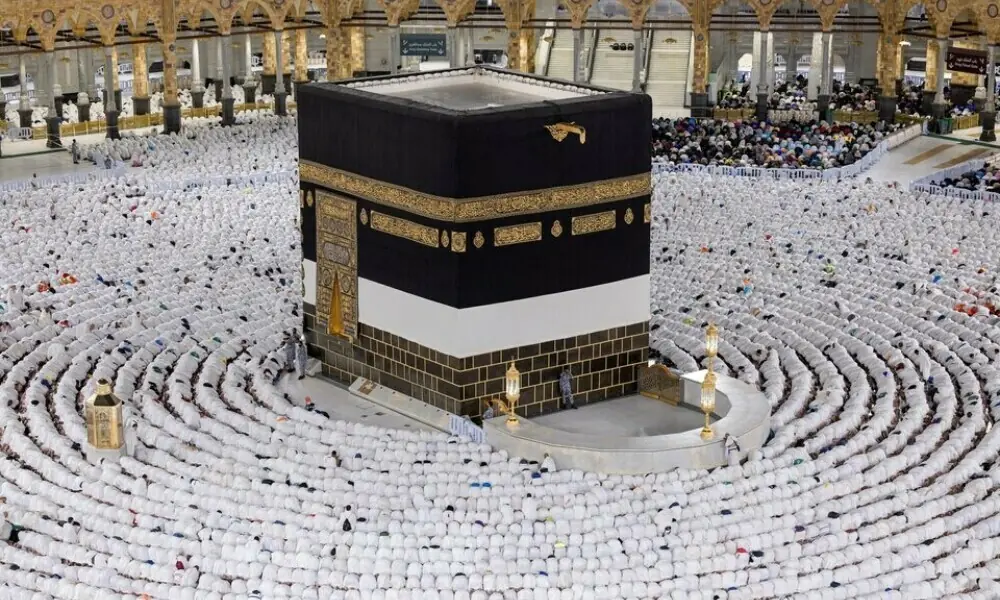
Federal Minister for Religious Affairs Sardar Muhammad Yousuf on Wednesday unveiled Pakistan’s first four-year Hajj policy (2027–2030), aimed at ensuring transparent and digital governance, accountability, merit and improved logistical facilities for pilgrims.
“This is not only a policy but the beginning of fundamental and lasting reforms in Hajj arrangements,” the minister said while addressing a press conference in Islamabad.
He announced that, for the first time, pilgrims will be able to choose their preferred Hajj year in advance under a four-year Hajj registration and waiting list system.
The minister said three to four-year contracts could be signed for accommodation, transport, catering, air travel and cargo services, which would improve the quality of facilities while reducing costs.
Sardar Yousuf said that all stages of the Hajj process—from registration to grievance redressal and post-Hajj review—would be carried out through a completely digital system.
Sharing details of the quota system, he said the quota for the government and private Hajj schemes would remain at 60% and 40%, respectively, from 2027 to 2030, unless revised by the federal cabinet.
He said the government would gradually transition to the role of regulator, monitor and quality assurer, rather than directly managing Hajj arrangements, while the involvement of the private sector would increase.
The minister said pilgrims would be able to register for the Hajj year of their choice by depositing an estimated 10% of the Hajj expenses at the time of registration.
Regarding the selection process, he said pilgrims would be selected on a “first come, first served” basis through a fully transparent digital waiting list.
He added that multiple Hajj packages of varying duration would be introduced under the Government Hajj Scheme, enabling pilgrims to choose according to their needs and convenience.
Sardar Yousuf said all procurement and contracts would be awarded transparently in accordance with government procurement rules in both Pakistan and Saudi Arabia.
He further said that if any amount remained from the Hajj dues collected after the completion of Hajj operations, it would be refunded to the pilgrims.
The minister said both public and private Hajj arrangements would be reviewed impartially by an independent third party to further improve the quality of services.
He added that the registration and monitoring of private Hajj companies would be based on their performance and compliance with prescribed service standards rather than quota allocation alone.
Sardar Yousuf announced that all private Hajj companies would be required to use the Private Hajj Management Portal (PHMP), through which bookings, payments, monitoring and auditing would be conducted entirely through digital means.
He noted that all Hajj payments would be made only through government-designated banking channels to ensure transparency and financial security.
Sharing details of the complaint mechanism, the minister said a modern digital complaint management system, effective monitoring and a formal appeals process were being introduced to ensure the prompt resolution of pilgrims’ complaints.
He also said that a comprehensive merit-based criterion would be formulated by the Cabinet Committee for the selection of Hajj assistants to ensure that the most qualified individuals were appointed.
The minister said the training of Hajj pilgrims would be further enhanced and would include awareness of Hajj rituals, mobile applications, health, emergency management and Saudi laws.
He added that the Hajj Protector Scheme would continue under the new policy, providing financial assistance in cases of death, accidents or emergency evacuation during Hajj.
Highlighting emergency preparedness, Sardar Yousuf said an emergency management system and a dedicated emergency response team would be established to deal effectively with any emergencies.
He said the new Hajj policy had been aligned with Saudi Vision 2030 and international standards to ensure transparency, digital governance, accountability and the provision of the best possible facilities to pilgrims.
Expressing confidence in the new policy, the minister said the four-year framework would not only facilitate better planning for the coming years but would also strengthen the confidence of millions of pilgrims by bringing Pakistan’s Hajj arrangements in line with global standards.


















Comments