


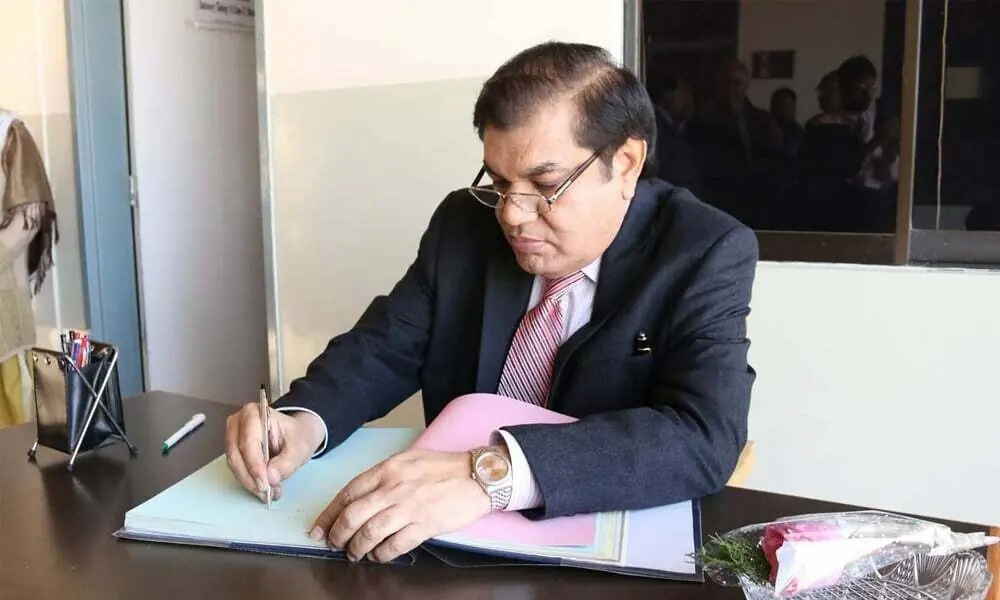

KARACHI: The President of the Pakistan Businessmen and Intellectuals Forum and All Karachi Industrial Alliance as well as the Chairman of National Business Group of Pakistan and the FPCCI Policy Advisory Board, Mian Zahid Hussain, has urged the federal government to establish a GSP+ coordination mechanism comprising the Ministries of Commerce, Foreign Affairs, the FPCCI, human rights, overseas Pakistanis, human resource development, climate change, provincial governments and representatives of the business community.
He said progress on legislation alone would not be sufficient; implementation, documentation and verifiable results would be equally important in convincing European institutions.
He said that Pakistan cannot afford any complacency regarding its GSP+ status, as preferential access to the European Union is critically important for exports, employment, industrial production and foreign exchange earnings.
He said that the European Union’s latest assessment of implementation of the Generalised Scheme of Preferences during 2023–2025 has identified shortcomings in Pakistan’s compliance with some of its obligations.
While Pakistan has expressed disappointment over what it considers an insufficiently balanced assessment, the matter should be handled through constructive engagement, effective diplomacy and accelerated domestic reforms rather than confrontation.
Mian Zahid Hussain said that Pakistan’s economic stakes are enormous. Pakistan exported goods worth approximately 8.7 billion euros to the European Union in 2025 while total bilateral trade in goods reached around 12.2 billion euros. The EU accounted for about 14.1 percent of Pakistan’s total trade and remains one of the country’s most important export markets.
He said Pakistan is presently the largest beneficiary of the EU’s GSP+ arrangement. More than 85 percent of Pakistan’s exports, including a substantial share of textiles and clothing, enter the European market duty and quota free.
Mian Zahid Hussain observed that textiles and apparel are Pakistan’s largest export industry and employ millions of workers directly and indirectly.
Any deterioration in preferential access to Europe could increase duties and taxes on Pakistani products, reducing their competitiveness against regional exporters and adversely affecting textile production, investment, employment and foreign exchange earnings.
He said that Pakistan’s GSP+ benefits are not being withdrawn immediately as the new EU GSP regulation will become applicable from January 1, 2027, and existing GSP+ beneficiaries will have to qualify under an expanded framework.
The number of international conventions linked with the arrangement will increase from 27 to 32, covering human rights, labour standards, environmental protection, climate commitments and good governance.
He further added that existing beneficiaries will continue receiving GSP+ preferences during a transition period until December 31, 2028, but countries wishing to continue under the scheme thereafter must submit a fresh application and demonstrate credible implementation of their commitments.
He said that Pakistan should use this transition period wisely instead of waiting until the deadline approaches.
Mian Zahid Hussain said Pakistan has already undertaken important legislative and institutional reforms since receiving GSP+ status in 2014, and these achievements should be communicated effectively to European policymakers.
He said that the European Union’s demand for implementing additional conventions is beneficial not only for exports but also for Pakistan’s society.
He further noted that GSP+ is not merely a diplomatic facility, but it is an economic asset for Pakistan.
Protecting preferential access to the European markets means protecting exports, factories, jobs and valuable foreign exchange earnings. The government and private sector must therefore work together to ensure that Pakistan comfortably qualifies under the new GSP+ framework.
Copyright Business Recorder, 2026















Comments