


Plight of Longi chilli
Pakistan's chilli industry faces collapse due to unsafe hybrid varieties contaminated with carcinogens, weak regulation, and policy neglect, jeopardizing public health and export markets.
- Health risks from carcinogen-contaminated hybrid chillies.
- Loss of lucrative export markets.
- Post-harvest practices causing widespread chilli contamination.
- Urgent need for stronger regulation and farmer support.
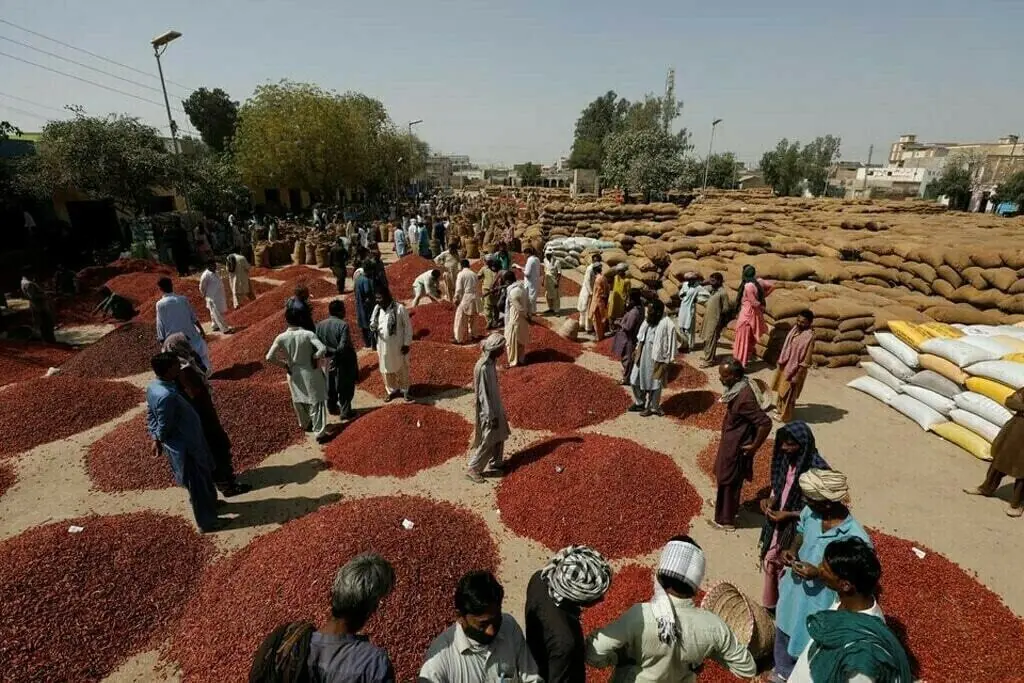
EDITORIAL:An investigative report on Kunri’s famed chilli industry is a cautionary tale of how short-term commercial gains, weak regulation and policy neglect can together erode products that once gave Pakistan a genuine competitive advantage.
The most disturbing revelation is not simply that the country’s prized indigenous Longi chilli is steadily being displaced by more profitable hybrid varieties, but that the hybrid chillies widely consumed in Pakistan may be exposing millions of consumers to a known carcinogen while simultaneously shutting the door on lucrative export markets. That this problem has persisted despite being well understood by researchers and regulators points to a serious failure of food safety governance.
The report documents how Pakistani hybrid chilli products routinely exceed internationally accepted limits for aflatoxin B1, a toxin produced by mould that is classified as a Group 1 carcinogen by the International Agency for Research on Cancer and is strongly associated with liver cancer. Yet chilli powder containing contamination levels far above those permitted in the European Union continues to be sold domestically. The fact that some branded products are labelled for consumption only within Pakistan because they do not meet export standards raises an uncomfortable question: why should Pakistani consumers be expected to accept food that other countries deem unsafe? The commercial costs are equally evident. Pakistan, once among the world’s leading chilli exporters, has steadily lost access to premium markets because buyers in the European Union and elsewhere enforce strict food safety standards. Rejected consignments not only hurt exporters but also undermine the country’s credibility as a supplier of quality agricultural produce.
Importantly, the investigation makes clear that contamination is neither unavoidable nor technologically difficult to address. Much of it occurs after harvest, when chillies are dried on bare ground and exposed to dust, moisture and fungal growth before reaching the market. Research has already demonstrated that improved post-harvest practices, particularly solar tunnel drying, can significantly reduce aflatoxin levels while improving quality, shortening drying time and increasing market value. The challenge is therefore not one of scientific knowledge but of implementation. Small farmers cannot be expected to adopt improved technologies without extension services, affordable financing and investment in modern post-harvest infrastructure. At the same time, preserving Kunri’s indigenous Longi chilli and improving food safety should be seen as complementary objectives. A distinctive local variety produced to internationally acceptable standards would command premium prices while restoring confidence in Pakistan’s exports.
At the end of the day, this is first and foremost a public health issue. Consumers have no means of determining whether the chilli powder they purchase contains unsafe levels of aflatoxin, making effective regulation indispensable. Provincial food authorities and federal regulators must therefore institute routine surveillance, mandatory testing and strict enforcement across the supply chain. A country that aspires to expand agricultural exports cannot afford a regulatory culture in which food rejected abroad is considered acceptable at home. The standards that protect export competitiveness must also protect the health of Pakistani consumers.
Copyright Business Recorder, 2026
























Comments