


This wave of Trump tariffs is likely here to stay; more are coming
- His latest global tariff salvo — duties of 10% or 12.5% on 60 countries over allegedly weak enforcement of forced-labor bans — marks the first of numerous tariff actions
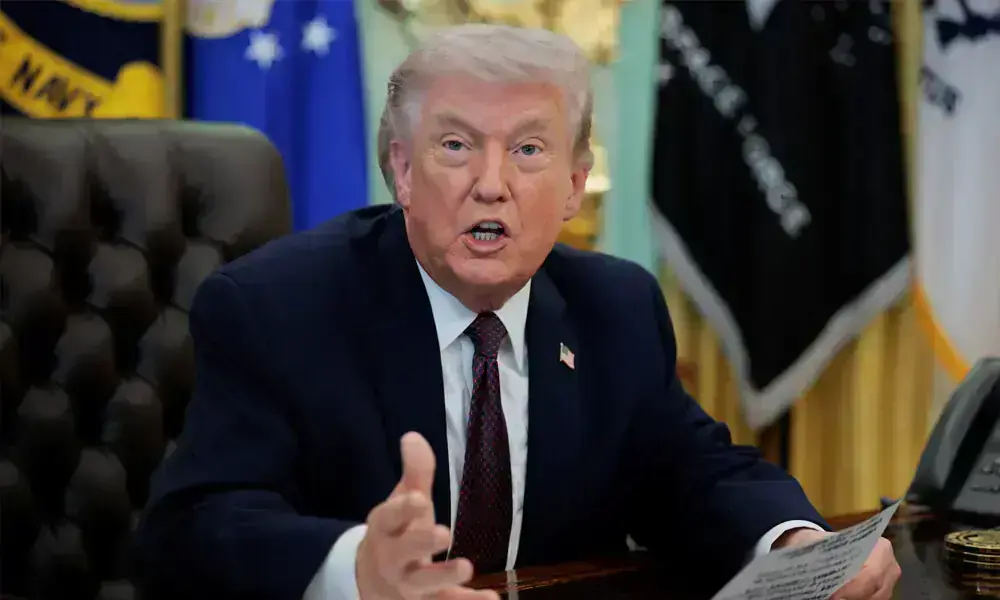

WASHINGTON: U.S. President Donald Trump had no time for lengthy tariff investigations when he returned to office last year, wanting to hammer trading partners right away to wring concessions.
What followed was a chaotic start to a trade agenda that was eventually upended by a stinging Supreme Court defeat this year. Now he and his team are moving into a new phase to build a more durable U.S. tariff wall using more traditional and court-tested trade laws, those he had little patience for 18 months ago.
His latest global tariff salvo — duties of 10% or 12.5% on 60 countries over allegedly weak enforcement of forced-labor bans — marks the first of numerous tariff actions to be unveiled in the months ahead. They include probes into excess industrial capacity, alleged intellectual property theft by Vietnam, and national security protections for strategic industries from semiconductors to robotics and industrial machinery.
“We’re at the end of the beginning of the Trump tariff agenda,” said Dan Ujczo, associate general counsel at Canadian oil producer Cenovus Energy, who specializes in U.S.-Canada trade. “Within the next few weeks, and certainly by the end of the summer, we will see large parts of President Trump’s trade policy fully in effect.”
Pakistan among countries hit with Trump’s new 10% US forced labour tariff
This could bring more clarity and certainty for businesses on Trump’s ultimate tariff structure, along with dread in foreign trade ministries that they may have to cough up more concessions to protect access to a $3.4 trillion U.S. import market.
Direct replacements
Trump’s new anti-forced labor duties imposed under Section 301 of the Trade Act of 1974, the unfair trade practices statute used against China during his first term, almost directly replace a global 10% temporary tariff that expired on Friday. They cover 99.4% of U.S. imports, the U.S. Trade Representative’s office said.
This rebuilds part of Trump’s signature “Liberation Day” tariffs of 10%-50% on nearly every country, which the U.S. Supreme Court struck down as illegal under an untested national emergencies law Trump used to impose them.
Another part of the baseline tariffs is likely to be rebuilt by another Section 301 investigation into excess industrial capacity, targeting 16 big trading partners, including China, the EU, Japan, South Korea, Mexico and Vietnam. That ongoing probe targets industrial subsidies and other export-focused policies.
US tariff puts Indian textile exporters at disadvantage, industry body says
Amid a wider uproar over Trump’s move, some viewed it as largely maintaining the status quo.
Mark Bissell, CEO of Michigan-based vacuum maker Bissell Inc, said the newest tariffs were largely what the company anticipated and it hadn’t frontloaded inventory from China and elsewhere to try to beat them.
“We continued to run the business based on the belief that the tariffs would stay in the 10-15% range,” Bissell said in an email to Reuters.
Budget impact
Trump’s gamble on quick but untested tariffs right out of the gate did four things. It heaped added costs onto retailers and other import-dependent industries; it brought dozens of trading partners to the negotiating table, yielding concessions for lower rates; it prompted swift retaliation and tariff escalation from China that led to a delicate truce; and it filled U.S. fiscal coffers with hundreds of billions of dollars.
The Liberation Day tariffs alone yielded $166 billion in revenue, a major offset to a growing federal deficit, but refunds to importers have now turned those collections negative.
Canada evaluating ‘all options’ after fresh US tariffs threat
The 150-day temporary tariffs, based on a law meant to quell balance-of-payments crises, have added $31 billion in assessed revenue through July 5. But if a federal court ruling against them stands, that money, too, is subject to refund.
With U.S. public debt approaching $40 trillion, Josh Lipsky, chair of international economics at the Atlantic Council, said subsequent administrations may become addicted to tariff revenue that is likely to be sustained.
“The tariff wall is being rebuilt strong brick by strong brick, and it’s very durable,” Lipsky said.
Trump’s broad use of Section 301 in the forced-labor case prompted an immediate legal challenge by small businesses, but trade and legal experts say this will take time to play out. The statute has a solid track record in the courts, and judges may be reluctant to enjoin actions aimed at curbing forced labor and lowering barriers to U.S. goods.
More to come
U.S. Trade Representative Jamieson Greer made clear this week that Trump will use everything at his disposal to erect tariffs to reshore production and shrink the trade deficit.
“The specific authorities this administration is using have changed, but the trade strategy has not,” Greer told the U.S. Senate Finance Committee.
US trade envoy says acting ‘soon’ on new tariffs as 10% levy to expire
Greer, who has not committed to a timeline for the industrial capacity investigations, has said the layers of tariffs being rebuilt will not exceed caps included in deals he has been negotiating, including 15% for the EU, Japan and South Korea and higher rates for Southeast Asian countries.
Administration officials say even though China is viewed as the world’s largest source of excess manufacturing, its rates will not exceed the cap of about 20% agreed by Trump and Chinese President Xi Jinping last November, which is on top of the 25% tariffs from his first term.
Some nominal — or announced — duties may be higher than actual applied rates, which analysts say may be an enforcement mechanism for countries to stick to agreed trade deal terms.
Still, some things continue to come out of the blue, including the 50% duties on Canadian beer, dairy, hockey sticks and other products Trump announced on Monday over Ottawa’s refusal to make trade concessions, and his threat to cut off all trade with Spain over not meeting NATO military spending targets.
That proclivity for spontaneous tariff announcements remains an ongoing risk, said Eswar Prasad, a trade professor at Cornell University and former head of the International Monetary Fund’s China department. “Trump’s eagerness to impose tariffs to address a whole range of grievances will not only continue disrupting the global trading system but will have significant adverse effects on American households and businesses.”

























Comments