


KE's industrial power consumption rises 20% to 6.08bn units in FY26
- Development highlights utility’s role in powering Karachi, country’s economic engine
K-Electric's industrial power consumption hit a record 6.08 billion units in FY26, reflecting Pakistan's 3.7% GDP growth and robust economic activity, especially in Karachi.
- Record industrial power consumption in Karachi.
- Pakistan's GDP growth and economic activity.
- K-Electric's role in powering key industrial sectors.
- Government incentives driving industries to on-grid power.
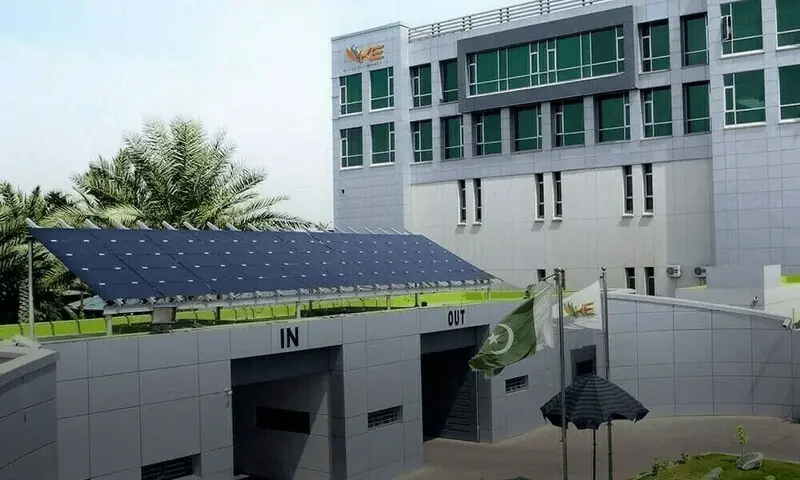

K-Electric’s (KE) industrial feeders’ consumption hit a record high at 6.08 billion units in FY26 as Pakistan’s GDP growth increased to 3.7% during the fiscal year, Finance minister’s advisor Khurram Schehzad said in a post on X.
The development highlights the utility’s role in powering Karachi, the country’s economic engine.
“These are the kind of underlying indicators that reflect improving economic activity beyond the headline numbers,” Schehzad wrote.
“Karachi powers Pakistan’s economy. When its industries consume more electricity, it is often a strong signal that growth is gathering pace.”
In a separate statement, KE Chief Executive Officer Syed Muhammad Taha said: “This achievement cannot be viewed in isolation. It reflects the collective efforts of the Government of Pakistan, the Special Investment Facilitation Council (SIFC), and Karachi’s industrial community, whose continued support has helped foster a stable and conducive business environment for investment and economic growth”.
“Karachi remains central to Pakistan’s industrial and commercial progress. KE has provided industries with loadshed-exempted power supply since 2013, and we are committed to continuing our role in powering that growth through reliable and sustainable power,” he said.
KE’s industrial feeders serve a wide variety of manufacturing and industrial units stretching across various zones.
According to the KE statement, the highest consumption remained in the B3 category – industries deploying power between 501–5,000 kW – that consists of units in the cement, steel, and textile sectors among others.
On a monthly basis, the highest industrial consumption was in the month of June 2026, followed by April 2026.
The highest yearly number was previously registered in FY22 when industrial consumption on grid stood at 5.84 billion units in tandem with GDP growth that also crossed 6% that fiscal year.
“Since FY22, industrial consumption had remained moderate amid economic headwinds, but FY26 saw a substantial 20% year-on-year increase after 5.04 billion units were consumed in FY25.
“With the government’s incentive to move industries from captive to on-grid power, and rebound in GDP growth, industrial consumption has seen an increase. KE also energised 349 new industrial connections while another 273 cases expanded their load, cumulatively adding 168MW of demand to the grid,” KE said.
As per the utility, industrial feeders/segment have had far better recovery rates across all customer categories, underscoring the importance of timely bill payments as one of the most important reasons behind loadshed exemption.
























Comments