


Oil prices rise as hostilities worsen in the Middle East
- Brent futures gained 18 cents, or 0.2%, to $84.91 a barrel
Oil prices surged to a one-month high after the US reimposed a naval blockade on Iranian ports, leading to Iranian retaliatory strikes and renewed hostilities in the Strait of Hormuz.
- US blockade on Iranian ports and retaliatory strikes.
- Strait of Hormuz supply disruptions and global oil impact.
- Oil price forecasts amid escalating regional hostilities.
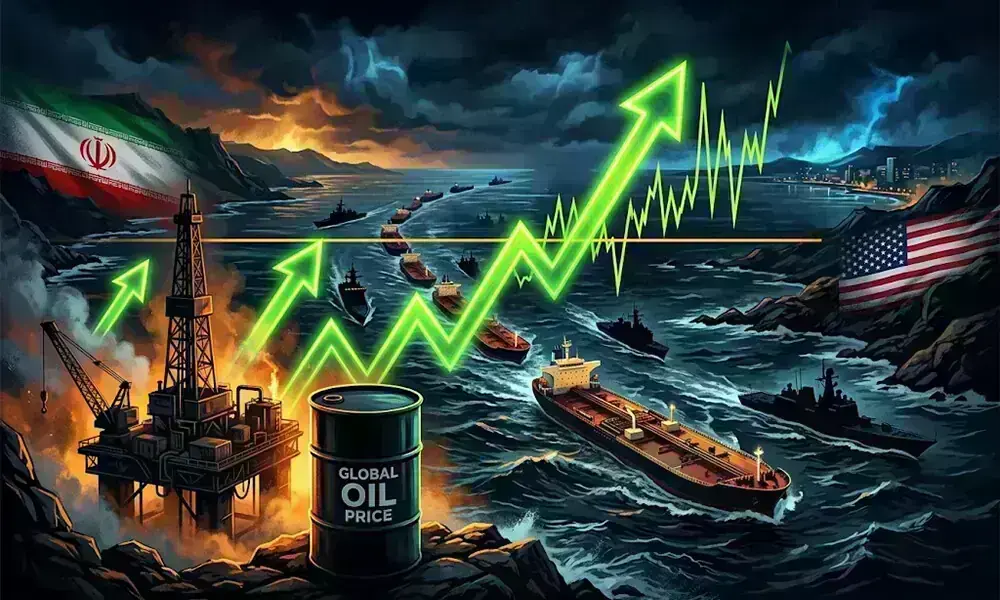

LONDON: Oil extended gains as the U.S. said it had begun a new wave of strikes against Iranian military installations on Wednesday, aiming to limit Tehran’s ability to strike commercial shipping in the Strait of Hormuz.
Washington had earlier reimposed a naval blockade of Iranian ports and launched overnight strikes, prompting Iran’s Islamic Revolutionary Guard Corps to threaten to close “all other export corridors that benefit the U.S. and its allies”.
Brent futures gained 18 cents, or 0.2%, to $84.91 a barrel at 1214 GMT. West Texas Intermediate futures rose 26 cents, or 0.3%, to $79.60 a barrel.
Oil prices settled up 2% at a one-month high on Tuesday as attacks exacerbated a supply disruption in the Strait of Hormuz, through which about a fifth of the world’s oil and liquefied natural gas passed prior to the war’s outbreak.
The hostilities between Iran and the U.S. reignited last week, fraying an already fragile truce reached in June after several months of fighting.
Late on Tuesday, the U.S. military said it had hit dozens of military targets near the strategic waterway and Iranian coastal areas in strikes lasting seven hours.
In response, Iran’s Islamic Revolutionary Guard Corps said on Wednesday it had struck U.S. military targets in the region, including in Bahrain, Kuwait and Jordan.
The U.S. military said its fresh strikes on Wednesday against Iran’s coastal defence systems and cruise missile storage and launch sites were “designed to further degrade military capabilities Iranian forces have used to attack commercial shipping in the Strait of Hormuz.”
Analysts have said Iran has been signalling it may use its Houthi allies in Yemen to shut the Bab el-Mandeb gateway to the Red Sea, opening a new front against Washington and putting two of the world’s most vital energy arteries at risk.
Further strengthening oil prices was a U.S. naval blockade of ships coming and going to Iranian ports, said UBS analyst Giovanni Staunovo, adding that Iranian crude exports were around 1.5 million to 2 million barrels per day in the last two weeks.
Goldman Sachs estimated in a note that Gulf exports recovered to more than 80% of pre-war levels after the U.S.-Iran memorandum of understanding in June but slipped back below 50%, or about 11 million bpd, over the last week.
The bank said Brent could exceed $110 in the fourth quarter this year if the Gulf export recovery continues to stall.
Still, investors are cautious to apply too much of a premium on oil prices, given the back-and-forth headlines.
“This is just all part of the war games,” said Saxo Bank head of commodity strategy Ole Hansen. “And the market has learned to adopt a little bit of a sanguine approach to some of these big announcements, simply in the sense that they often do not actually materialize.”


























Comments