


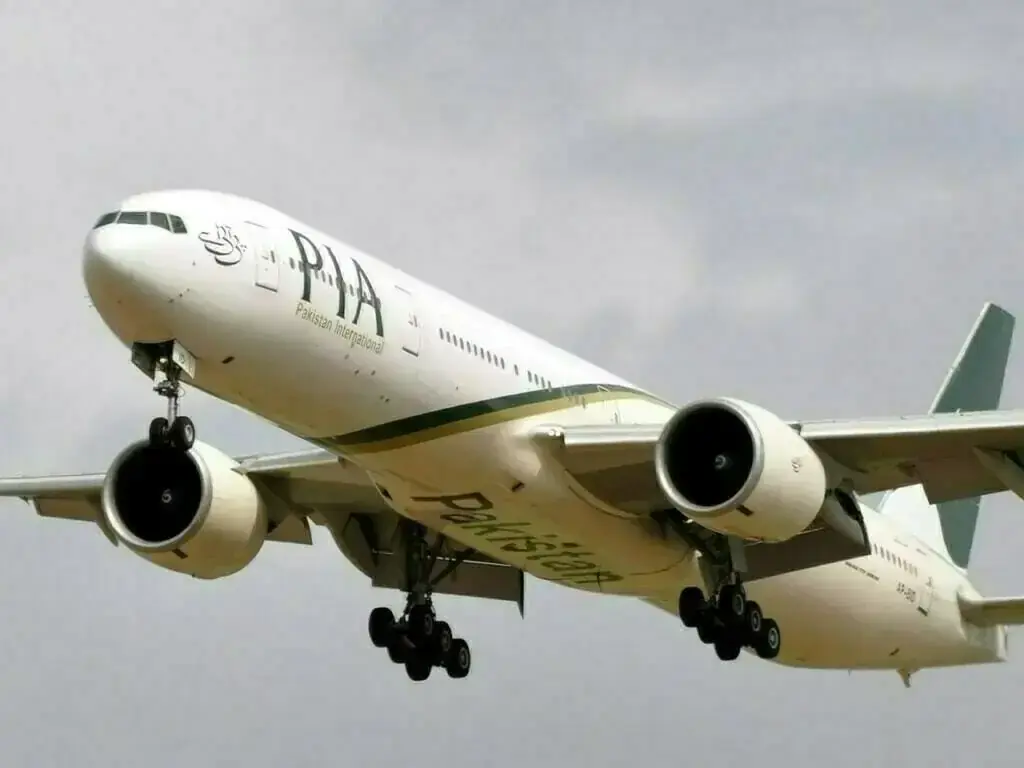

This is the seventh article in a ten-part series on Pakistan’s SOE reform. The previous article examined Pakistan Railways — the case where reform has been indefinitely postponed. This one examines Pakistan International Airlines, where on 30 June 2026, after three wasted decades, reform finally began. The remaining three articles will distil the lessons and set out the way forward.
A sale is not the same thing as a success. The distance between the two is where most Pakistani privatisations have come to grief.
On 30 June 2026, management control of Pakistan International Airlines passed to PIA Equity Limited, a special purpose vehicle formed by the consortium led by Arif Habib Corporation. After three decades of attempts — promised, relaunched, abandoned across governments of every complexion — a Pakistani government has actually sold a major state-owned enterprise. This time, it happened.
That deserves recognition. It also deserves scrutiny.
A blueprint worth studying
The right way to understand this transaction is not as a sale but as rehabilitation. PIA was not simply auctioned off. It was surgically repaired first.
Over Rs 600 billion of legacy debt and pension liabilities were carved out into a separate holding company, so the airline could be handed to private management as a clean entity — a debt-light balance sheet, positive equity, and irreplaceable global traffic rights to 97 countries rather than the accumulated baggage of decades of mis-governance. Tax credits of Rs 36 billion were granted, over Rs 33 billion of FBR and CAA liabilities rescheduled, and the 18 percent sales tax on aircraft leases waived. The European Union and United Kingdom had already lifted their flight bans, restoring access to the markets that matter most.
The contrast with the previous attempt tells the story. In October 2024, the government’s first effort collapsed when a single qualified bidder offered Rs 10 billion against a minimum expectation of Rs 85 billion; less an auction than an embarrassment. Fourteen months later, the same asset drew a genuinely competitive contest: a consortium led by Arif Habib Corporation — with Fatima Fertiliser, City Schools, Lake City Holdings, and AKD Group — bid Rs 135 billion for a 75 percent stake, edging out the Lucky Group by Rs 1 billion in the thirteenth round. Three bidders cleared the Rs 100 billion reference price.
What changed was not the airline. It was the discipline of preparation. Isolate past failures through a holding structure. De-risk the asset to attract credible capital. Bind investors to performance and fleet growth. This is the philosophy strategic privatisation requires — for airlines, banks, and power distribution companies alike. The Privatisation Commission operated here as a restructuring-and-value platform, not a simple auction house. That should become the norm.
Where the money goes
The most instructive feature of the transaction is where the money goes. Of the Rs 180 billion total commitment, Rs 125 billion is injected back into PIA as fresh equity. Only Rs 55 billion goes to the government — Rs 10 billion at First Closing, and Rs 45 billion at Second Closing within twelve months.
This is the opposite of the instinct that has wrecked previous privatisations. The tempting move is always to maximise the cash the exchequer collects on sale day. But a distressed enterprise sold for maximum upfront cash and then starved of capital tends to remain distressed — now under private ownership, and still leaning on the state. That, in one sentence, is the K-Electric story. Directing 92.5 percent of the bid value back into the airline is the right call: divestment as a tool for value creation, not cash extraction.
The sponsors are a marked improvement on precedent. Arif Habib, Fatima Fertiliser, and Fauji Fertiliser (who joined the consortium after the auction) are established groups with credible balance sheets and reputations to protect. This is not the 2005 KESC sale, where the winning bid came from a virtually unknown Saudi entity and control ended up, by a route never publicly explained, with an offshore company in the Cayman Islands. This time, the country knows who owns its airline.
One flaw in an otherwise sound design
Here is where the applause should pause — not because the structure was wrong, but because it stopped one step short.
The Privatisation Commission did the hard, value-creating work. It separated Rs 600 billion of legacy liabilities, cleaned the balance sheet, and channelled Rs 125 billion of the sale proceeds back into the airline as fresh equity. In economic substance, this is public capital. Having manufactured a clean, recapitalised, upside-rich airline, the government then gave away the entire upside. I would like to raise a simple question for the Privatisation Commission regarding the capital injection of Rs 125 billion: will this amount be credited as the consortium’s equity, or as the government’s?
At First Closing the state retained 25 percent. But the consortium has already exercised its option to acquire that residual stake for Rs 45 billion at Second Closing. Once that completes, the government will hold no equity, appoint no directors, and share in none of the recoveries it spent years making possible. If PIA becomes the competitive carrier this transaction is designed to build, every rupee of gain will accrue to private shareholders — on the back of Rs 125 billion of public money and a state-funded rehabilitation. Retaining even a minority stake with proportionate board representation would have let the public share in the value it created, and kept a set of eyes inside the enterprise.
Which raises the harder question. What does the Share Purchase and Subscription Agreement (SPSA) actually require the new owners to do with the Rs 125 billion? Are there binding milestones for fleet renewal and route expansion? Limits on related-party transactions, on dividend distribution, on procurement that could drain the capital without building anything? Reporting obligations that let the Privatisation Commission and the public see where the money goes? These provisions are the difference between Rs 125 billion of public investment and Rs 125 billion of public subsidy. Whether the SPSA contains them has not been disclosed.
The K-Electric experience is the cautionary tale. Governments placed directors on that board for years and still failed to protect the public interest — the nominations were not merit-based, the directors lacked independence, competence, and institutional support. Board seats alone do not guarantee protection. Safeguards must be structural, contractual, and competently enforced. All three together.
A beginning, not a verdict
The preparation was disciplined. The bidding was genuinely competitive. The sponsors are credible. The proceeds are pointed at recapitalisation rather than extraction. This is the strongest major privatisation Pakistan has executed in nearly twenty years, and a direct rebuttal to those who insist the country is incapable of reform.
But privatisation does not end when the SPSA is signed; it actually begins. Whether PIA becomes a competitive airline depends on what the consortium does with the money, whether the fleet and route commitments materialise, and whether the state retains the institutional capacity to hold the new owners to their word. Every failed Pakistani privatisation began with optimism. What separated the failures from the successes was what happened after the closing.
The PIA transaction has earned the right to be called a beginning. Whether it earns the right to be called a success is a question for the years ahead — and one the remaining articles in this series will help frame.
Copyright Business Recorder, 2026
The writer, a former managing partner of a leading professional services firm, is a public sector governance and public financial management specialist and has done extensive work on governance in the public and private sectors. He posts on X @Asad_Ashah















Comments