


Oil’s false calm
Geopolitical tensions in the Strait of Hormuz have reignited oil price volatility, despite initial hopes of a surplus. Instability makes safe passage uncertain, impacting refined fuel markets and global economies.
- The Strait of Hormuz's uncertain safety for oil tankers.
- Uneven recovery of crude oil versus refined fuel supplies.
- Geopolitical instability's impact on global oil prices.
- Pakistan's economic challenges from volatile fuel costs.
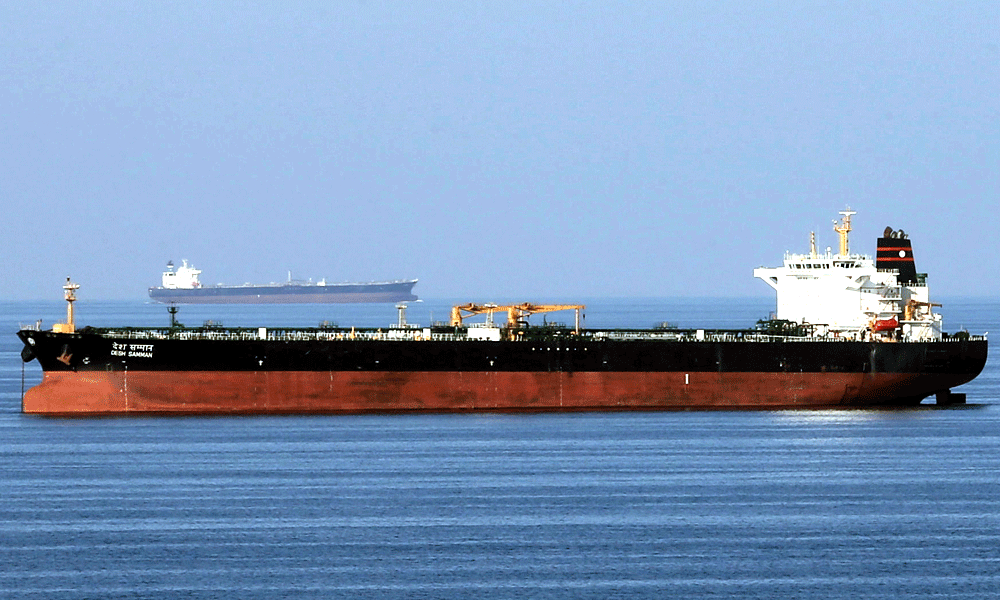
For a brief moment, it looked as if the worst was over.
The Strait of Hormuz was reopening, stranded tankers were moving again, and oil prices were falling back towards pre-war levels. By the end of June, the market was no longer focused on shortages. Instead, traders were beginning to worry that too much oil could arrive at the same time.
That calm did not last. The immediate fear of a prolonged disruption was fading. Brent crude was trading close to $73 a barrel on June 29 after falling sharply from its wartime highs. Gulf production was recovering, cargoes were returning to the market, and buyers had already secured alternative supplies. Prices weakened further in early July as the market shifted its attention towards rising supply and softer demand. The possibility of an oil glut began to look more credible than another price spike.
Then geopolitics returned. Fresh attacks on commercial vessels, followed by renewed military exchanges between the United States and Iran, reminded the market that Hormuz may be open, but it is still not safe. Brent quickly climbed back towards $80 a barrel, rising roughly 8 percent from its June 29 level.
The reversal was driven less by demand and more by fear. The risk of another disruption returned, and traders rebuilt the geopolitical premium that had only recently disappeared.
The market is no longer dealing with a simple question of whether Hormuz is open or closed. It is operating somewhere in between.Tankers are moving, but shipowners remain cautious. Insurance and security costs are high, and LNG traffic remains weak. Oil can pass through the Strait, but not with the same speed, confidence, or predictability as before the conflict.
The recovery in supply is also uneven.Gulf crude production and exports have improved significantly, easing fears of an immediate shortage. But crude is only one part of the story. Refineries across the region are taking longer to recover, while exports of diesel, jet fuel, LPG, and other petroleum products remain below normal levels.
This means crude prices can look relatively comfortable while refined fuel markets remain tight. That matters for countries like Pakistan, which are exposed not only to crude oil international price but also to international petrol and diesel prices. A softer crude price does not automatically translate into equal relief at the pump if refining margins stay elevated.
The earlier expectation of a large oil surplus has therefore become less certain. A surplus could still emerge if Gulf production continues to recover, Hormuz remains open and global demand stays weak. But that outcome depends on stability.
Every tanker attack, military strike or fresh threat to the Strait delays the return to normal. Even when oil is available, prices can rise sharply if buyers are unsure whether it can reach them safely.
For Pakistan, the situation is less comfortable than it appeared at the end of June. Lower oil prices had offered some relief for the import bill, inflation, and domestic fuel pricing. Sustained Brent prices near $70 would have been helpful at a time when external finances remain tight.
The shortage may have eased, but stability has not returned. The issue is no longer whether oil is available. It is whether that oil can move safely.












Comments