


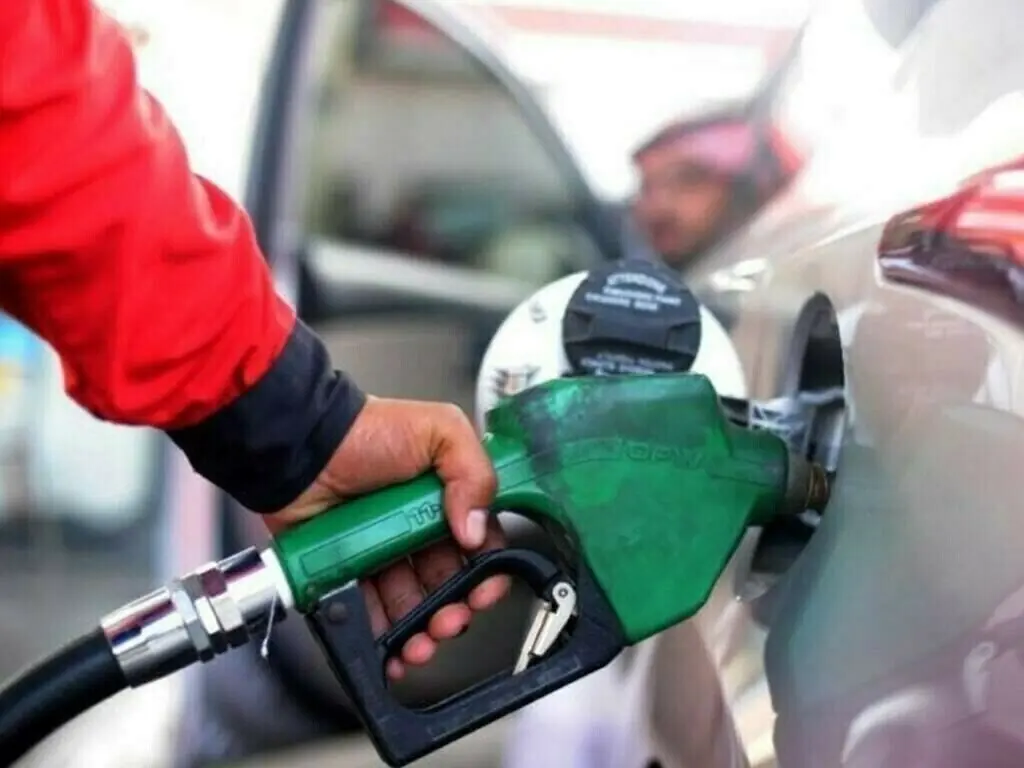
KARACHI: Business and industrial community reacted with deep concern and strong protests to the country’s fuel price hikes.
They have warned that the increases will aggressively push up transport costs, hike cost of doing business, worsen severe inflation, and slow down industrial growth in the import-dependent economy.
President of the Korangi Association of Trade and Industry (KATI), Muhammad Ikram Rajput has expressed serious concern over the federal government’s latest increase in petroleum prices, warning that the move will place an additional burden on industries, businesses and consumers, while fueling a fresh wave of inflation and raising the risk of industrial closures.
Rajput said the government had increased the price of petrol by Rs13.18 per liter, high-speed diesel by Rs13.80 per liter, and kerosene oil by Rs11.19 per liter.
He said the increase would significantly raise transportation and production costs, resulting in higher prices of essential commodities and adding to the financial strain on the public and the business community.
Rajput urged the government to substantially reduce the petroleum levy on fuel products so that the resulting financial relief could be passed directly to consumers and industry.
He also called for an immediate review of the recent fuel price increase.
The Pakistan Business Forum (PBF) condemns the federal government’s decision to increase the price of petrol by Rs13.18 per litre and High-Speed Diesel (HSD) by Rs13.80 per litre, taking the retail prices to Rs310.71 per litre for petrol and Rs323.30 per litre for diesel.
This decision has been taken despite the fact that international crude oil prices do not support such a substantial increase and will impose another heavy burden on industry, agriculture, transport, businesses and ordinary citizens who are already struggling with record-high costs of living.
Brent crude oil, the international benchmark for Pakistan’s petroleum imports, is currently trading at around US$76 per barrel, while West Texas Intermediate (WTI) is hovering around US$71 per barrel.
These prices remain significantly below the levels witnessed during periods of heightened geopolitical tensions when crude exceeded US$90-100 per barrel. Global oil prices have remained relatively stable over recent weeks and do not, by themselves, justify a double-digit increase in domestic petroleum prices.
The Pakistan Business Forum, a non-partisan body believes that the principal reason for the increase in domestic fuel prices lies not in international oil markets but in the government’s continued reliance on indirect taxation through the Petroleum Development Levy (PDL) and other statutory charges to meet fiscal targets.
Such an approach fuels inflation, erodes industrial competitiveness and places an unfair burden on salaried individuals, transporters, farmers, exporters and the country’s middle and lower-income households.
At present, the federal government is collecting approximately Rs105 per litre on both petrol and High-Speed Diesel through a combination of the Petroleum Development Levy, Customs Duty and the Climate Support Levy, in addition to the Inland Freight Equalisation Margin (IFEM).
From 1 July, the Climate Support Levy was doubled to Rs5 per litre, further increasing the tax burden on consumers.
The Petroleum Development Levy itself continues to stand at approximately Rs80 per litre on petrol, representing one of the highest indirect levies ever imposed on petroleum products in Pakistan.
PBF believes the government can no longer justify maintaining such an extraordinarily high levy while simultaneously citing public hardship and inflationary pressures.
It is important to recall the original purpose of the Petroleum Development Levy. The levy was introduced primarily as an alternative to the 18 percent General Sales Tax (GST) on petroleum products so that the revenue could remain outside the divisible pool under the National Finance Commission (NFC) Award and would therefore not be shared with the provinces. While this may have served short-term fiscal objectives, the continuation of such a high levy has now become economically damaging and socially unsustainable.
If petroleum products were instead taxed at an equivalent 18 percent GST, calculations indicate that the effective tax burden would currently amount to approximately Rs41 per litre rather than around Rs80 per litre under the Petroleum Development Levy. In effect, consumers are paying approximately Rs40 extra per litre because of the government’s decision to continue relying on the Petroleum Development Levy instead of a GST-equivalent mechanism.
On this basis, petrol today could have been priced at approximately Rs270 per litre instead of Rs310.71 per litre, while High-Speed Diesel could have been available at around Rs293 per litre instead of Rs323.30 per litre if taxation hadbeen aligned with the equivalent GST incidence rather than the present level of levies.
The Pakistan Business Forum is deeply concerned that fiscal consolidation is increasingly being pursued through indirect taxation rather than comprehensive structural reforms.
Petroleum products have become one of the government’s largest sources of revenue because petrol and High-Speed Diesel together record monthly sales of approximately 700,000 to 800,000 tonnes, compared with kerosene consumption of only about 10,000 tonnes per month. This heavy dependence on petroleum taxation has transformed fuel pricing into a revenue-generation mechanism rather than a reflection of international market fundamentals.
PBF believes “the government should stop punishing the people” for its continued decision to finance expenditures in sectors that, following the 18th Constitutional Amendment, largely fall within the constitutional jurisdiction of provincial governments.
Instead of repeatedly increasing indirect taxes on petroleum products, meaningful fiscal reforms should focus on broadening the direct tax base, improving tax compliance, reducing wasteful expenditure and enhancing the efficiency of public spending.
The Forum also believes that there is merit in a broader legal and constitutional discussion on the existing framework governing the Petroleum Development Levy.
Copyright Business Recorder, 2026













Comments