



Pakistan’s exports are stagnant around $30 billion while added sweeteners are exports of $10 billion of services and IT. Exports of manufactured goods and agriculture commodities are on a merry go-around ride since last few years.
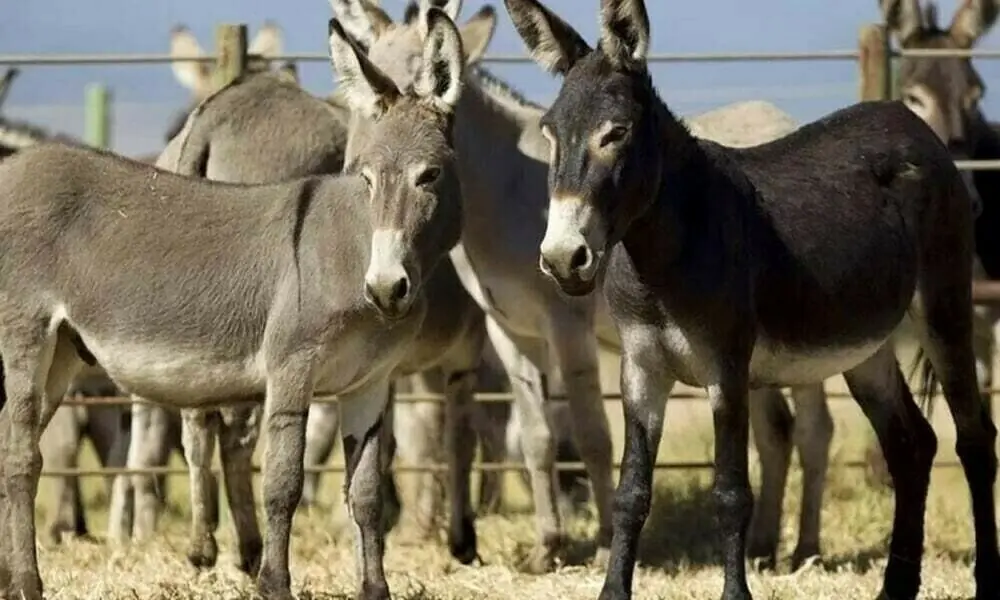
There is lot of talk about minerals and fisheries being game changers, but these are more talk than action. Export of rare minerals is still a shot in the dark and will take considerable time to make their mark. Pakistan must focus on available indigenous resources, commodities, and even animals, to scale the export ladder. One such sector is developing the export potential of donkey meat, bones, and hides.
Easier said than done. There is either an in-built bias against the donkey sector or there are individualistic or institutional negatives that have kept this sector out of the export loop. Where did the idea of exports of donkey meat, bones and hides come from Isn’t donkey only a means of livelihood for many persons involved in transporting goods on their donkey carts? Will the donkey population decrease tremendously once donkey products become available for export? These are questions emanating out of people with either tunnel vision, biased mind-set, or exuding ignorance of religious beliefs. If cow, goat, lamb, or even camel meat can be exported, then why the hullabaloo against donkey meat? Or is there an inherent prejudice against those investing in donkey specific slaughterhouses, especially against Chinese investors and Chinese demand?
Some people fear donkey slaughterhouses will reduce Pakistan’s donkey population. This misguided concern overlooks the importance of scientific breeding. Donkey population is influenced by many factors, including breeding practices, climate, veterinary care, rural economics, and farm management, not simply the number of slaughterhouses.
A properly regulated industry encourages breeding because farmers receive stable income and have incentives to raise more animals. Sustainable production and controlled slaughter is the correct approach. Administrative procedures remain one of the biggest challenges. It is evolutionary that continued cooperation between government and industry will gradually, but hopefully soon, improve efficiency, transparency, and monitoring, and traceability.
The ground realities are countering such assumptions, biases, or misconceptions. The credit goes to Andy (who has become a familiar name in Pakistan), a dynamic, youthful Chinese entrepreneur, who is passionate about Pakistan and who wants to see a great Pakistan. He undertook the challenge of setting up a slaughterhouse, of all places, in Gwadar.
He saw a fabulous opportunity accorded by the CPEC and he was well aware of the humongous potential of exports to China where domestic consumption of 2.4 million donkeys annually exceeds local herds, creating a major shortfall.
He gauged correctly that the biggest challenge is shipping because Gwadar currently has relatively limited container traffic, meaning international shipping companies have fewer scheduled services compared with Karachi. Therefore, many export containers have to be currently transported to Karachi Port before international shipment.
He bet on the notion that as Gwadar’s trade volume grows, shipping lines will naturally become more interested in serving the Port directly. Cargo can be transported to China by road. However, compared with sea freight, land transportation generally involves higher logistics costs and is therefore used selectively.
It is not that a routine matter to export animal products to China. There are quality standards, inspections, and protocols that need total compliances.
The General Administration of Customs China (GACC), the national agency responsible for customs supervision, import/export duties, border quarantine, and anti-smuggling, is the most demanding approvals entity for food export and does not issue certificates without a deep dive into the products as well as into the exporting firm.
Before submitting an application to GACC, Andy obtained approximately 28 different approvals and certifications, including 12 NOCs issued through Pakistan’s Ministry of National Food Security and Research, Balochistan Government environmental protection permit and health approvals, Hazard Analysis and Critical Control Point certification (HACCP is an internationally recognized, preventive system used in the food industry to identify, evaluate, and control biological, chemical, and physical hazards), ISO certifications, Religious No Objection Certificate, as well as third-party food safety certifications recognized by China.
Andy went through the bureaucratic maze here and in China, and his efforts took more than five years. He was ready to export. But GACC certification did not come on a silver platter.
After all documentation is completed, GACC normally does document assessment, factory inspection, quality assessment of donkey products, and, given the complex conditions in Gwadar, a significant time was required for registration before final approval. This entire process took more than five years before Andy could even begin to prepare for actual exports.
On 14 August 2025, this writer authored an article on establishing and regulating donkey trade and specifically highlighted that donkey slaughterhouses should only be set up in Gwadar and its breeding, transportation from farms to slaughterhouse, and utilizing scientific monitoring systems to discourage wrong use of donkey meat.
On 02 October 2025, the Government of Pakistan issued SRO 1902 (I)/2025 restricting donkey business exclusively in Gwadar and only by designated, approved, and registered slaughterhouses. There are strong reasons behind this writer’s proposals.
First, Pakistan is one of the world’s major exporters of Halal beef and mutton, and thus maintaining international confidence in Pakistan’s Halal reputation is extremely important. Uncontrolled donkey slaughter in different regions could create misunderstanding and mistrust among overseas buyers and potentially affect Pakistan’s much larger Halal meat industry.
Second, Pakistan has no previous experience regulating this donkey industry. Concentrating slaughterhouses in Gwadar allows authorities to establish effective supervision before considering future expansion.
Third, Gwadar Free Zone still requires significant industrial development. Providing preferential policies for export-oriented industries will accelerate Gwadar’s economic growth, create employment, and strengthen the success of CPEC, since Gwadar is Pakistan’s deep-sea gateway.
The economic and employment possibilities are huge. Take Andy’s initiative in building up the ecosystem for donkeys.
He has inked agreements with a dozen commercial breeding and fattening partner farms and has signed cooperation agreements with approximately 10,000 farming households throughout Pakistan. His long-term objective is to establish linkages with 50 commercial breeding and fattening enterprises and More than 50,000 participating farming households. Large numbers, but Andy is bullish on Pakistan, and he can and will achieve his goals.
At this moment he employs around 500, predominantly Baloch, at his slaughterhouse and estimates that atleast 8,000 are working on the donkey breeding farms. And this is the beginning.
Exporting directly from Gwadar allows stricter control over all by-products, ensuring they do not unintentionally enter the domestic food market plus maintaining food safety standards.
Andy invested RMB 5 million (around $740,000) to develop a comprehensive digital traceability system. This is the most important monitoring, controlling, and transparent process to track each and every animal. Every donkey can be tracked from: Farmer→Commercial Farm→Transportation→Slaughterhouse→ Export Shipment→Chinese Customer. This traceability system improves food safety while allowing government authorities to monitor animal resources, employment generation, farmer income, and overall industry development.
Normally it takes 1.5 to 3 years to breed a ready-for-slaughter donkey, depending on breed, nutrition, and management. Slaughterhouses will purchase animals based on live weight. Current purchasing prices are approximately PKR 400–500 per kilogram.
Only animals weighing over 90 kg are purchased. Pregnant females and female donkeys under five years of age will not be purchased because protecting breeding stock is essential for sustainable development and population growth.
Costs vary considerably. Many rural farmers allow donkeys to graze naturally, resulting in relatively low production costs. Commercial fattening farms typically spend approximately PKR 20,000 per animal during the final one-month fattening period before slaughter.
Pakistani meat exporters usually buy animals from farms, markets, or individuals and send them to a slaughterhouse duly registered with Animal Quarantine Department which is mandated to regularly visit these slaughter houses and check on the processes. The exporters apply and get a certificate from AQD before shipment and, at the airport, one or two AQD Inspectors perfunctorily check the quantity and that’s about it. Not in the case of donkey meat exports.
AQD has devised a nine-page comprehensive strategy and SOPs for regulation of donkey farming and export operations. This is an unparalleled document that only visionaries sitting in AQD could conjure up. It is like Big Brother of George Orwell’s 1984 novel who will be watching each and every step from the breeding at the farms all over Pakistan, to transportation to Gwadar, to the slaughterhouse process, refrigeration, trucking all the way to Karachi Port, and eventual loading onto ships.
A large pool of personnel would, actually, be needed by AQD to effectively comply with the whole process as envisaged in the AQD “strategy”. A great employment opportunity for those who cannot find jobs. It goes without saying that Andy will also need to beef up his staff force to comply with the AQD conditionalities.
What is export potential? The Prime Ministers of China and Pakistan had signed an MoU for annual export of 200,000 donkeys (meat, bones, and hides). If things begin to move smoothly, atleast during fiscal year 2026-27 approximately 15,000 tonnes of meat, 20,000 tonnes of bones, and 216,000 tonnes of hides (limit set by GACC for Andy’s slaughterhouse) can be exported.
The current international prices are $6,500 per tonne for meat, $1700 per tonne for bones, and $11,500 per tonne for hides. Donkey hides are essential for the gelatin called ejiao that is used for pharmaceutical products. If the above exports are realized, this would earn between $375 and $400 million in foreign exchange. The good news is that the first cargo successfully reached China which is a landmark achievement for Pakistan’s exports.
Throughout history, donkeys have faithfully served humanity with remarkable endurance, patience, and resilience.
Andy, who is acknowledged as an industry standard setter and regulatory scheme designer, states that “governments, industry partners, farmers, and consumers worldwide must respect animal welfare while promoting sustainable industry development”.
He supports “scientific conservation of valuable donkey breeds, responsible breeding, transparent traceability, environmentally responsible production, and international cooperation”. He desires that “every donkey be treated with care and dignity and that economic development always goes hand in hand with animal welfare, environmental responsibility, and respect for life”.
Copyright Business Recorder, 2026
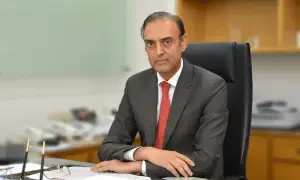
The writer is President Employers Federation of Pakistan









Comments