




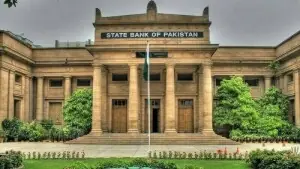
The latest debt bulletin of the State Bank of Pakistan (SBP) confirms what many economists have feared for years. By the end of May 2026, the federal government’s debt had climbed to nearly Rs 82 trillion after increasing by approximately Rs 5.9 trillion during the first eleven months of just ended fiscal year 2025-26—an average addition of almost Rs 16 billion every day.
Domestic debt alone rose to over Rs 58 trillion, while external debt approached Rs 24 trillion. More worrying still, short-term domestic borrowing expanded sharply despite declining interest rates, increasing refinancing risks in the years ahead.
These figures coincide with two equally disturbing institutional developments. The Public Accounts Committee has questioned weaknesses in debt management, while the Auditor General of Pakistan has reportedly pointed to serious deficiencies in budgeting for debt repayment, including an alleged irrational budgeting anomaly of Rs. 1.83 trillion and the continuing absence of proper debt reporting and institutional oversight.
The country’s Debt Management Office has remained without a permanent head for months despite repeated commitments to strengthen debt governance. None of this should surprise anyone who has followed Pakistan’s public finance over the last two decades.
The country is trapped in a fiscal model that was never designed to produce sustainable growth. Every Finance Act promises fiscal consolidation. Every budget claims to broaden the tax base. Every programme of International Monetary Fund (IMF) speaks of structural reforms. Yet every year public debt rises faster than productive capacity, while fiscal deficits remain stubbornly entrenched.
The explanation offered is almost always the same: inherited liabilities, external shocks, geopolitical uncertainty or energy prices. These factors certainly matter, but they do not explain why Pakistan repeatedly returns to the same fiscal destination despite changing governments, tax rates and economic managers. The real problem lies deeper.
Pakistan has gradually transformed its tax system into an extraction mechanism rather than an instrument of economic development. Revenue collection has become an end in itself rather than the consequence of expanding national income. Instead of enlarging the tax base through sustained growth, successive governments have increasingly relied upon withholding taxes, advance taxes, presumptive regimes, petroleum levy, import-stage taxation and ever-higher indirect taxes.
These measures are administratively convenient because they produce immediate cash flows. Their cumulative effect, however, has been to suppress investment, discourage documentation and reduce the very productive activity from which sustainable tax revenues ultimately arise. This is the paradox of Pakistan’s fiscal policy.
The Federal Board of Revenue (FBR) has achieved record (sic) collections, yet the debt burden continues to rise. The explanation is straightforward. Tax collection has increased primarily through greater extraction from an already documented segment of the economy, while the underlying tax base has not expanded commensurately.
Higher nominal collections by FBR coexist with weak economic growth, declining industrial competitiveness and rising public indebtedness. The consequence is a vicious cycle. Higher taxes increase production costs. Higher production costs reduce competitiveness.
Reduced competitiveness weakens investment and employment. Lower economic growth narrows the future tax base. Government then borrows to finance persistent fiscal deficits. The growing debt burden increases debt-servicing obligations. To finance those obligations, new taxes are imposed upon the same shrinking documented sector. The cycle then repeats itself. This is not fiscal consolidation. It is fiscal circularity.
The latest SBP figures illustrate this structural weakness. While domestic borrowing has expanded rapidly, development expenditure has not increased proportionately. Increasingly, borrowing finances current expenditure, debt servicing and fiscal deficits rather than productive public investment. Debt is therefore generating limited future income capable of servicing itself.
There is an important distinction between productive debt and consumptive debt. Borrowing to finance infrastructure, human capital, technological transformation and export competitiveness can increase future national income. Such debt creates assets capable of servicing the liabilities incurred to build them.
Borrowing to finance recurring expenditure or interest payments merely postpones adjustment while increasing future obligations. Pakistan has increasingly moved towards the second model. This explains why debt servicing now absorbs a growing share of federal revenues, leaving progressively less fiscal space for education, healthcare, scientific research, environmental protection and infrastructure.
The Constitution promises social welfare and equitable development, yet fiscal resources are increasingly diverted towards servicing accumulated liabilities rather than creating productive national assets. This is not merely an accounting problem. It is a constitutional political economy problem. The Constitution envisages taxation as an instrument of governance and public welfare. It does not contemplate perpetual extraction simply to finance expanding debt obligations.
Likewise, fiscal federalism under Articles 160 and 161 of the Constitution envisages a balanced distribution of resources between the Federation and the provinces. Increasing reliance on non-divisible revenues and borrowing weakens that constitutional compact while reducing fiscal autonomy at every level of government.
The Auditor General’s observations regarding debt management deserve far greater attention than they have received. Sound debt management is not limited to recording liabilities accurately. It requires transparent borrowing strategies, realistic budgeting, parliamentary oversight and institutional accountability.
A country cannot aspire to fiscal sustainability while its principal debt-management institution remains under-capacitated and key positions remain vacant. Equally significant is the continuing emphasis placed by international financial institutions (IMF et al) on fiscal consolidation measured primarily through higher revenues. Pakistan’s experience demonstrates the limitations of that approach.
Fiscal sustainability cannot be achieved by increasing tax extraction from a stagnant economy. Sustainable public finance requires sustained expansion of national income. The objective should immediately shift from maximising annual tax collections to maximising long-term productive capacity. This requires a fundamentally different fiscal philosophy.
Income tax should be simplified and based upon real income rather than transactions that has converted the Income Tax Ordinance, 2001 into an indirect tax—making withholding tax minimum and not adjustable. Sales taxation should be harmonised at a low, broad-based rate covering both goods and services. Customs duties should follow the National Tariff Policy 2025-30 and encourage industrial upgrading rather than protection of vested interests. Federal excise duty should remain confined to clearly defined regulatory purposes.
Above all, public expenditure should increasingly favour productive investment over recurrent consumption. Debt management cannot be divorced from economic strategy. A country cannot borrow its way to prosperity. Nor can it tax its way out of structural stagnation.
The latest SBP debt bulletin should be viewed as more than another statistical release. It is a reminder that Pakistan’s fiscal challenge is not simply one of financing government. It is one of redesigning the entire relationship between taxation, borrowing and economic growth. Unless that relationship changes, every record-breaking tax collection will be followed by another record-breaking debt figure.
The problem is not that Pakistan borrows. The problem is that Pakistan’s fiscal model has become increasingly dependent upon borrowing because the country taxes production more heavily than promoting it, measures success by annual revenue targets rather than sustainable wealth creation, and continues to treat economic growth as a consequence of taxation instead of recognising that in every successful economy taxation is ultimately a consequence of growth.
Copyright Business Recorder, 2026
The writer is a lawyer and author, is an Adjunct Faculty at Lahore University of Management Sciences (LUMS), member Advisory Board and Senior Visiting Fellow of Pakistan Institute of Development Economics (PIDE)
The writer, an Advocate Supreme Court, Adjunct Faculty at Lahore University of Management Sciences (LUMS), member Advisory Board and Visiting Senior Fellow of Pakistan Institute of Development Economics (PIDE), holds LLD in tax laws
The writer is a corporate lawyer based in the US with extensive expertise in financial regulations, including Virtual Asset Service Providers (VASPs), corporate governance, and global economic policies. He holds an LLM from Washington University in St. Louis and has completed the Management Development Program at the Wharton School. He has developed regulatory frameworks for North American and South American Financial Institutions and has consulted and trained bureaucrats of different regions. He can be reached at [email protected]















Comments