


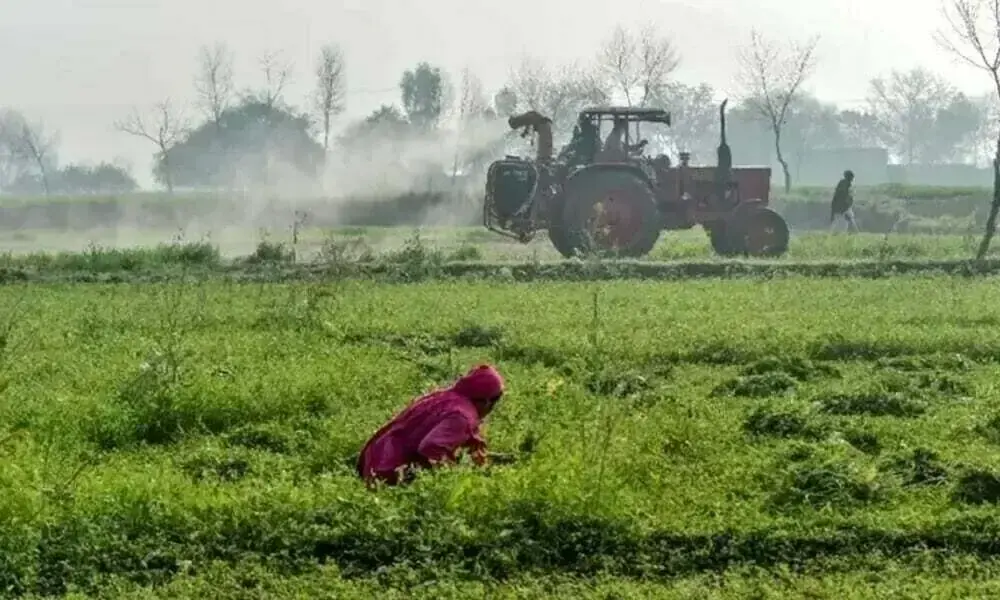
Pakistan’s agricultural export sector, a crucial part of its economy, is currently facing significant challenges, particularly evident in the decline of rice exports and fluctuations in other agricultural commodities. While some sectors, like meat and fruits, demonstrate resilience, the overall landscape reveals a concerning downward trend in export performance.
Specifically, the rice export outlook has noticeably deteriorated from FY2024-25 to FY2025-26. In FY2024-25, Pakistan’s rice exports reached approximately USD3.96 billion, with a total quantity ranging from 5.5 to 5.7 million metric tons (MT). This growth was largely facilitated by India’s export ban during this period, allowing Pakistani rice to fill the gap in the market. However, projections for FY2025-26 indicate a sharp drop, with estimated export values expected to decline to around USD3.1 to USD3.4 billion, and total quantities predicted to be between 4.6 and 4.7 million MT. A troubling statistic highlights that rice exports for the first half of FY2025-26 have witnessed a staggering 49.56 percent decrease compared to the same period the previous year, with the first quarter export volume falling by 28 percent (Source: State Bank of Pakistan).
The reasons behind this decline are multifaceted. Increased regional competition plays a major role, particularly with India’s re-entry into the market facilitated by the removal of its Minimum Export Price (MEP). This shift has led to a surge of cheaper rice flooding markets, significantly impacting the prices and demand for Pakistani exports, especially in the Gulf regions where price sensitivity is paramount. Additionally, few stringent SPS measures adopted by EU countries are also underlining the decreased exports.
In terms of other agricultural commodities, the performance is mixed but still concerning. The total food group exports have plummeted from USD5.17 billion in FY2024-25 to USD3.39 billion in FY2025-26, reflecting a substantial 34 percent decline. Vegetables faced an alarming 46.45 percent drop in exports, with values crashing from USD227.22 million to USD121.68 million, and export volumes falling from approximately 804,000 MT to 424,000 MT. In contrast, the meat sector has shown robust growth, with exports increasing by 9.03 percent from USD338.65 million to USD370.15 million, driven primarily by new opportunities in the Chinese market. Fruits also saw a positive turnaround with a 6.25 percent increase, attributed to successful first-time cherry exports to China and rising demand from the European Union.
The agricultural export decline is compounded by several overarching challenges. Operational and regulatory hurdles remain significant obstacles, as exporters find it difficult to meet international market standards, particularly Sanitary and Phytosanitary (SPS) regulations that are essential for accessing key markets. Additionally, the abolition of essential departments like the Department of Plant Protection (DPP) and Animal Quarantine has raised concerns about pest and disease management, crucial for maintaining product quality and safety, crucial for compliance with international standards. Moreover, unauthorized actions, including disciplinary or non-disciplinary against qualified and experienced officers/officials and unsupportive, unscientific, and/or arbitrary actions from the ministry etc.
Further complicating the situation is the uncertainty surrounding the integration and operationalization of the National AgriTrade and Food Safety Authority (NAFSA 2025). This has created confusion among stakeholders about compliance requirements, negatively impacting the ability of exporters to navigate market dynamics effectively. Market receptivity is another pressing issue, as uncertainties related to product quality and safety can deter importers from engaging with Pakistani agricultural products. Certain ambiguous policies and unnecessary requirements from EU are also becoming source of disinterest of rice exporters who are otherwise wise enough to fulfil SPS measures.
Despite these challenges, there are significant opportunities for rejuvenating Pakistan’s agricultural exports. Enhancing compliance with SPS policies through effective training for farmers and exporters can improve adherence to international standards and market access. Moreover, diversifying into non-traditional markets like Jordan, Uzbekistan and Egypt, while focusing on targeted marketing strategies, can mitigate reliance on conventional export destinations.
Re-establishing or bolstering the functions of key regulatory bodies such as the Plant Quarantine and Animal Quarantine is imperative for ensuring effective pest and disease management, thus restoring importers’ confidence. Additionally, investing in technology and infrastructure to improve storage, processing, and transportation can reduce post-harvest losses and enhance export quality. Nonetheless, adoption of good agricultural practices, especially the traceability segment, are imperative at farm level.
Policy reforms that create a cohesive agricultural export strategy, stabilizing pricing structures and regulatory frameworks, are essential for promoting consistent growth in the sector. Finally, fostering public-private partnerships can strengthen the agricultural export ecosystem, enabling the sharing of best practices and resources essential for navigating the challenges of the global agricultural market.
In conclusion, while the agricultural export sector in Pakistan faces formidable challenges, particularly in rice and vegetable exports, there are also significant opportunities for growth and rejuvenation. By addressing current hurdles and leveraging potential growth strategies, Pakistan can enhance its agricultural export capabilities and reinforce its position in the competitive global marketplace. And this is only possible with involvement of technical expert teams at all levels, from farm to ferry.
The writer is a former Director General in the Federal Government and can be reached at: [email protected]

















Comments