




There is merit in the argument that Pakistan’s industry cannot be made competitive through permanent protection. No economy can industrialise merely by raising tariff walls and shielding domestic producers from international competition forever.
Industries must eventually learn to compete on productivity, quality, innovation, scale, and export performance. In that sense, a serious debate on tariff rationalisation is both necessary and overdue.
However, the more important question is whether Pakistan has created the basic conditions under which its industry can compete. Tariff protection cannot be discussed in isolation from the cost of doing business.
A manufacturer in Pakistan does not operate in the same environment as a manufacturer in Bangladesh, India, Vietnam, and Türkiye or other competing economies.
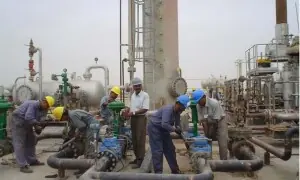
The Pakistani producer carries a far heavier burden in the form of high energy prices, high interest rates, multiple layers of taxation, delayed refunds, regulatory friction, weak logistics, policy reversals, and uncertainty in the application of rules.
If these structural disadvantages are not addressed, tariff reduction will not automatically create efficiency. It may instead expose local industry to a competition for which it has not been fairly prepared. In such a situation, the result may be higher imports, lower domestic production, loss of jobs, pressure on foreign exchange, and further weakening of the industrial base.
Pakistan’s problem is not simply that its industry is protected. The deeper problem is that its industry is expensive. Electricity and gas tariffs for industry have repeatedly risen because of circular debt, cross-subsidies, inefficiencies in the power and gas sectors, and fiscal pressures.
Credit remains costly, making investment in machinery, technology and working capital difficult. Taxation is not only high but also complicated and uncertain. Refunds are often delayed, increasing the cost of liquidity.
On top of this, businesses face abrupt policy changes: import restrictions one year, liberalisation the next; special taxes in one budget, withdrawn incentives in another; sudden changes in customs duties, regulatory duties, sales tax treatment, and documentation requirements.
No investor can plan confidently in such an environment. Industrial investment is not a short-term trade. It requires long-term commitment in land, machinery, labour, technology, quality control, supply chains and export market development.
For that, businesses need policy stability. They need to know the rules of the game in advance. If the rules keep changing, investors either postpone expansion or move capital into trading, real estate, financial assets or import-based activity. This is exactly why Pakistan has struggled to build a broad and competitive manufacturing base.
It is also important to recognise that not all protection is bad, and not all liberalisation is good. Countries that are now successful exporters did not become competitive overnight.
Many of them used state support, infrastructure investment, export incentives, cheap credit, skill development, technology upgrading and time-bound protection to build domestic capability.
The difference was that protection was often linked to performance. Industries were expected to improve productivity, increase exports, upgrade technology and create employment. Protection was not treated as a permanent entitlement.
Pakistan should follow a similar balanced approach. Tariff reform should be gradual, predictable and linked to measurable industrial outcomes.
Tariffs on raw materials, intermediate goods and modern machinery should be rationalised to reduce the cost of production. This can help local manufacturers become more competitive.
But an abrupt reduction in protection on finished goods, without reducing energy costs, financial costs and tax burdens, would hurt local production and encourage import dependence.
The objective should not be to protect inefficiency. Nor should it be to open the economy in a manner that destroys productive capacity.
The objective should be to build competitiveness. For this, tariff reform must be part of a wider industrial policy. That policy must include regionally competitive energy tariffs for export-oriented and employment-generating sectors, lower and simpler tax compliance, timely refunds, easier import of machinery and inputs, better customs processes, improved logistics, strict action against smuggling and under-invoicing, and consistency in policy implementation.
At the same time, local industry must also accept responsibility. Protection cannot be unconditional. Sectors enjoying tariff support must demonstrate progress in productivity, quality improvement, technology adoption, localisation, employment generation and exports.
Where industries continue to rely only on high tariff walls without improving performance, the case for continued protection becomes weak. But where industries are investing, exporting, creating jobs and building value addition, the state should support them through a transparent and time-bound framework.
Pakistan’s policy debate often swings between two extremes. One side argues for protection as if the domestic industry has an automatic right to be shielded forever. The other side argues for liberalisation as if tariff reduction alone will magically create efficiency. Both positions are incomplete. A serious policy must recognise that competitiveness is not created by exposure alone; it is created by lowering structural costs, ensuring policy stability, improving governance and requiring performance from industry.
The country needs a reform sequence. First, reduce the cost of doing business. Second, rationalise tariffs on inputs and machinery.
Third, provide time-bound and performance-linked support to sectors with real potential. Fourth, gradually expose industries to competition according to a pre-announced roadmap. Such a sequence will give investors confidence and push industry toward efficiency without causing avoidable deindustrialisation.
Tariff walls cannot remain forever. But before bringing them down, the foundation of the house must be strengthened. If the foundation is weak, removing the wall will not create competitiveness; it will expose fragility. Pakistan must move toward a more open and competitive economy, but it must do so intelligently.
Trade policy should support production, employment, investment and exports, not simply make imports easier. Real reform lies not in replacing protection with exposure, but in replacing high-cost, uncertain and inefficient industrial conditions with a stable, competitive and growth-oriented economic environment.
Copyright Business Recorder, 2026
The writer is a civil servant with deep interest in the energy and climate change issues











Comments