


The canal system that feeds Pakistan is being starved
Punjab's vital canal system, underpinning a multi-trillion-rupee agricultural economy, is severely underfunded for maintenance, risking national food security and economic stability.
- Severe underfunding of Punjab's critical canal system maintenance.
- Colonial administration's profitable management of the canal system.
- National economic consequences of neglecting agricultural infrastructure.
- Solutions for sustainable funding and stewardship of the canal system.
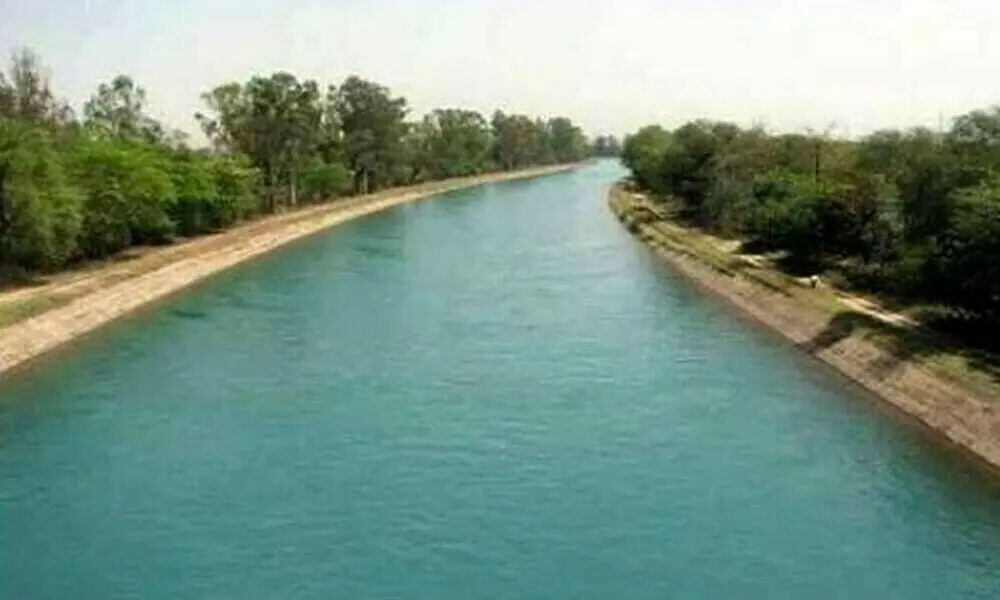

Punjab’s canal system, with 13 barrages, 25 main canals, over a dozen inter-river link canals, and tens of thousands of kilometres of distributaries and minors built over more than a century, underpins an agricultural economy worth conservatively Rs 4 to 5 trillion at the farm gate every year.
Wheat, rice, sugarcane, maize, cotton, potato, fruit, vegetables, and fodder: much of this output, and much of the groundwater economy that now supplements it, still depends on water delivered, recharged or regulated through this infrastructure. Yet Punjab has budgeted only Rs 8.9 billion to repair and maintain it.
That is roughly one-fifth of one percent of the annual economic output this system helps sustain.
This is not merely a Punjab budget issue. When the country’s largest irrigated agricultural base under-maintains its canals, the consequences travel far beyond provincial boundaries. They show up in national food prices, wheat security, rice exports, poultry feed costs, rural incomes, agro-industrial supply chains and foreign exchange earnings.
No serious business would treat its most productive machinery this way. No board would accept it. No bank would lend against it. Yet this is what Punjab does, year after year, with the most productive public asset it owns.
The uncomfortable historical truth is that the British colonial administration, driven by extraction rather than public welfare, ran this same system as a disciplined commercial enterprise and generated extraordinary returns for the state and prosperity to the farmers of the Indus plains.
From the late nineteenth century onward, colonial irrigation finance classified major canals as “productive works” only if they could earn a fair return on capital investment. By the Indian Irrigation Commission of 1901-03, this commercial logic had become firmly embedded in official thinking. Major irrigation projects financed through loan capital were expected to generate enough annual income to cover interest and contribute to repayment.
Richard Strachey, Inspector General of Irrigation, stated the principle plainly: “the essential point to regard is that the works shall be remunerative, which in brief implies that they will be profitable to the State.”
And profitable they were.
Official colonial irrigation returns showed that by 1926-27, Punjab’s productive irrigation works had recovered their capital investment more than twice over. The overall net return on productive works was over 14 percent per annum. In those returns, the Lower Chenab Canal was recorded as earning as much as 56.95 percent on capital cost, effectively paying for itself every two to three years. Revenue from canal-irrigated lands rose from less than 20 percent of Punjab’s total revenue in 1913 to over 40 percent by the 1920s.
This is not an argument for colonial extraction. It is an argument that even an extractive state understood that a productive asset had to be financed, maintained and measured.
The colonial state, motivated by extraction, still priced, measured and maintained the asset. The post-colonial state, claiming to serve the public, has too often treated maintenance as an afterthought.
Government may respond that irrigation has received a larger overall allocation, including development expenditure. But that misses the central point.
Development is not maintenance.
New schemes, rehabilitation projects, feasibility studies, lining packages and capital works may have their place. But they do not substitute for the annual repair and preservation of a century-old brick-and-mortar hydraulic system. A canal system decays every day through siltation, seepage, cracked masonry, weakened embankments, corroded gates, failing hoists and worn regulators.
Maintenance is the recurring discipline that keeps the asset alive. Development is episodic. Maintenance is permanent.
Even using a modest asset-preservation rule of thumb of 2 percent a year to a system with a conservative replacement value of Rs 3 to 4 trillion, proper asset preservation would require roughly Rs 60 to 80 billion a year.
Punjab has budgeted Rs 8.9 billion.
The shortfall does not disappear when it goes unspent. It accumulates as infrastructure debt. Canal linings crack and are not repaired. Embankments weaken and are not reinforced. Gates corrode and are not replaced. Siltation reduces carrying capacity and is not cleared. Each deferred repair becomes a liability transferred to a future budget, where it will cost not one rupee but many.
This infrastructure produces more than crops. Punjab’s wheat harvest is the foundation of Pakistan’s food security. Rice from the Sheikhupura-Hafizabad-Sialkot belt is one of Pakistan’s major foreign-exchange earners. Maize feeds the poultry industry. Sugarcane supports one of the country’s largest agro-industries. Potatoes, fruit, vegetables and fodder all depend on irrigated agriculture. The point is not provincial pride. It is national exposure. Even fodder crops, including export-oriented Rhodes grass, depend on the same hydraulic foundation.
Every canal breach will cost far more to repair than the preventive work that would have avoided it. Every season in which water delivery is reduced by siltation, gate failure or lining deterioration means reduced yields, incomes, and export earnings. The farmer who loses a crop because a distributary ran dry does not appear in the budget documents. But the loss is real, large, and avoidable.
Punjab has no shortage of investment proposals. Every budget brings new projects, new schemes and new announcements. The question is whether the province can afford to keep building new assets while the most productive asset it already owns quietly deteriorates.
The answer is not simply to raise abiana and pour the proceeds into the general treasury. That would only deepen mistrust. Punjab needs a ring-fenced irrigation asset-preservation fund, a published five-year operations and maintenance plan, canal-wise maintenance reporting, third-party engineering audits, and a tariff path visibly linked to service improvement.
Farmers will resist higher charges if they see only higher bills. They may accept them if they see desilted channels, repaired gates, measured flows, stronger embankments, functioning regulators and fewer tail-end failures.
Punjab’s canal system is not merely an engineering inheritance. It is a living economic machine. It converts river water into food security, rural employment, agro-industry, exports and provincial stability.
The colonial administration understood its financial value because it wanted to extract from it. The post-colonial state should understand its value because millions of people depend on it.
Punjab does not need another slogan about agriculture. It needs infrastructure stewardship.
The best investment Punjab can make is not another ribbon-cutting scheme. It is the disciplined preservation of the canal system that already sustains the province.
With Rs 8.9 billion a year, that system will not be preserved.
It will be consumed.
Copyright Business Recorder, 2026
The writer is a former Minister of Irrigation, Punjab; a three-time Member of the Punjab Provincial Assembly; a former Member of the National Assembly; a former Senator; and currently engaged with UNDP as Senior Water Sector Expert

























Comments