


Indus Waters Treaty: Meaningful engagement with India requires reciprocity: Dar
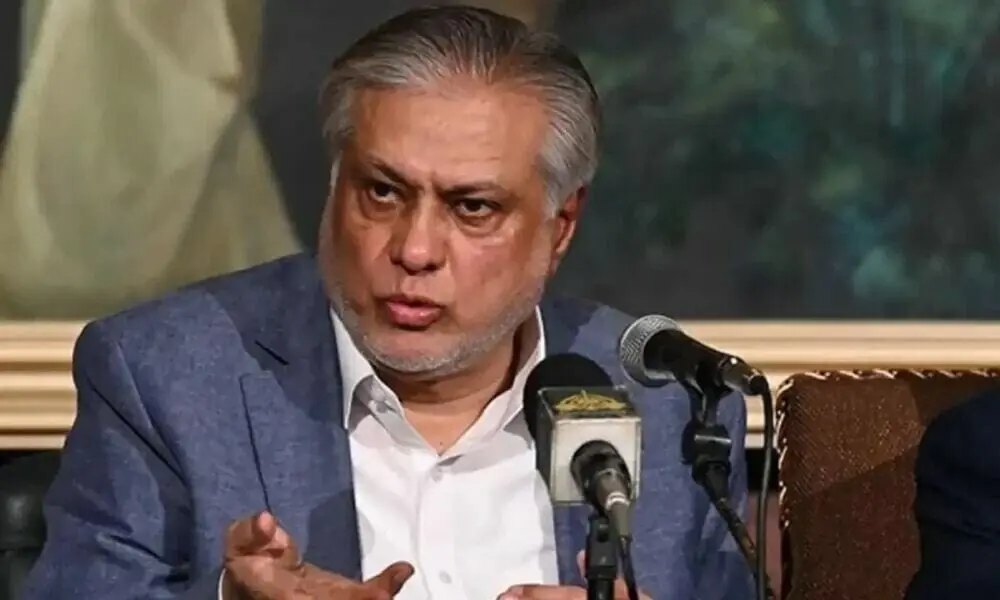

ISLAMABAD: Warning against unilateral actions on transboundary rivers, Deputy Prime Minister and Foreign Minister (DPM/FM) Ishaq Dar on Tuesday said any attempt to undermine the Indus Waters Treaty (IWT) would threaten regional stability and the water security of millions. Dar stated this while addressing an international seminar on Indus Waters Treaty.
He stated that the Indus Waters Treaty (IWT) was not merely a water-sharing arrangement but a cornerstone of peace and security in South Asia, stressing that meaningful engagement with India requires reciprocity.
“We want comprehensive dialogue with India but it takes two to tango.
Pakistan remains committed to resolving all issues through dialogue, diplomacy, and the mechanisms provided under international law. Our position is guided not by confrontation, but by the conviction that lasting solutions can only emerge through cooperation and respect for mutually agreed obligations, he added.
Dar has strongly warned earlier that at least 17 projects designed to drastically alter the river system as a whole, giving India the tools for “hydro-hegemony” that it so desires.
He further said, “”It is important to underscore that our concerns are not merely based on Indian statements. India has followed up its belligerent statements with illegal actions; these include projects to create reservoirs such as Sawalkot, Kirthai, Kwaretc; the expansion of existing structures such as Baglihar and Salal; and, most alarmingly, diversion projects on the Indus, Chenab and Ravi rivers. “
DPM Dar remarked that Pakistan has consistently upheld the values enshrined in the UN Charter and has remained committed to its principles and relevant UN resolutions. It was in this spirit that Pakistan signed the Indus Waters Treaty with India in 1960, establishing a framework for the utilization of the six rivers of the Indus River System.
“The treaty envisages the peaceful resolution of disputes within its own framework.
Dar highlighted that it iss important to acknowledge that Pakistan has previously voiced concerns over certain actions by India under the Treaty. Consistent with the Treaty’s provisions, we sought settlement through international mechanisms and respected decisions even when they fell short of our expectations.
At no stage was the outright unilateral abrogation of the Treaty considered a viable course of action by either side. Responsible states act within established legal frameworks rather than abandoning them. And yet, he added today, we find ourselves confronted with precisely such a challenge, stating river systems are not merely waterways. They are lifelines.
DPM Dar emphasised Water must never be viewed as an instrument of coercion. It is a shared resource, a common responsibility, and ultimately a prerequisite for human dignity and sustainable development. The future of transboundary water governance must therefore be anchored in cooperation and respect for international law.
Copyright Business Recorder, 2026

























Comments