


The solar paradox
Solar energy's rapid growth presents a looming challenge: managing end-of-life panels. Without proper recycling and policy, the environmental benefits risk being undermined by massive waste and lost valuable resources.
- The impending wave of solar panel waste by 2050.
- Environmental and economic risks of improper panel disposal.
- Policy solutions and recycling technologies for a circular solar economy.
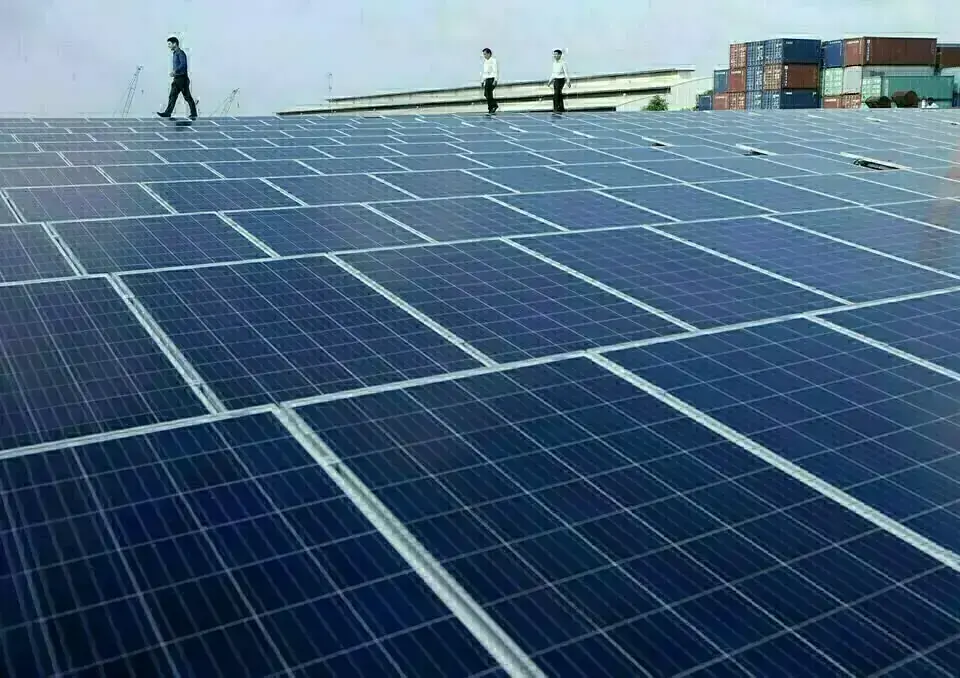

For the past two decades, the story of solar energy has been one of extraordinary optimism—and rightly so.
Few technologies have reshaped the global climate conversation as dramatically as solar power. Once prohibitively expensive, solar photovoltaics are now among the cheapest sources of electricity ever.
According to the International Energy Agency, solar PV is set to become the world’s largest source of installed electricity generation capacity this decade.
Global installed capacity surpassed 1.6 terawatts in 2024, up from barely 40 gigawatts in 2010.
This is a remarkable achievement. Solar power reduces carbon emissions, lessens dependence on volatile fossil fuel markets, lowers household electricity bills, and expands energy access in both cities and remote communities. It has become a symbol of a cleaner, more decentralized energy future.
But beneath this success lies an uncomfortable truth: every solar panel has an expiration date.
Most photovoltaic panels are built to last 25 to 30 years. That means the first generation of large-scale installations—from Germany and Japan to China, the United States, and beyond—is now approaching retirement. The result is a looming wave of waste unlike anything the renewable sector has yet faced.
The International Renewable Energy Agency estimates that by 2050 the world could generate 78–80 million metric tons of solar panel waste. To put that into perspective, this is roughly equivalent to the weight of more than 8,000 Eiffel Towers or of hundreds of thousands of fully loaded aircraft.
The danger is not solar technology itself. The danger is what happens when we fail to plan for its end-of-life.
If end-of-life panels are treated as ordinary waste, the consequences will be severe. Although panels are mostly made of glass and aluminum, they also contain small amounts of hazardous substances, including lead, cadmium, and other trace metals. Improper disposal—especially in open dumps or poorly regulated landfills common in parts of the developing world—can allow these materials to leach into soil and groundwater, creating localized environmental and public health risks.
At the same time, dumping panels means throwing away highly valuable resources. A typical solar module contains high-purity glass, aluminum, copper, silver, and silicon—materials that require enormous amounts of energy, water, and mining to extract and refine. Discarding them is not just environmentally irresponsible; it is economically irrational.
The International Renewable Energy Agency estimates that recoverable materials from retired solar panels could be worth more than US$15 billion by 2050. That amount of raw material would be enough to manufacture approximately 2 billion new panels without reopening mines at the same scale. In other words, yesterday’s solar waste can become tomorrow’s clean energy supply chain.
The real opportunity lies here.
The solar paradox is not inevitable. It is a policy challenge—and one we already know how to solve.
Modern recycling technologies can recover 90–95% of a solar panel’s material mass. Advanced facilities use mechanical separation to dismantle frames and wiring, thermal treatment to remove encapsulating polymers, and chemical refining to extract silver and semiconductor-grade silicon. Glass can be reused in manufacturing. Aluminum can be remelted indefinitely. Copper can re-enter electrical supply chains. Silicon can be purified and reintegrated into photovoltaic production.
Countries are beginning to move in the right direction—but progress remains uneven.
The European Union already classifies solar panels under the Waste Electrical and Electronic Equipment Directive, which requires collection and recycling obligations across member states. France operates one of the most advanced dedicated solar panel take-back systems through PV Cycle. Japan has introduced national roadmaps for panel recycling as early installations retire. Meanwhile, the United States and many developing countries still lack comprehensive national frameworks, leaving disposal largely fragmented, voluntary, or economically unattractive.
This policy gap matters—especially in emerging economies.
Countries across South Asia, the Middle East, and Africa are expanding solar energy initiatives at an unprecedented rate to combat energy insecurity and increasing electricity demand. For instance, Pakistan has experienced rapid growth in rooftop solar installations, driven by grid instability and escalating utility tariffs. However, the recycling infrastructure for end-of-life solar modules remains virtually nonexistent. Without appropriate policy interventions, numerous nations risk replacing one environmental challenge—fossil fuel reliance—with another: unmanaged waste from clean technology.
The solution must begin long before panels reach the landfill.
Governments should urgently implement Extended Producer Responsibility (EPR) legislation, mandating that manufacturers and importers finance the collection, transportation, and recycling of end-of-life panels. This approach would reallocate disposal costs from municipalities and consumers and motivate companies to design modules that are more straightforward to dismantle and recover.
Second, public investment must support regional recycling infrastructure. Recycling facilities are scarce and costly, especially outside Europe and East Asia. It is often cheaper to landfill a panel than to recycle it. This must change via subsidies, tax incentives, and landfill restrictions.
Third, we need to embed design-for-circularity into manufacturing. The next-gen solar panels should focus on disassembly, using fewer toxic adhesives, modular frames, standardized materials, and easier separation to lower future recycling costs.
Procurement policy can drive demand, so governments, utilities, and large buyers should prioritize panels with verified recycled content and transparent end-of-life recovery plans. Clean energy procurement must include circularity metrics, not just carbon accounting.
The global transition to renewable energy is not simply about generating clean electricity. It is about redesigning industrial systems so that growth no longer depends on extraction, depletion, or disposal.
Solar power remains one of humanity’s greatest climate achievements. But if we ignore what happens when panels reach the end of their life, we risk undermining the very environmental promise they represent.
The clean energy transition cannot be linear: mine, manufacture, install, dump.
It must be circular: design, generate, recover, and regenerate.
Only by closing that loop can we ensure that our race toward the sun does not leave a permanent scar on Earth. Solar energy can still be our brightest climate solution—but only if we build an equally ambitious system to manage what it leaves behind responsibly.
Copyright Business Recorder, 2026
The author is a Professor at the Pakistan Institute of Development Economics (PIDE). She can be reached at Email: [email protected]
























Comments