


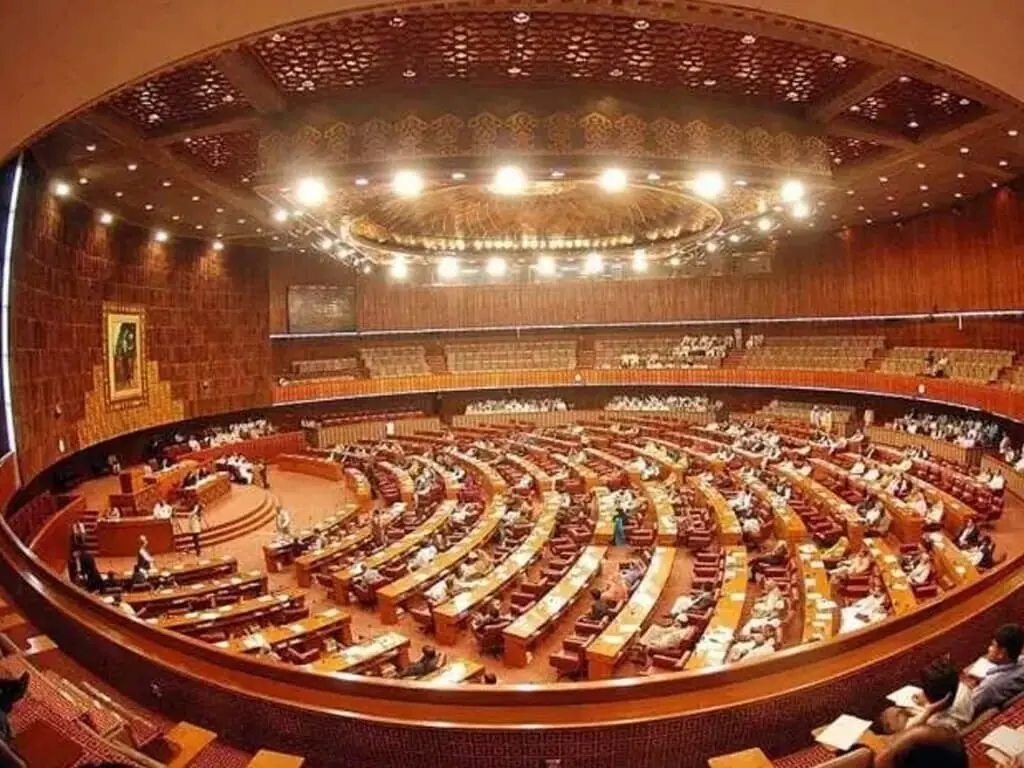

ISLAMABAD: The National Assembly erupted into a heated budget debate on Friday as lawmakers tore into the federal budget 2026-27, demanding tougher relief for salaried class and struggling low-income families battered by soaring inflation.
While criticism dominated much of the budget debate, the government stood its ground, describing the financial plan as tightly constrained yet broadly balanced within the country’s difficult macroeconomic environment.
Taking part in the ongoing budget debate, senior Pakistan People’s Party (PPP) leader and former prime minister Raja Pervaiz Ashraf set the tone for the day’s deliberations by declaring the proposed 7 per cent salary increase for government employees “wholly insufficient.”
He argued that, given the current cost-of-living pressures, salaries should have been raised by at least 10 per cent to meaningfully offset inflationary shocks hitting public sector households.
Ashraf drew a comparison with the PPP’s previous tenure, recalling that salaries had once been raised by as much as 50 per cent despite economic strain.
He implied that bold fiscal decisions were still possible if there was political will. Beyond the numbers, he stressed that economic recovery could not be achieved in isolation from political stability, continuity of policy, and national consensus.
Without these, he warned, even well-designed budgets risked falling short of their goals.
Urging restraint in political rhetoric, he cautioned that polarising narratives were undermining economic confidence.
Turning to recent developments in Azad Jammu and Kashmir (AJK), he described the situation as “deeply distressing,” though he noted that negotiations had produced substantial progress following directives from the prime minister.
According to him, nearly 80 per cent of the demands raised had been addressed, including subsidised electricity at Rs3 per unit and relief on flour prices.
However, he acknowledged that sensitive issues – particularly those relating to refugee representation – remained unresolved.
He called for continued dialogue through a newly constituted negotiation committee while emphasising that “state red lines” could not be crossed.
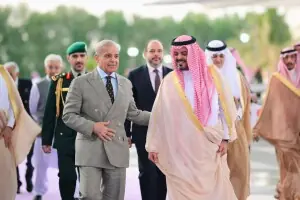
Adding a different dimension to the debate, PPP MNA Nafisa Shah highlighted the country’s recent diplomatic outreach, suggesting that renewed international engagement had helped improve the country’s global standing.
She linked expanding ties with Gulf nations to the long-term vision of former prime minister Zulfikar Ali Bhutto, arguing that such relationships could serve as a stabilising force for the economy.
At the same time, she urged the government to reduce dependence on International Monetary Fund (IMF) programmes, calling instead for a strategic pivot towards domestic productivity.
Under the “Uraan Pakistan” framework, she emphasised agriculture and industry as the twin engines of growth.
Describing agriculture as the backbone of the economy, she called for urgent relief for farmers and the removal of structural bottlenecks hindering exports, warning that such constraints were continuing to strain foreign exchange reserves.
From the opposition benches, Pakistan Tehreek-e-Insaf (PTI) MNA Muhammad Nawaz offered a sharply critical assessment, arguing that the budget provided little tangible relief to ordinary citizens already burdened by inflation.
While advocating for national unity, he pointed to what he described as stagnation in development initiatives in Battagram, citing delays in a grid station project and key road infrastructure schemes.
He urged greater investment in tourism and forest conservation as potential avenues for job creation and local economic development.
Separately, Ejazul Haq of PML-Z questioned the government’s growth assumptions, stating that the projected 4 per cent GDP growth rate was insufficient to address rising unemployment and entrenched poverty.
He argued that the country required sustained growth in the range of 6 to 7 per cent to produce meaningful improvements in living standards.
Responding on behalf of the government, Minister for Parliamentary Affairs Dr Tariq Fazal Chaudhry defended the budget, stating that it had been prepared after extensive consultations with stakeholders and reflected prevailing fiscal constraints.
He described it as the “best possible” financial plan under current economic realities, while assuring lawmakers that viable proposals from both treasury and opposition benches would be considered.
He also revealed that the prime minister would soon meet opposition leaders to further address their concerns.
Other legislators who took part in the budget debate included Arshad Abdullah, Nosheen Iftikhar, Nafisa Shah, Naseer Ahmed Abbas, Khurram Manj, Sanjay Perwani, Dr Darshan, Zubair Khan, Hafeez-ur-Rehman Drishak, Muhammad Shahbaz Babar, Fazal Muhammad Khan, Shamsher Ali Mazari, Rana Iradat Sharif, Muhammad Saad Ullah, Malik Asad Sikandar, Zulfiqar Ali Bhatti, Babar Nawaz, Rabia Naseem Farooqi, Muhammad Khan Daha, and Ahmad Raza Maneka.
Meanwhile, official data presented before the House showed that 206 members participated in the six-day budget debate, which stretched across nearly 48 hours of discussion.
Treasury lawmakers spoke for 29 hours and 23 minutes, while the opposition contributed 18 hours and 16 minutes, underscoring the intensity and breadth of the proceedings that marked the budget session.
Copyright Business Recorder, 2026










Comments