


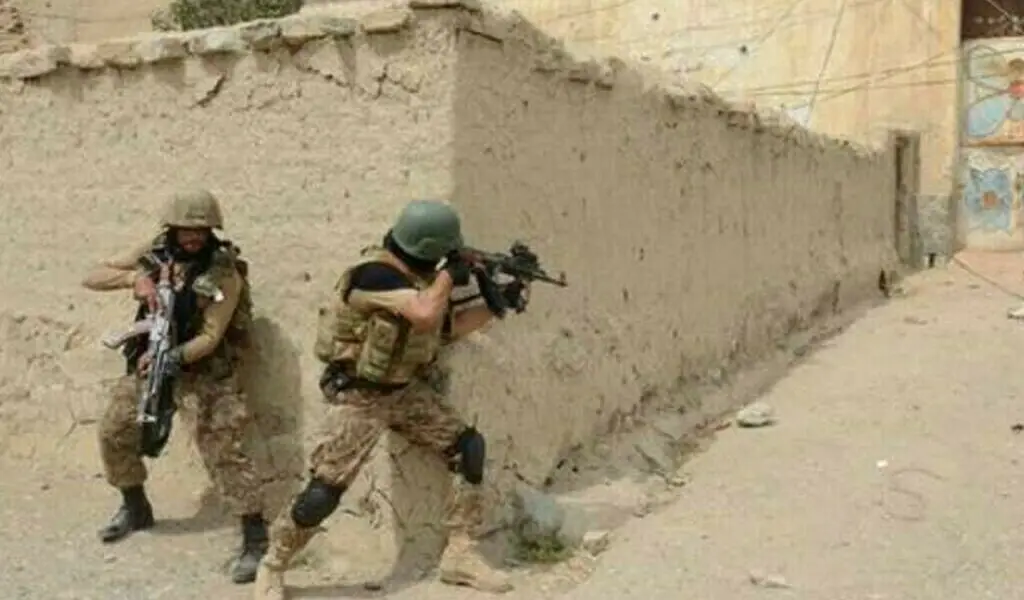

ISLAMABAD: Pakistan’s security forces have killed 1,861 terrorists in more than 32,000 intelligence-based and counter-terrorism operations conducted so far this year, security sources said on Tuesday, warning that terrorism remains the country’s most serious security challenge amid continued militant sanctuaries across the border in Afghanistan.
During an extensive background briefing with media representatives, security sources said 32,092 intelligence-based and counter-terrorism operations had been carried out across the country this year.
According to figures shared during the briefing, 2,170 terrorist incidents were recorded during the period while 1,861 terrorists were killed. Of these, 991 militants were eliminated inside Pakistan and 862 inside Afghanistan, according to the sources. They said the figures translated into an average of more than 10 terrorists killed every day.
The sources added that 640 security personnel, law enforcement officials and civilians embraced martyrdom during the period.
According to the operational breakdown, approximately 24,718 operations were conducted in Balochistan, 5,710 in Khyber Pakhtunkhwa and 1,664 in other parts of the country.
Security sources alleged that more than two dozen terrorist organisations were currently operating from Afghan territory and continued to receive sanctuary, facilitation and support. They said Pakistan had repeatedly raised the issue with the Afghan Taliban administration through diplomatic channels but had seen little practical action against terrorist infrastructure.
The sources maintained that Pakistan pursued dialogue and engagement with the Afghan Taliban authorities between 2021 and 2025 and remained committed to resolving issues through diplomacy. However, they alleged that Kabul had failed to fulfil commitments regarding the use of Afghan territory by groups targeting Pakistan.
Security sources said Pakistan’s engagement with Afghanistan remained transparent and centred on one core demand: an end to support, facilitation and sanctuary for terrorist groups operating against Pakistan.
According to the sources, any military action undertaken against terrorist hideouts across the border was based on credible intelligence and executed with precision. They said terrorist camps, training facilities, logistics hubs, ammunition depots and support infrastructure had been targeted while efforts were made to avoid civilian casualties and collateral damage.
Responding to questions on the defence budget, security sources said the allocation had been increased to around Rs3 trillion, but argued that inflation significantly reduced its real value. They noted that more than 80 per cent of the budget was consumed by essential expenditures, including salaries, rations, maintenance and operational requirements.
The sources said these expenditures ultimately circulated back into the national economy and contributed to economic activity and stability. However, they maintained that only a limited portion of the allocation remained available for modernisation, procurement of equipment, development projects and enhancement of operational capabilities.
Security sources pointed to India’s defence budget of more than $90 billion, describing it as several times larger than Pakistan’s allocation. They said Pakistan’s armed forces were simultaneously preparing for conventional military threats, emerging technological challenges and the ongoing fight against terrorism.
The sources stressed that future warfare would increasingly depend on technological capabilities, while counter-terrorism operations continued to require significant manpower and resources. They said the increase in defence spending reflected evolving security requirements and the need to maintain multi-domain operational readiness.
“Even if resources are limited, Pakistan’s armed forces remain fully prepared and committed to defending the country at all times,” the sources added.
On broader foreign policy, security sources said Pakistan’s diplomacy was independent and based solely on national interests. Referring to discussions surrounding Iranian Foreign Minister Abbas Araghchi’s regional engagements, including his visit to India, the sources said every country pursued its own national interests and Pakistan had no concerns over “who meets whom.”
The sources said Pakistan enjoyed strong strategic ties with China while simultaneously maintaining constructive relations with the United States, Russia, Saudi Arabia, Iran and other friendly countries. They described Pakistan’s relationship with China as “stronger than platinum” and rejected suggestions that Islamabad’s foreign policy was aligned exclusively with any single bloc.
Security sources also underscored the growing importance of military diplomacy, saying defence cooperation and military-to-military engagement formed an important component of broader state diplomacy. They said military diplomacy had expanded significantly in recent years and contributed to regional peace, security cooperation and conflict prevention.
Responding to a question about reports of an alleged meeting between PTI founder Imran Khan and a former army official, security sources reiterated that the military had no role in politics.
“We have repeatedly stated that the Pakistan Army has nothing to do with politics. Politicians should talk among themselves,” the sources said, adding that political issues should be resolved through constitutional and democratic processes.
Addressing the situation in Balochistan, security sources alleged that terrorist groups operating in the province enjoyed external support and were attempting to exploit rights-based narratives and social media campaigns to advance violent agendas. They rejected suggestions of any UAE involvement in destabilisation efforts and said friendly Gulf countries remained important partners of Pakistan.
Security sources described Fitna al-Hindustan (BLA) as a terrorist organisation allegedly backed by India and supported by hostile external elements. They claimed anti-Pakistan actors were actively attempting to obstruct development and prosperity in Balochistan through violence, disinformation and coordinated propaganda campaigns.
The sources alleged that efforts to shape and promote anti-state narratives were being driven by hostile actors seeking to undermine public confidence and distort ground realities in the province. They maintained that the so-called narrative war largely existed on social media and did not reflect the actual situation on the ground.
Highlighting development indicators, security sources said Balochistan’s road network now extends over 32,000 kilometres and that more than 18,000 vehicles travel daily on highways and roads across the province. They argued that terrorists exploit the province’s vast geography by targeting isolated vehicles and incidents, which are then amplified through social media and segments of foreign media to portray a misleading picture of instability.
The sources further alleged that facilitators and handlers operating from abroad used such incidents as part of an organised anti-Pakistan propaganda strategy. They also accused militant groups of exploiting women for propaganda and operational purposes, describing the practice as contrary to both Islamic teachings and Baloch cultural traditions.
On development initiatives, security sources said the Balochistan government was working to improve governance through transparent distribution of funds at the district level, better project selection and timely implementation of development schemes. They described Reko Diq as a major milestone for the province, arguing that royalties, investment and economic activity generated by the project would contribute significantly to Balochistan’s long-term development.
The sources maintained that minerals extracted from any region generated broader economic benefits through processing, exports, employment and public investment, and emphasised that Balochistan’s progress was directly linked to Pakistan’s overall economic growth and national development.
On Jammu and Kashmir, security sources reiterated Pakistan’s longstanding position that the dispute remained the unfinished agenda of Partition and a core issue for regional peace.
They said occupied Kashmir remained one of the most heavily militarised regions in the world and argued that demographic changes, legal measures and economic incentives could not replace the Kashmiri people’s right to self-determination.
Referring to recent developments in Azad Jammu and Kashmir, security sources said Pakistan’s first preference had always been dialogue and political engagement. However, they alleged that certain elements within protest movements had adopted violence and sought to challenge the writ of the state, adding that no group would be allowed to impose its demands through force or undermine constitutional order.
The sources also defended the constitutional provision reserving 12 seats for Jammu and Kashmir, describing them as linked to the right of self-determination of the Kashmiri people.
On the Indus Waters Treaty, security sources referred to the National Security Committee’s declaration of April 24, 2026, which described water as a vital national interest.
They said Pakistan’s economy, agriculture and food security were directly linked to the Indus basin and stressed that the country would protect its water rights through the full spectrum of national power.
While expressing confidence in Pakistan’s military capability and resolve, the sources said Islamabad had launched a comprehensive legal and diplomatic response to what it described as Indian violations of the treaty.
At the same time, they acknowledged the need for improved domestic water management through greater storage capacity, enhanced conservation measures, canal infrastructure and stronger regulatory frameworks.
The sources argued that recent Indian rhetoric on water was linked to domestic political considerations and efforts to shift attention from diplomatic and military setbacks following recent tensions between the two countries.
The briefing concluded with security sources reiterating that Pakistan would continue pursuing dialogue wherever possible while remaining fully prepared to defend its national interests, territorial integrity and security against any threat.
Copyright Business Recorder, 2026




















Comments