


Punjab Budget
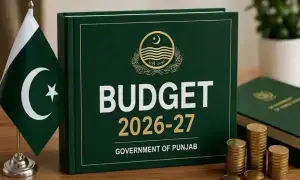
Punjab's new budget projects a 47.5% revenue increase, largely from higher sales and agricultural taxes, aiming for a surplus to meet IMF commitments despite concerns over tax fairness.
- Significant increase in sales tax on services.
- Revised agricultural income tax rates and low collection.
- Budget surplus and commitments to the IMF.
- Expenditure allocation for current and development projects.
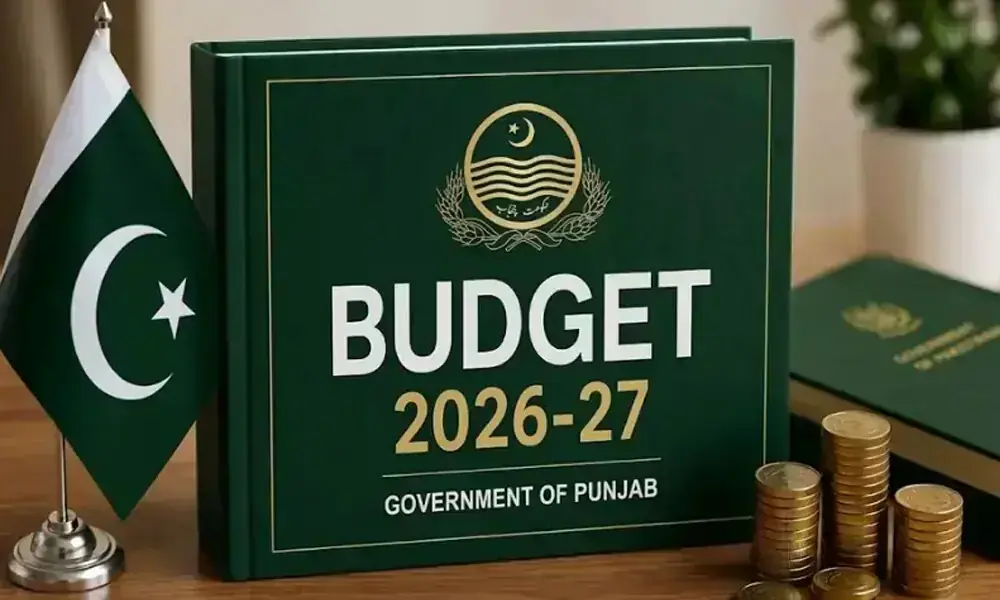
EDITORIAL: The Punjab budget envisages total revenue of 1209 billion rupees from own resources (only 749 billion rupees from taxes and 461 million rupees as non-tax revenue) against the revised estimates of 820 billion rupees in the outgoing fiscal year – a significant rise of 47.5 percent.
Sales tax collections on services, passed on in its entirety to the clients/consumers, an indirect tax, to boot, whose incidence on the poor is greater than on the rich, are budgeted to rise to 521 billion rupees next year against 363.5 billion rupees collected in the revised estimates of the current year (though the budgeted target for the current year was lower at 333.5 billion rupees) – a 43 percent rise. This encapsulates higher tax on IT services, transport and professional services (from 5 to 8 percent), a 3 percent new tax on foreign exchange services (that is likely to impact the middle to lower income levels) and 8 percent on event management (though input tax adjustment has not been factored in).
Actual collection with respect to agriculture income tax for next fiscal year is a paltry 12.5 billion rupees against 3.99 billion rupees collected in the outgoing year though the budgeted amount was 10.5 billion rupees. The budget, however, claims upward revisions in this tax: those with more than 12.5 acres of land would pay a flat rate of 1,000 per acre, up from 300 rupees per acre for 12.5 to 25 acres, 400 rupees per acre for 25 to 50 acres, and 500 rupees per acre for above 50 acres. Tax on irrigated orchards would rise from 600 rupees to 1,000 rupees per acres and on non-irrigated orchards from 300 rupees to 500 rupees per acre. This is a far cry from the need to bring the tax at par with a specific farm’s income to be levied at the same rate as payable by the salaried.
Given that Punjab is the bread basket of the country with a large number of absentee landlords who are overwhelmingly represented in the provincial assembly, the small projected revenue from this source may not be met at the end of next fiscal year – a projection based on the outgoing year’s collection of only 38 percent of what was budgeted.
The agricultural income tax collection must be seen in the context of 10.6 billion-rupees subsidy to the farm sector, and included in the Fiscal Risks Statement 2026-27 is the following: 7.3 billion rupee subsidized diesel to support farmers, 1.7 billion rupees for subsidized petrol to motorcyclists and 0.75 billion rupee free public transport services throughout Punjab.
These higher than the outgoing year’s budgeted projections are not in line with the pledge made to the International Monetary Fund (IMF) noted in the May 2026 staff level agreement on the third review of the ongoing Extended Fund Facility programme: “At the provincial level, revenue mobilization will continue to focus on broadening the GST tax base on services and the application of higher income tax rates on agricultural income.”
The budget envisages a 19 percent increase in non-tax revenue mainly from Cash Management Fund that was set up under the Punjab Public Financial Management Act 2022 to manage Punjab’s liquidity and budget execution and has increased from 800 billion rupees to 1.2 trillion rupees. It is funded and replenished from productive investments and parking of idle cash balance, surplus provincial revenue and unutilized funds from the provincial consolidated fund. In addition, higher revenue is budgeted to be generated from police due to enhanced traffic fines (2.8 billion rupees), increased revenue from royalties, release of NHP arrears by the Centre and anticipated profits from Punjab Pension Fund established in 2024 through employee contributions effective for those hired from 2024 onwards, though the exact amount has not been quantified.
The budget shows a surplus of 910 billion rupees, higher than the total provincial tax receipts of 749 billion rupees, a surplus that was required to meet the federal budget’s demands geared to meeting the commitment with the IMF.
The expenditure outlay is mainly on current expenditure at 3.29 trillion rupees while development outlay is budgeted at 752 billion rupees or 12.7 percent of the total – lower than the Centre’s percentage allocation of 93 percent on current expenditure. It is relevant to note that the rise in development outlay, supported as it is, gives Punjab’s share in the downward revised provincial public sector development programme as noted in the federal budget at only 38 percent – lower than its share in the divisible pool, which is 51.74 percent – a share that no doubt is rooted in Punjab budget’s overarching objective to meet the federal budget’s requirements as pledged to the IMF.
To conclude, this may not be the final outlay if there are unforeseen liabilities associated with exogenous factors and the Punjab budget echoes what is in the federal budget: “expenditure restraint will also be essential, with primary spending remaining flat as a share of GDP in FY27, while increasing targeted cash transfers and health and education spending ratios. Further, expenditure compression (including lower-priority capital spending) may be needed if risks to revenue mobilization materialize.”

















Comments