


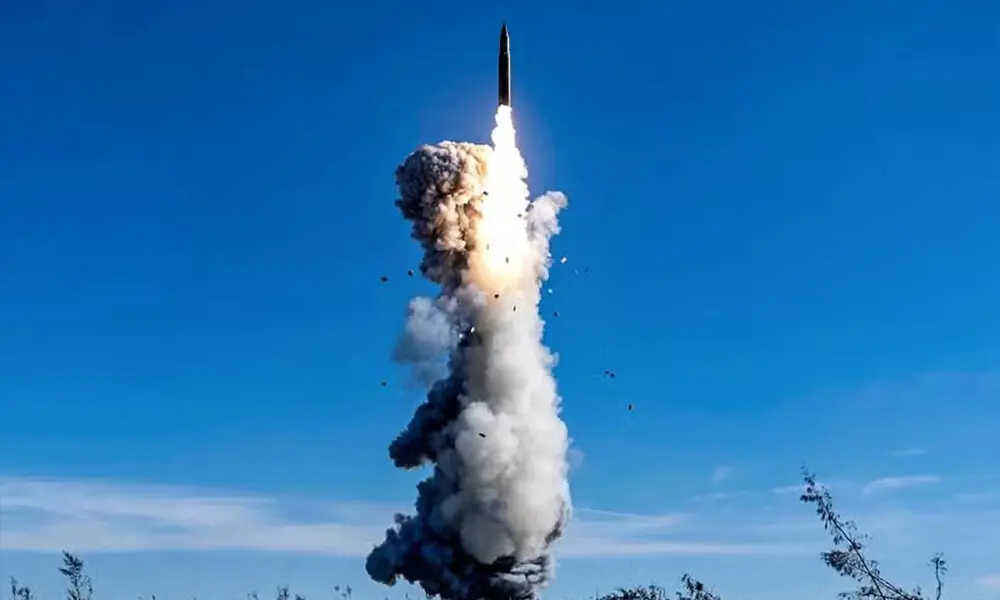

SYDNEY: China is capable of a direct missile strike on Australia and the threat is growing as Beijing amasses long-range and hypersonic weapons and builds islands in the South China Sea, an Australian think tank said on Sunday.
A Lowy Institute report found the main threat to Australia was from Chinese missiles fired from ships, submarines and a new intermediate-range ballistic missile that could reach the island continent from China.
China’s capacity to strike Australia would grow over the next decade as “the DF-27 intermediate-range ballistic missile, and potentially a conventionally armed intercontinental ballistic missile, grow in service numbers”, it said.
The DF-27 missile has a range of 5,000 to 8,000 kilometres (3,000 to 5,000 miles), the US military said in December.
The direct military threat posed to Australia was not well understood by the public, the report said, adding that it was assessing Beijing’s capability and not its intentions.
Sam Roggeveen, the director of the Lowy Institute’s International Security Program, told AFP the report was “neither hawkish nor dovish, neither alarmist nor complacent”.
“I think the growth of the People’s Liberation Army is the most important thing to happen to Australian security since the collapse of the Soviet Union, and there is a pressing need for a more informed Australian discussion about it,” he said.
Australia reshaped its military strategy three years ago in response to China’s rapid navy build-up and rising friction between Beijing and Washington, focusing on deterring an adversary from its northern approaches.
However, Prime Minister Anthony Albanese’s government has been reluctant to talk about the potential for a direct attack on the Australian mainland.
Although China’s ability to sever undersea communications cables, cyber attacks and interdicting maritime trade are the primary risk for Australia, “the direct strike threat is real and growing”, the report said. The Dong Feng-26 intermediate-range ballistic missile could reach northern Australia if deployed from one of Beijing’s artificially built islands in the South China Sea, it said.
The threat to Australia would “dramatically escalate” if China fielded a crewed or drone long-range bomber, or deployed bombers or missiles on Pacific islands close to Australia.




















Comments