


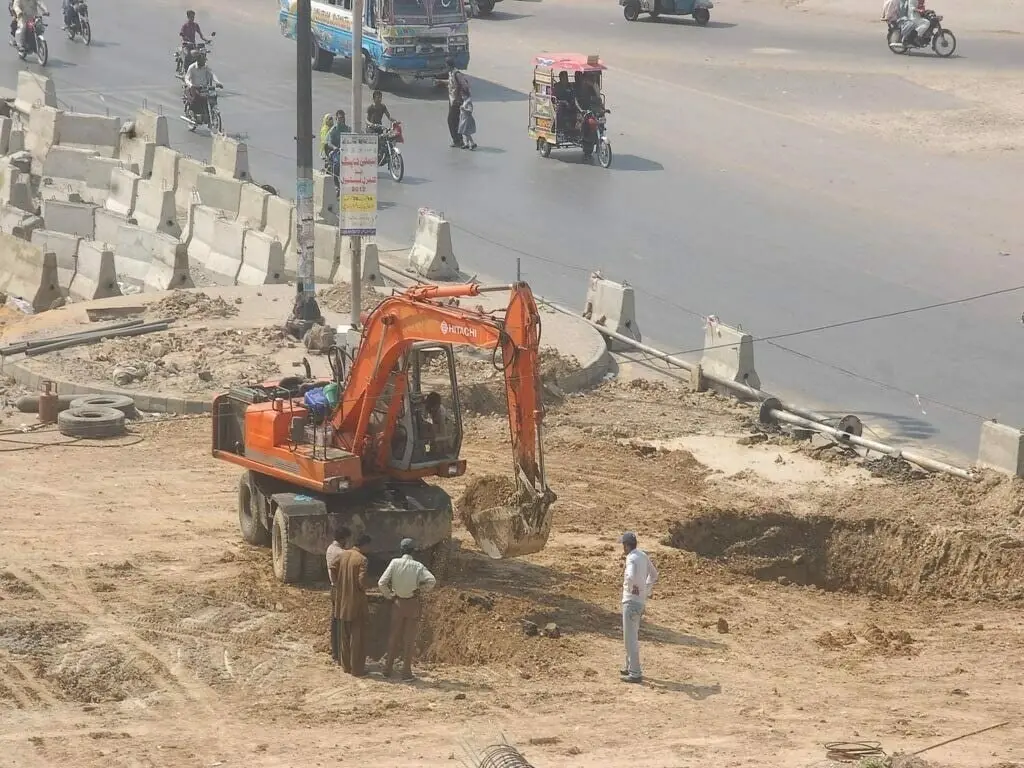
EDITORIAL: Billions of rupees worth of foreign-funded development projects are once again facing delays, not because international financing has dried up, not because development partners have withdrawn support, and not because the projects themselves lack strategic importance. The obstacle, according to reports, is the federal government’s continuing inability to provide timely rupee cover for projects already included in the Public Sector Development Programme. For a country that routinely struggles to secure external financing, this is a particularly troubling form of self-inflicted damage.
The issue is not new. Development partners and executing agencies have reportedly been raising concerns for some time. Parliamentary committees have discussed the problem. Ministerial and sub-committees have been formed to examine it. Yet the underlying bottleneck remains unresolved. As a result, projects financed through loans and support from institutions such as the World Bank continue facing uncertainty despite foreign funding already being available.
The consequences are entirely predictable. Delays increase costs. Procurement schedules are disrupted. Contractors face uncertainty. Implementation timelines slip. Eventually, taxpayers bear the burden through cost escalations that could have been avoided through timely administrative actions.
The irony is difficult to ignore. Pakistan regularly emphasises the importance of development financing, infrastructure investment and public-sector reform. Yet projects that have already secured foreign funding are being slowed by procedural shortcomings within the government’s own financial management system. Such inefficiencies undermine both credibility and effectiveness.
The issue becomes even harder to justify when viewed from the perspective of public accountability. Foreign-funded projects are ultimately financed through loans that must be repaid. Delays therefore do not merely postpone development outcomes; they also reduce the value obtained from borrowed resources. Every unnecessary month of delay diminishes the economic return on investments that future taxpayers will help finance.
Transparency would help address part of the problem. The government should publish a regularly updated list of all foreign-funded projects, identifying the total project cost, foreign financing component, rupee cover requirement, implementation status and any pending financial approvals. Such disclosures should be made available to parliament, development partners and the public.
This would serve several purposes simultaneously. It would allow policymakers to identify emerging bottlenecks before they become major obstacles. It would enable parliamentary oversight. It would strengthen public confidence in project management. Most importantly, it would make it considerably harder for delays to disappear into the bureaucracy without explanation.
There is also a broader governance issue at stake. Pakistan has spent years discussing the need to improve implementation capacity across the public sector. Reports, reform plans and committee recommendations have consistently highlighted weaknesses in coordination between ministries, overlapping responsibilities and delays in administrative approvals. The rupee cover issue appears to be another manifestation of the same underlying problem.
The fact that a ministerial committee was constituted as far back as October 2025 illustrates how long this matter has remained unresolved. If multiple meetings, stakeholder consultations and sub-committee deliberations have still failed to produce a practical solution, then questions about institutional effectiveness become unavoidable.
Foreign development partners pay close attention to such matters. They are not only assessing the quality of individual projects. They are also assessing the state’s ability to execute them efficiently. Persistent administrative delays create the impression of a system that struggles to translate financing into outcomes.
Pakistan cannot afford that perception. Development needs remain substantial, fiscal space remains limited and access to affordable financing remains important for future growth. Every effort should therefore be made to ensure that projects already approved and funded move forward without unnecessary obstacles.
The larger lesson is straightforward. Development financing is only as effective as the institutions responsible for managing it. Securing foreign funding is difficult enough. Allowing bureaucracy and indecision to undermine projects after the money has already been arranged reflects a level of unprofessionalism that should no longer be acceptable. The government must resolve the rupee cover issue quickly, transparently and permanently. The cost of continued delay is becoming far too high.
Copyright Business Recorder, 2026

























Comments